7 Innovative Digital Business Card Ideas for 2026
13 minutes
17th of January 2026
In this article:
- Why Digital Business Cards Are Essential in 2026
- 7 Innovative Digital Business Card Ideas for 2026
- Key Features Shaping the Future of Digital Business Cards
- How to Choose the Right Digital Business Card Platform in 2026
- Digital Business Card Trends to Watch for 2026 and Beyond
Imagine a world where sharing your details is instant, interactive, and memorable. The digital business card is transforming how professionals connect in 2026, making traditional paper cards a thing of the past. In this article, we explore seven groundbreaking ideas set to redefine networking. Discover next-level features, top platforms, and creative approaches that empower both individuals and enterprises. Ready to stand out at any meeting or event? Step into the future of networking and see how these solutions can give you an unforgettable first impression.
Why Digital Business Cards Are Essential in 2026
Imagine attending a conference in 2026. Instead of fumbling for a paper card, you share your details instantly with a single tap or scan. This is the new normal, and the digital business card is at the center of this transformation.
The Decline of Paper Cards and Rise of Digital Alternatives
Traditional paper cards are quickly losing relevance. The environmental impact is significant, as millions of cards are discarded every year, contributing to unnecessary waste. By switching to a digital business card, professionals and organizations can dramatically reduce their carbon footprint and support sustainability goals.
Cost savings are another major driver. Printing, reprinting, and shipping paper cards all add up, especially for businesses with large teams or frequent updates. With a digital business card, updates are instant and free, ensuring your contact details are always accurate. No more stacks of outdated cards in your desk drawer.
Remote and hybrid work models have also accelerated the shift. In a world where meetings happen as often online as they do in person, a digital business card ensures you can share your information seamlessly, whether across the table or across the globe. Global accessibility means you can connect with anyone, anywhere, no matter their device or preferred method of communication.
Integration with business tools is now expected. Modern digital business card platforms allow you to sync contacts directly with CRMs, automate follow-ups, and streamline workflows. This not only boosts productivity but also reduces manual errors and saves valuable time.
Security and privacy are top priorities. Unlike paper cards, a digital business card can offer encryption, GDPR compliance, and access controls. Businesses can protect sensitive information and ensure only the right people see the right details.
The real-world impact is clear. For example, Blinq powers digital networking in over 189 countries and is trusted by Fortune 500 brands. According to Digital Business Card Adoption Statistics, users report a 38 percent increase in engagement and 630 percent more follow-ups after switching to digital cards. These numbers underline why the digital business card is not just a trend, but an essential tool in 2026.
In summary, adopting a digital business card means embracing a smarter, more efficient, and environmentally responsible way to network. The shift is happening fast, and the benefits are too significant to ignore.
7 Innovative Digital Business Card Ideas for 2026
The digital business card landscape in 2026 is a showcase of rapid evolution, personalization, and smart integrations. As organizations and professionals adapt to hybrid work and global networking, the demand for standout digital business card solutions is higher than ever. According to Digital Business Card Market Growth, the industry is set for impressive expansion, making it crucial to choose the right tool for your needs.
Below, we explore seven platforms redefining what a digital business card can achieve—each with unique strengths for individuals, teams, and enterprises.
Spreadly – The All-in-One Customizable Digital Card Solution
Spreadly sets the standard for what a digital business card should offer in 2026. With a free plan and affordable premium options, individuals and enterprises alike benefit from instant card creation and sharing. Users can distribute their digital business card via QR code, NFC, wallet integration, email signatures, or a direct link—no app needed for the recipient.
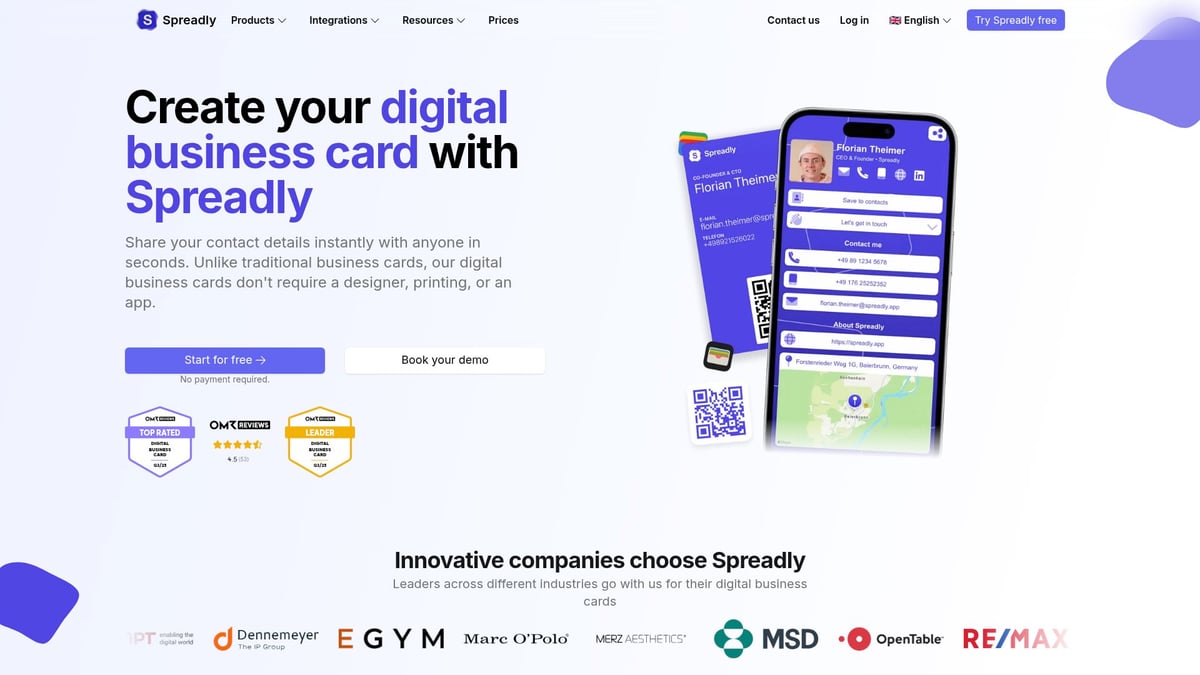
Key features include:
- Video and file attachments
- Appointment scheduling
- Lead capture forms and AI-powered card scanning
- Real-time updates and advanced branding with custom layouts, fonts, and interactive backgrounds
Spreadly integrates seamlessly with Salesforce, HubSpot, Microsoft Dynamics, and BambooHR, making it a favorite for organizations prioritizing workflow automation. Its GDPR-compliant, multi-language platform appeals to global teams needing a secure and scalable solution.
Pros:
- Setup in less than 2 minutes
- Advanced customization and branding
- Trusted by major brands like Volkswagen Financial Services and TUM
Cons:
- Some features require a paid plan
Spreadly's digital business card is ideal for professionals seeking a blend of creativity, efficiency, and enterprise-level security.
Wave Connect – Feature-Rich, User-Friendly, and Affordable
Wave Connect delivers a digital business card experience tailored for professionals and teams wanting simplicity without sacrificing capability. Its free forever plan includes unlimited contacts, QR sharing, Apple/Google Wallet support, and business card scanning. The platform also introduces live activity QR codes for iPhone, making networking in real time seamless.
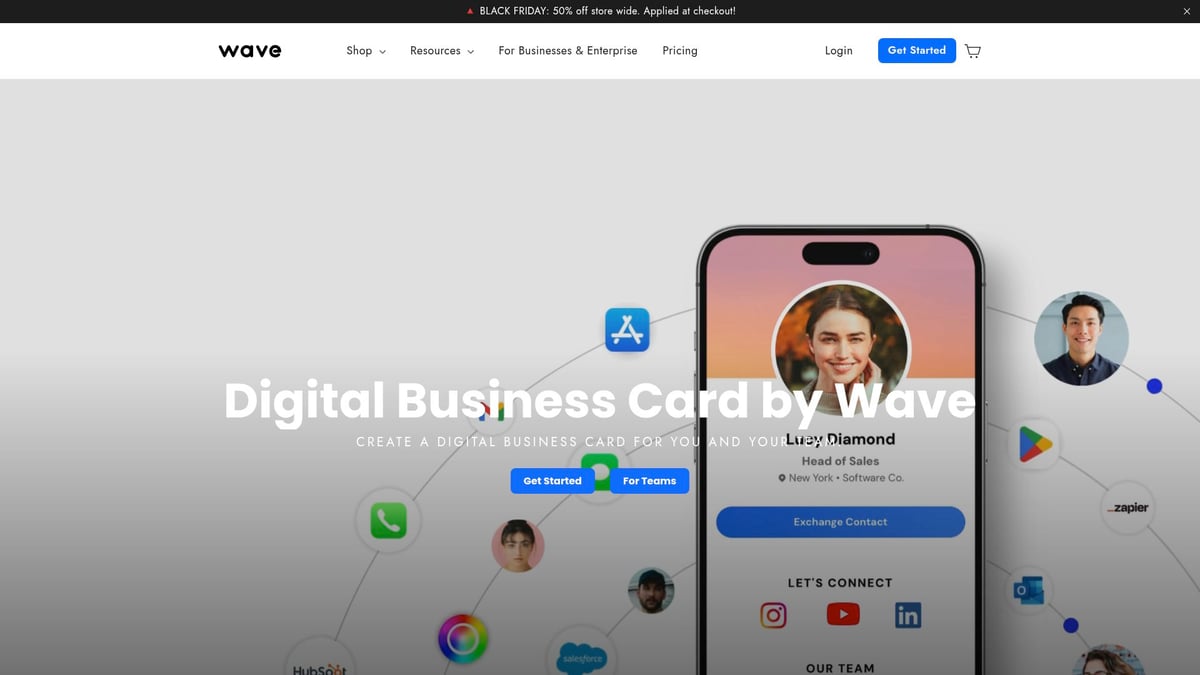
Key features:
- Automated follow-ups via email and SMS
- Contact labeling and tagging
- Widgets for quick access
- CRM sync and analytics
Wave Connect's onboarding is intuitive, letting users manage their digital business card and connections with ease. The robust contact management system is especially useful for those who network frequently across platforms.
Pros:
- Unlimited contacts on the free plan
- Simple setup for individuals and teams
- Recognized as the easiest solution for enterprise users
Cons:
- No multiple card profiles for different roles
- Limited widget support on Android devices
- No payment collection features
Wave Connect is perfect for those who want a cost-effective, practical digital business card solution with advanced follow-up tools and analytics.
Popl – NFC-First Networking with Extensive Integrations
Popl stands out as the digital business card platform of choice for tech-forward users and sales teams. The system revolves around NFC-enabled cards, wristbands, and badges, allowing users to share their digital business card with a simple tap or scan. Popl also supports customizable landing pages, embedded videos, dual profiles, and payment links.
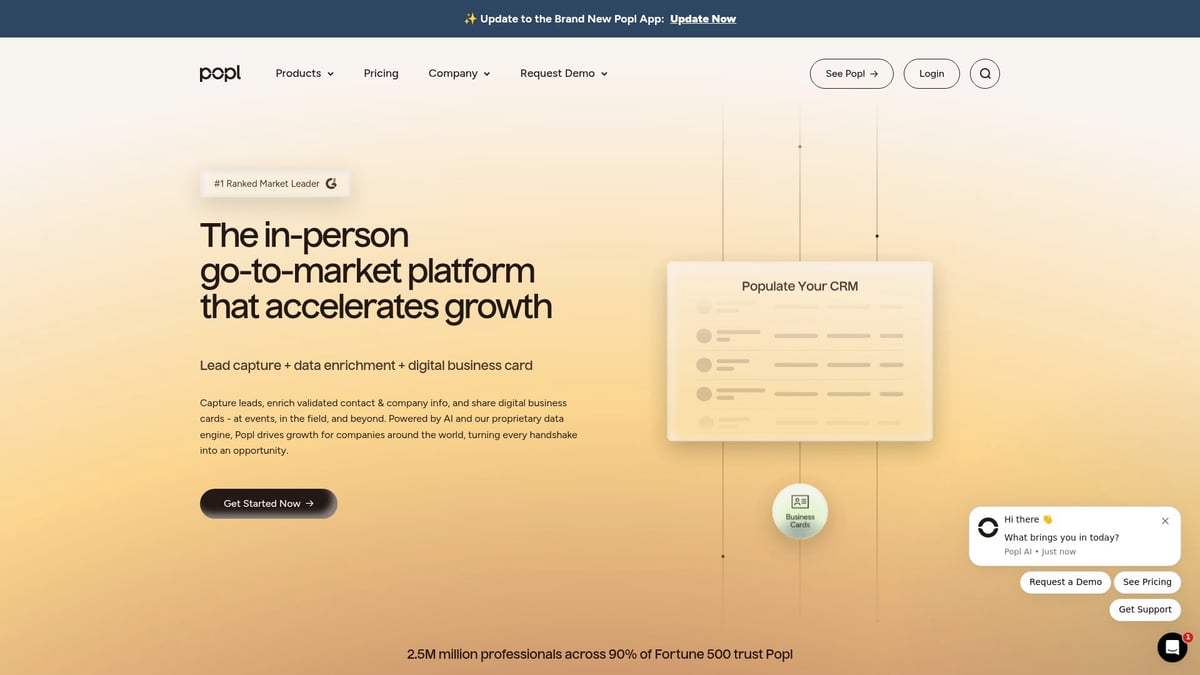
Integration is a major strength, with over 5,000 apps supported, including popular HR, CRM, and marketing tools. Popl provides widgets for both iOS and Android, ensuring your digital business card is always a tap away.
Pros:
- Multiple NFC product options (cards, wristbands, badges)
- Video and payment link support
- Deep analytics and extensive integrations
Cons:
- Free plan limited to 5 contacts
- Higher monthly cost for full features
Popl's digital business card tools are widely used by event marketers and sales professionals who need instant sharing and robust integrations.
HiHello – Simple, Secure, and Versatile Sharing
HiHello is designed for entrepreneurs and small business owners who value security and ease of use. Its digital business card platform features QR code and link sharing, Apple Watch support, and a powerful email signature generator. SOC 2 certification ensures data privacy and security, making it a trusted choice for sensitive industries.
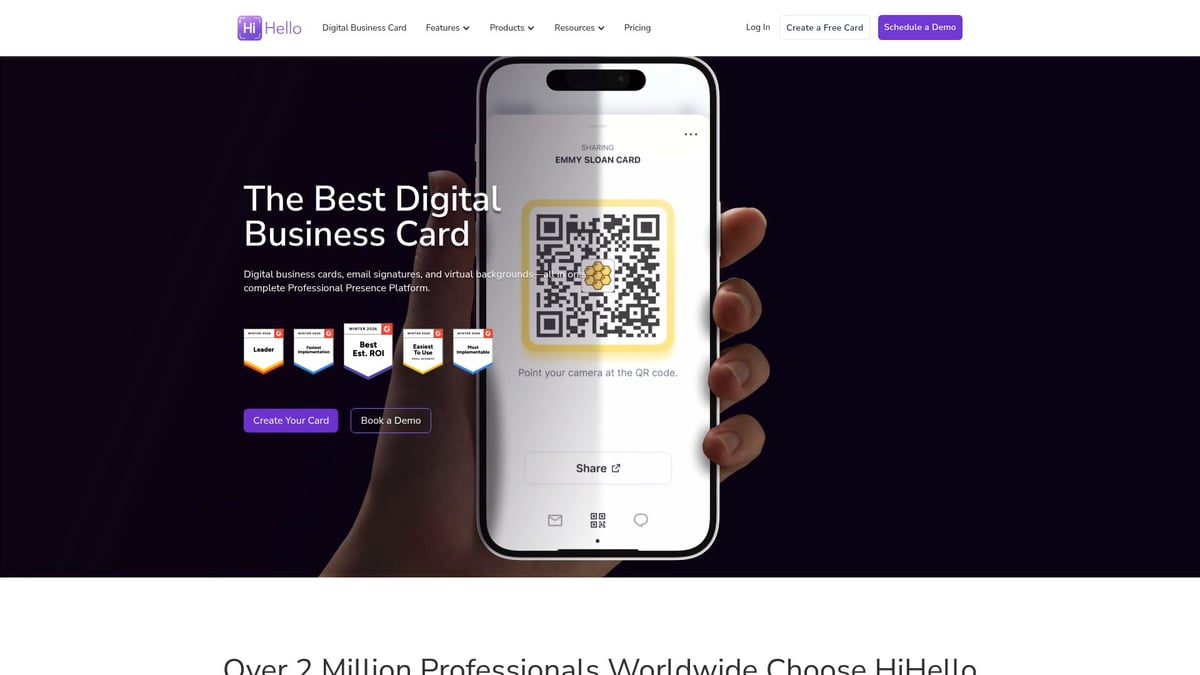
Notable features:
- Automatic updates for shared contacts
- User-friendly dashboard
- Widgets for quick card access
- Multiple sharing options, including smartwatches
Pros:
- Easy for anyone to use
- Available on all major platforms
- Keeps contact details always updated
Cons:
- Limited NFC customization
- Lacks direct CRM lead capture
- Professional plan can be expensive for teams
HiHello's digital business card shines at networking events and for professionals who need a secure, reliable, and efficient way to exchange contact details.
Blinq – Minimalist Cards with Maximum Accessibility
Blinq is the digital business card solution for freelancers and consultants who want simplicity without sacrificing performance. The platform supports QR code and NFC sharing, Apple Watch and Wallet integration, and unlimited contact sharing. Its customizable landing page makes every digital business card feel unique.
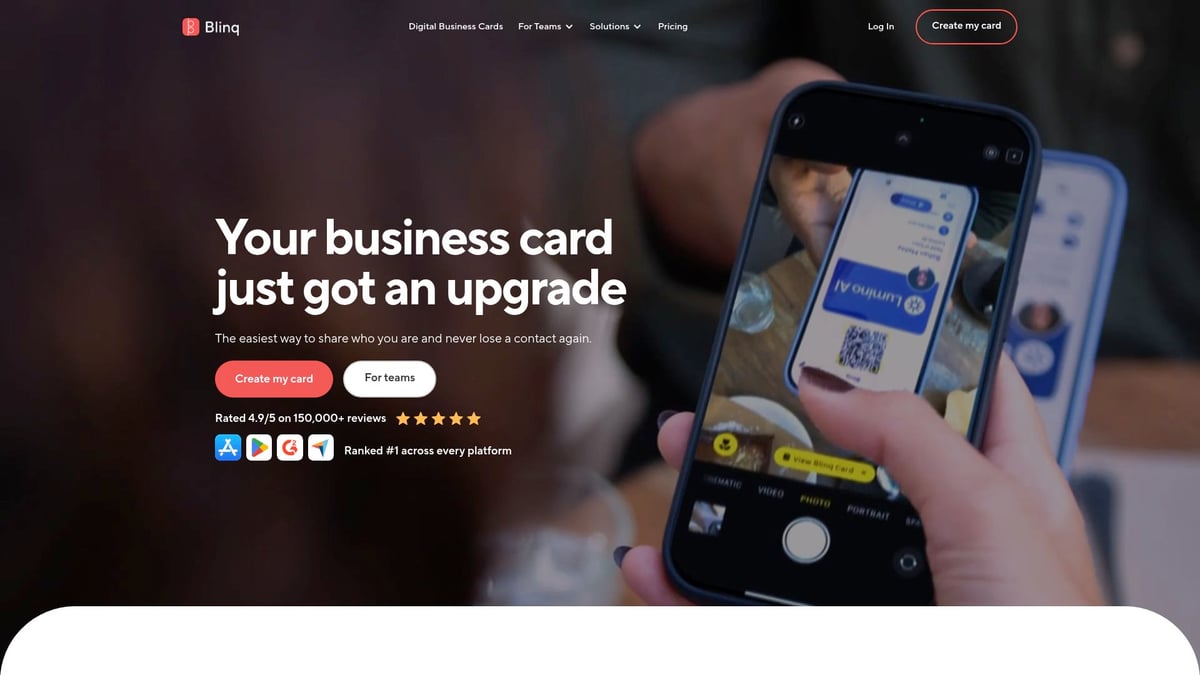
Blinq also enables users to add notes and tags to contacts and generate dynamic email signatures and meeting backgrounds. With SOC 2 Type II and GDPR compliance, Blinq is ready for enterprise deployment.
Pros:
- Intuitive and minimalist design
- No app needed for recipients
- Secure with SSO integration for large teams
Cons:
- No analytics dashboard
- Limited integrations with third-party tools
- Lacks video and lead capture features
Blinq is trusted by millions, including major brands like LVMH and Pepsi, for accessible and secure digital business card sharing.
Uniqode (Formerly Beaconstac) – Enterprise-Grade Digital Cards
Uniqode delivers a digital business card platform engineered for large organizations and event managers. With tiered plans, it offers bulk card creation, advanced analytics, dynamic QR codes, and centralized admin controls. The platform is built for scale, supporting SSO, multiple languages, and granular access permissions.
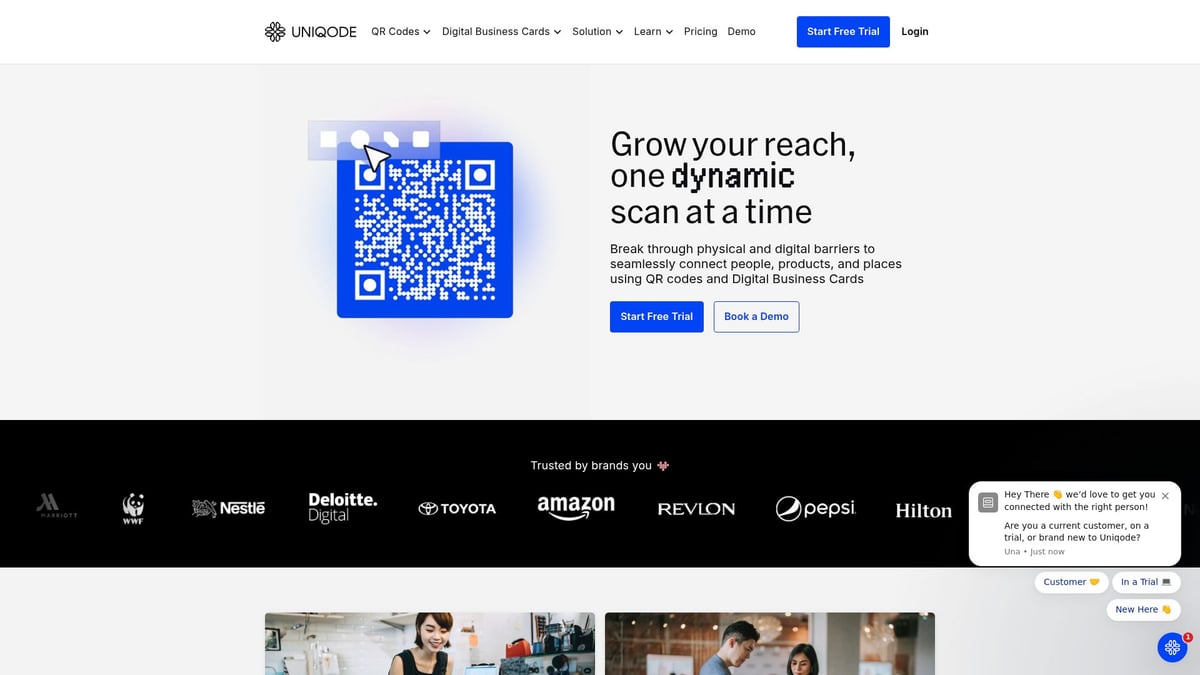
Key integrations include CRM, HR, and marketing platforms, making Uniqode a top choice for teams that require seamless data flow and compliance.
Pros:
- Highly scalable for enterprises
- Customizable at scale with brand controls
- Robust compliance and security features
Cons:
- Higher learning curve for new users
- Pricing is available on request, not always transparent
Uniqode's digital business card system is favored by Fortune 500 companies for secure, branded networking and event badge integration.
Mobilo – Smart Cards for Sales and Lead Capture
Mobilo specializes in digital business card solutions for sales professionals, recruiters, and real estate agents. The platform combines physical NFC cards with digital features like lead generation forms and CRM integration. Users can capture contacts instantly and sync leads directly to their CRM, all while tracking analytics in real time.
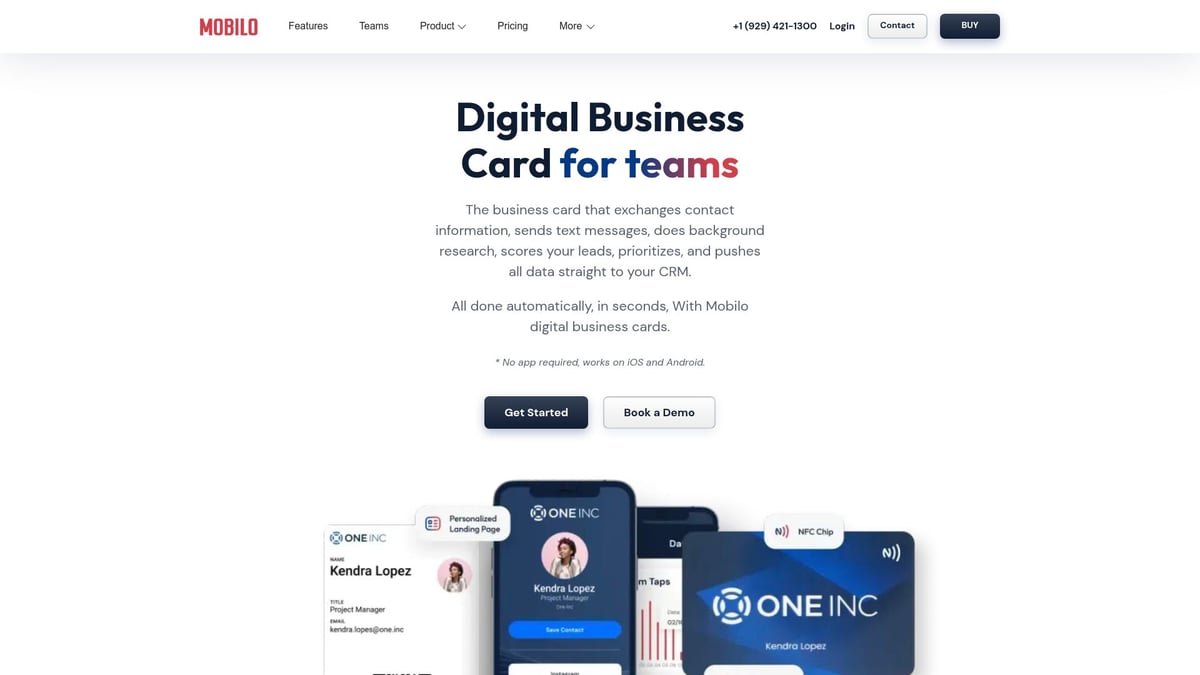
Mobilo is ideal for teams that attend trade shows and need fast, automated follow-up. The durable cards and automated lead sync set it apart from other digital business card platforms.
Pros:
- Focus on lead capture and automation
- Real-time notifications for new contacts
- Team management features
Cons:
- Customization options are limited
- Some advanced features require a subscription
Mobilo's digital business card is the go-to tool for sales teams needing efficient networking and instant lead management.
Key Features Shaping the Future of Digital Business Cards
The digital business card is evolving quickly, bringing a new era of networking that is smarter, more interactive, and far more secure than traditional paper cards. As we look toward 2026, several key features are setting the standard for what a digital business card should deliver.
Interactive Media and Dynamic Content
Today’s digital business card does more than display contact details. Rich media like video introductions, product demos, and clickable portfolios turn every exchange into an engaging experience. Modern cards allow real time updates, so branding or links can be changed instantly.
Interactive lead forms embedded on the card help capture contact info or schedule meetings during the first interaction. These trends are at the forefront of Design Trends for Business Cards 2026, where digital integration and minimalism are shaping the future.
Seamless Sharing Across Platforms and Devices
The power of the digital business card is its ability to be shared anytime, anywhere, on any device. NFC chips, QR codes, and Wallet integration make cards accessible with a simple scan or tap. Widgets ensure details are just a swipe away.
No app is needed for recipients, making the digital business card easy to use for everyone. Cross platform compatibility means it works on iOS, Android, web browsers, and even smartwatches, supporting both virtual and in person networking.
CRM and Business Tool Integrations
A digital business card is most valuable when it connects seamlessly to your workflow. Integration with CRM platforms like Salesforce, HubSpot, and Microsoft Dynamics allows instant syncing of new contacts.
Automated follow ups and lead management reduce manual work, making the digital business card a true productivity tool. This integration streamlines sales, marketing, and HR processes, ensuring every lead is captured and nurtured efficiently.
Security, Privacy, and Compliance
Security is a top priority for any digital business card solution. Leading platforms offer SOC 2 and GDPR certifications, providing enterprise grade data protection. Features such as single sign on, access controls, and audit logs keep sensitive information secure.
Users control their privacy settings, deciding who can view or share their digital business card. These protections are essential for large organizations and individuals alike, fostering trust in modern digital networking.
Advanced Analytics and Engagement Tracking
Understanding how a digital business card performs is crucial for optimizing networking strategies. Real time analytics show who viewed, shared, or engaged with your card. Teams can identify which members or channels drive the most connections.
Advanced dashboards help track ROI, reveal top performing cards, and inform future outreach efforts. With these insights, the digital business card becomes not just a tool for sharing, but a strategic asset for growth.
How to Choose the Right Digital Business Card Platform in 2026
Selecting the right digital business card platform is crucial for building lasting connections and staying ahead in the professional networking landscape. With so many options available, taking a strategic approach ensures your investment aligns with both immediate and long-term goals.
Begin by evaluating your unique requirements. Are you an individual seeking a simple, memorable digital business card, or a team leader searching for scalable solutions with lead capture and analytics? Enterprises might need robust admin controls and integration with HR or CRM systems. Clarifying your needs will help narrow the field and prevent unnecessary spending.
Customization plays a pivotal role in ensuring your digital business card stands out. Look for platforms that enable advanced branding, such as custom logos, fonts, layouts, and multilingual support. Rich media features, including video intros or interactive backgrounds, can make each card a dynamic extension of your brand.
Integration capabilities are essential for streamlining workflows. The best digital business card platforms sync seamlessly with popular CRMs, HR tools, and marketing automation systems, reducing manual entry and keeping data accurate. Consider which integrations will benefit your organization most, such as Salesforce, HubSpot, or Microsoft Dynamics.
Security and compliance should never be overlooked. Prioritize platforms with SOC 2 and GDPR certifications, SSO, and granular user privacy controls. For teams handling sensitive client information, enterprise-grade security is non-negotiable.
Pricing and scalability are important, especially as your networking needs grow. Many digital business card providers offer free tiers for individuals, with paid plans unlocking advanced features, bulk creation, and team management. Assess whether the platform supports both your current and future requirements without hidden costs.
Customer support and onboarding can make a significant difference in your experience. Look for providers that offer live support, comprehensive demos, and guided onboarding. Responsive service ensures your team can make the most of every digital business card feature.
Here is a quick comparison of the most important criteria:
| Criteria | Why It Matters | What to Check For |
|---|---|---|
| Needs Assessment | Aligns solution with goals | Features for individuals, teams, or enterprise |
| Customization | Enhances brand identity | Logos, layouts, languages, media |
| Integrations | Streamlines workflow | CRM, HR, marketing tool sync |
| Security/Compliance | Protects sensitive data | SOC 2, GDPR, SSO, access controls |
| Pricing/Scalability | Controls costs, supports growth | Free vs paid, team management |
| Support/Onboarding | Ensures smooth adoption | Live support, demos, training |
For example, Spreadly offers instant setup, advanced branding, and both free and enterprise-grade plans, making it a flexible choice for individuals and large organizations alike.
Market adoption is accelerating rapidly. According to Blinq, 93% of Fortune 500 companies have already integrated digital business card solutions for their teams. Additionally, the growing demand for NFC-enabled options is highlighted in the NFC Business Card Market Analysis, which projects robust growth and evolving features through 2033.
Ultimately, choosing the ideal digital business card platform means balancing customization, integration, security, and support. By following these steps, you can empower your network with tools that make every introduction memorable and secure.
Digital Business Card Trends to Watch for 2026 and Beyond
The digital business card is rapidly evolving, with 2026 set to bring even more transformative trends. Professionals and companies need to stay ahead of these changes to keep their networking strategies relevant and effective.
AI and Automation
Artificial intelligence is becoming central to the digital business card experience. AI-powered card scanners now let users instantly capture contact info from physical or digital sources. Smart lead capture forms and automated follow-ups help professionals nurture connections without manual effort.
Key advancements include:
- Predictive analytics that identify valuable networking opportunities
- Intelligent reminders for follow-ups
- AI-driven recommendations for content personalization
For example, Spreadly integrates an AI card scanner and automated lead forms to streamline event networking. These features make every digital business card smarter, faster, and more effective.
Sustainability and Eco-Conscious Networking
Environmental responsibility is now a priority for many organizations. By adopting a digital business card, companies significantly reduce paper waste and support greener operations. This shift not only cuts costs but also aligns with sustainability goals.
Major trends include:
- Paperless networking at global events
- Tracking and reporting on eco impact
- Corporate commitments to reduce carbon footprint
Platforms like Blinq and Wave Connect highlight their eco-friendly approach, making the digital business card essential for modern, environmentally conscious professionals.
Personalization and Brand Experience
A standout digital business card offers more than just contact details. With hyper-customizable designs, professionals can showcase their brand identity with interactive backgrounds, videos, and dynamic layouts.
Notable features:
- Consistent branding for teams and enterprises
- Multiple templates and layouts for various roles
- Interactive elements like embedded portfolios and video intros
Spreadly and Uniqode lead the way by allowing full control over branding, ensuring every digital business card reflects the unique personality of its owner or company.
Hybrid and Virtual Networking Integration
Networking is no longer limited to face-to-face meetings. The digital business card now bridges in-person and virtual interactions, making it easy to connect on any platform.
Key integration points:
- Virtual backgrounds for online meetings
- Seamless sharing via QR codes, links, and widgets
- Event badge integration for conferences
HiHello and Blinq excel at providing virtual meeting tools, allowing users to share their digital business card during video calls or webinars, supporting hybrid networking environments.
Universal Accessibility and Device Compatibility
A modern digital business card must be universally accessible. Today’s solutions work across smartphones, laptops, tablets, and smartwatches, ensuring information is always at hand.
Consider these benefits:
- No app or login required for recipients
- Apple Wallet and Google Wallet integration
- Widgets and smartwatch compatibility
Popl and Blinq make it simple to share a digital business card on any device, breaking down barriers and maximizing reach for professionals everywhere.
As we look ahead to the future of networking, it is clear that digital business cards offer unmatched flexibility, instant updates, and a truly memorable first impression. You have seen how customizable, interactive, and eco-friendly solutions like Spreadly can transform the way you connect—whether you are an individual or part of a global team. Ready to experience these advantages firsthand and see just how easy it is to create your own digital card? You can start exploring all the features and value Spreadly offers right now—no commitment needed. Try for free and take the next step toward smarter, more impactful networking in 2026.