
What to look for in a Digital Business Card Provider
16 minutes
12th of February 2026
In this article:
- Choosing a Provider for Digital Business Cards
- Digital Wallet Integration for Maximum Adoption
- Automated HR System Integrations
- Rich Customization and Brand Consistency
- Local Support and Service Quality
- GDPR Compliance and Privacy Protection
- Information Security and Certification Standards
- Mobile Application Availability
- Individual Setup and Customization Capabilities
- Transparent Pricing Models
- White-Labeling and Domain Customization
- Mobile-First Experience and Cross-Platform Compatibility
- Making Your Final Decision
Choosing a Provider for Digital Business Cards
The decision to transition from physical to digital business cards represents a significant shift in how your organization approaches professional networking. With an increasing number of platforms offering digital business card solutions, selecting the right provider requires careful consideration of multiple factors that will impact your team's networking effectiveness, brand consistency, and operational efficiency. This guide explores the essential criteria you should evaluate when choosing a provider for digital business cards, ensuring your investment delivers long-term value and meets your organization's specific needs.
Digital Wallet Integration for Maximum Adoption
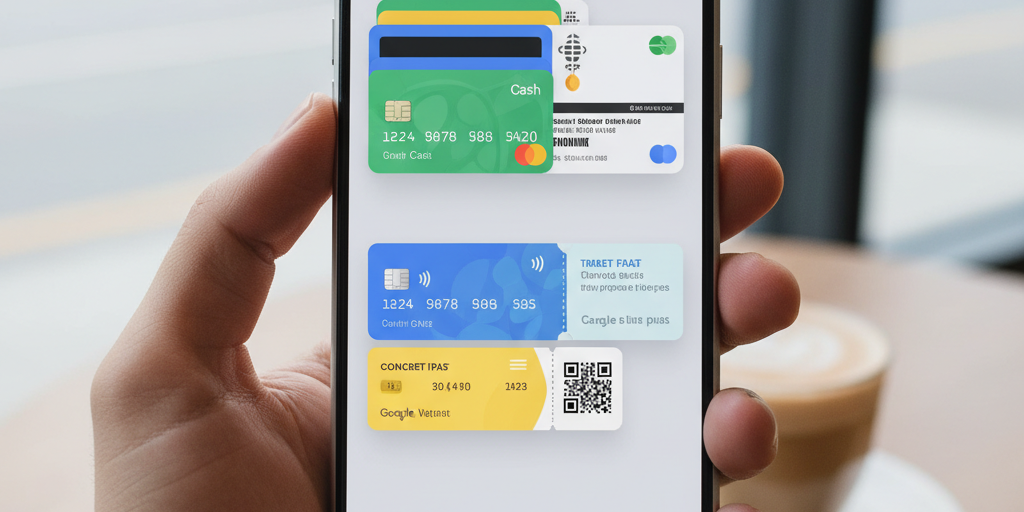
One of the most critical features to evaluate is whether your chosen provider supports Apple Wallet and Google Wallet integration. Modern professionals have increasingly replaced their physical wallets with digital alternatives, making this integration essential for driving adoption within your team. When business cards are accessible directly from the wallet app, employees can share their contact information instantly without opening additional applications or searching through multiple tools.
The convenience factor cannot be overstated. Your team members already carry their smartphones everywhere and regularly use wallet apps for payment cards, boarding passes, and loyalty cards. Adding digital business cards to this familiar interface creates a seamless experience that encourages consistent usage. Employees are significantly more likely to share their digital business cards when they're just one tap away in their wallet, rather than requiring them to remember separate apps or URLs.
Beyond convenience, wallet integration offers practical advantages during networking situations. At conferences, trade shows, or client meetings, professionals can quickly access their business card even when their phone is locked, making the sharing process faster than fumbling with physical cards. The integration also ensures that your team's contact information remains visible and accessible offline, addressing one common concern about digital solutions. When evaluating providers, verify that they offer full wallet pass functionality, including the ability to customize the appearance of the wallet card to match your brand identity.
Automated HR System Integrations
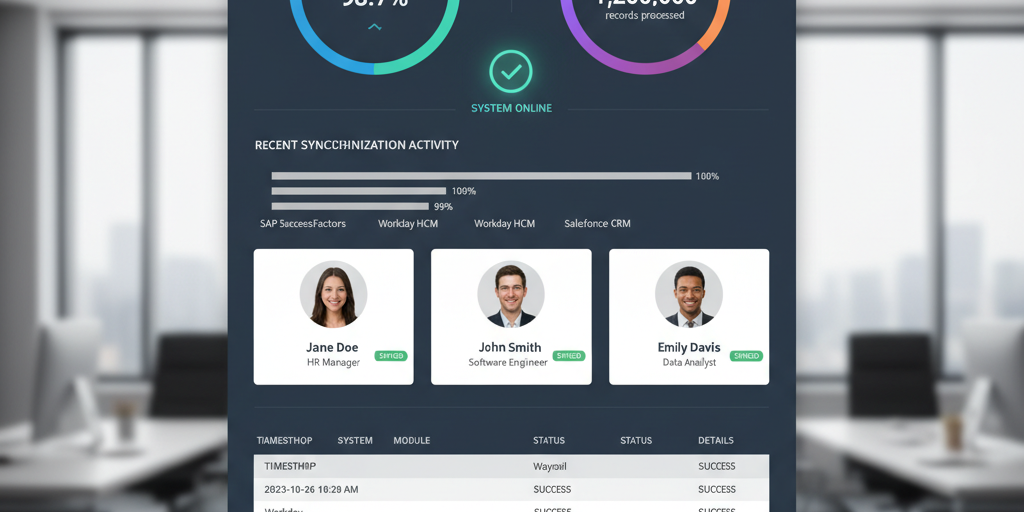
The true power of digital business cards lies in automation, and this capability hinges on robust HR system integrations. When selecting a provider, prioritize platforms that can seamlessly connect with your existing human resources tools, whether that's Microsoft Azure Active Directory, Google Workspace, Workday, BambooHR, or other enterprise HR systems. These integrations eliminate the manual work involved in creating, updating, and deactivating business cards as your team evolves.
Consider the typical employee lifecycle in your organization. When a new team member joins, HR tools like Microsoft Entra ID automatically create their account and populate employee information. With proper integration, your digital business card platform can pull this data automatically, generating a fully branded card for the new hire on their first day. This eliminates the waiting period associated with physical card printing and ensures new employees can begin networking immediately with professional, up-to-date contact information.
Equally important is the automatic update capability. When an employee receives a promotion, changes departments, or updates their contact information, these changes should flow automatically from your HR system to their digital business card. This real-time synchronization ensures that everyone in your organization always shares accurate information, preventing the common problem of outdated physical cards circulating in the market. Finally, when team members leave the organization, their digital business cards should be automatically deactivated, protecting your company from potential security risks and maintaining professional boundaries.
Integration complexity and support varies significantly between providers. Some platforms offer pre-built connectors for major HR systems, while others require custom API development. Assess your technical resources and choose a provider whose integration approach matches your capabilities. Platforms with extensive integration libraries and clear documentation will save your IT team considerable time and reduce implementation friction.
Rich Customization and Brand Consistency
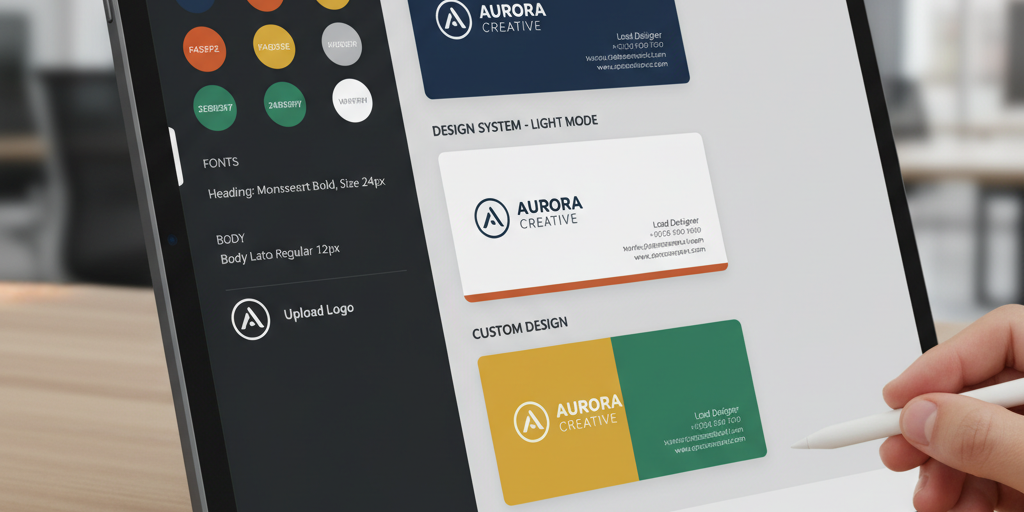
Your digital business card serves as a crucial professional touchpoint, often creating the first impression of your brand in digital networking situations. Therefore, the level of customization offered by your provider directly impacts your brand's perceived professionalism and consistency. When evaluating platforms, look beyond basic color and logo options to understand the depth of customization available for creating truly on-brand experiences.
Premium platforms distinguish themselves by offering advanced customization features that allow you to replicate your brand guidelines precisely. This includes the ability to upload and use your organization's proprietary fonts, rather than being limited to standard web fonts. Typography plays a significant role in brand recognition, and maintaining font consistency across all professional materials, including digital business cards, reinforces brand identity. Additionally, examine whether the provider supports custom color schemes with exact hex values, gradient backgrounds, and branded imagery that matches your corporate identity guidelines.
Design flexibility extends beyond static visual elements to include layout options and interactive components. Can you arrange information fields to match your preferred hierarchy? Does the platform support adding rich media elements like video introductions, company presentations, or portfolio links? Can you create different card templates for various departments or roles within your organization while maintaining overall brand consistency? These questions help identify providers that can accommodate your specific branding requirements rather than forcing you into generic templates.
Consider also the mobile and desktop display optimization. Your digital business cards will be viewed on various devices and screen sizes, so ensure your provider offers responsive design that maintains brand quality across all viewing contexts. Some platforms provide preview tools that let you see exactly how your cards will appear on different devices before deployment, helping you make informed design decisions that preserve your professional image.
Local Support and Service Quality
While digital platforms operate globally, the quality and availability of support services can vary dramatically by region. When investing in a digital business card solution for your organization, evaluate whether your provider offers adequate support resources in your geographic area. Local support becomes particularly valuable during the onboarding process when your team is learning the new system and during critical situations when technical issues could impact business operations.
In-person onboarding support can significantly accelerate your team's adoption of digital business cards. Providers with local representatives can conduct training sessions at your office, customizing the instruction to your specific use cases and industry context. This hands-on approach helps overcome resistance to change and ensures that team members understand not just how to use the platform, but why it benefits their individual networking efforts. Local support teams also better understand regional business practices and can offer relevant advice for maximizing the solution's value in your specific market.
Beyond initial setup, ongoing support accessibility matters for long-term success. Verify what support channels the provider offers in your region, whether that's phone support during your business hours, local language assistance, or regional account managers who understand your market's unique challenges. Some providers offer tiered support levels, with premium packages including dedicated support contacts and faster response times. For larger organizations or those in industries where networking is mission-critical, investing in higher support tiers may prove worthwhile.
Response times and resolution quality should be investigated before committing to a provider. Request references from customers in your region and inquire about their support experiences. How quickly does the provider respond to technical issues? Are support representatives knowledgeable and empowered to resolve problems, or do issues frequently escalate through multiple tiers? Understanding the provider's track record in your region helps you anticipate the level of service you'll receive when challenges arise.
GDPR Compliance and Privacy Protection
As digital business cards involve collecting, storing, and potentially sharing employee and partner data, privacy compliance represents a non-negotiable requirement. Organizations operating in or conducting business with the European Union must ensure their provider maintains GDPR compliance, while companies in other regions should evaluate adherence to relevant privacy regulations such as CCPA, PIPEDA, or local data protection laws.
GDPR compliance encompasses multiple technical and operational requirements that your provider must fulfill. This includes obtaining proper consent for data processing, providing transparent privacy notices, enabling data portability, and honoring data deletion requests. When evaluating providers, request their data processing agreements and privacy policies to understand exactly how they handle your organization's data. Legitimate providers will readily share this information and should be able to explain their compliance measures in clear, non-technical language.
Data residency represents another important consideration for privacy-conscious organizations. Some providers store data exclusively in specific geographic regions, while others utilize distributed cloud infrastructure. Understanding where your team's information is physically stored and processed helps you assess compliance with local data sovereignty requirements. For organizations in highly regulated industries such as healthcare, finance, or government, data location may be subject to strict regulatory requirements that limit which providers you can use.
Transparency in privacy practices separates trustworthy providers from those with questionable data handling. Your provider should clearly communicate what data they collect, how they use it, who they share it with, and how long they retain it. They should also provide regular updates about any changes to privacy policies or data handling practices. Look for providers who undergo regular third-party privacy audits and publicly share the results, demonstrating their commitment to maintaining high privacy standards beyond minimum legal requirements.
Information Security and Certification Standards
Beyond privacy compliance, robust information security protections safeguard your organization against data breaches, unauthorized access, and cyber threats. When evaluating digital business card providers, prioritize those holding recognized security certifications that demonstrate adherence to industry-leading security practices. The ISO 27001 certification represents the international standard for information security management systems and provides strong assurance that a provider implements comprehensive security controls.
ISO 27001 certification requires organizations to establish, implement, maintain, and continually improve an information security management system covering people, processes, and technology. Certified providers undergo rigorous third-party audits verifying that they maintain appropriate security controls for risk assessment, access management, encryption, incident response, and business continuity. When a provider holds current ISO 27001 certification, you can trust that they've demonstrated a systematic approach to protecting your data rather than implementing ad-hoc security measures.
SOC 2 Type II compliance offers additional security assurance, particularly relevant for software-as-a-service providers. This American Institute of CPAs standard evaluates how well providers protect customer data based on five trust principles: security, availability, processing integrity, confidentiality, and privacy. Unlike SOC 2 Type I, which assesses security controls at a point in time, Type II certification requires demonstrating that controls operate effectively over an extended period, typically six months or longer. Providers holding both ISO 27001 and SOC 2 Type II certifications offer the highest level of security assurance available in the industry.
Don't hesitate to ask potential providers detailed questions about their security practices. How do they encrypt data in transit and at rest? What authentication methods do they support, including multi-factor authentication? How do they manage access controls and ensure that employees only access data necessary for their roles? What incident response procedures are in place if a security breach occurs? How frequently do they conduct security audits and penetration testing? Reputable providers welcome these questions and provide transparent, detailed answers demonstrating their security maturity.
Mobile Application Availability
While web-based access to digital business cards works adequately, dedicated mobile applications provide enhanced functionality and user experience that can significantly improve adoption and usage rates. When evaluating providers, consider whether they offer native mobile apps for both iOS and Android platforms, as most professionals prefer using apps rather than mobile web browsers for frequently accessed tools.
Mobile apps deliver several advantages over web-based alternatives. They provide faster load times, more intuitive touch-based interfaces optimized for smaller screens, and the ability to access certain features offline. Apps can also integrate more deeply with phone operating systems, enabling features like home screen widgets, push notifications for important updates, and seamless access to device features such as the camera for QR code scanning. For your team members who primarily use their smartphones for networking activities, a well-designed mobile app dramatically improves the user experience.
App quality varies significantly between providers, so evaluate the actual user experience before committing. Download the provider's mobile app and test its functionality, interface design, and performance. Is the app regularly updated with new features and bug fixes, or has it been neglected? Do user reviews in app stores indicate satisfaction or frustration? Does the app offer key features like easy card editing, contact management, analytics viewing, and lead capture, or does it simply provide basic card viewing functionality? The quality and comprehensiveness of the mobile experience often reflects the provider's overall investment in product development and customer experience.
Consider also whether the mobile app requires an internet connection for core functions or works offline. Networking often occurs in environments with poor connectivity, such as exhibition halls, parking garages, or during flights. Providers whose mobile apps cache card data locally and sync changes when connectivity returns offer more reliability for your team members who network in challenging connectivity environments.
Individual Setup and Customization Capabilities
Organizations vary widely in their processes, workflows, and requirements, and your digital business card platform should accommodate this diversity rather than forcing you into rigid, one-size-all approaches. When evaluating providers, assess their flexibility in supporting individual setups tailored to your organization's specific needs and their track record in delivering customized solutions for clients with unique requirements.
Standard features satisfy most basic needs, but true platform flexibility reveals itself in edge cases and special requirements. Can the provider accommodate non-standard information fields specific to your industry? For example, professionals in certain fields need to display licenses, certifications, or regulatory information on their cards. Real estate agents might require property listing integration, while healthcare providers need to include multiple practice locations and specializations. Providers experienced with diverse client needs can typically accommodate these specialized requirements through configuration options or custom development.
Workflow customization represents another dimension of individual setup capabilities. Some organizations need approval workflows before cards go live, while others prefer enabling team members to make immediate updates. Companies might require different information governance rules for various departments or employee levels. For instance, executive leadership might need additional security protections or different sharing options compared to general staff. Providers offering robust permission and workflow management systems can adapt to these varied requirements, ensuring the platform supports your organizational structure rather than forcing you to change your processes.
Enterprise clients with complex needs should inquire about the provider's custom development capabilities and willingness to build bespoke features. While most requirements can be met through configuration of existing features, occasionally organizations need genuinely unique functionality. Providers with in-house development teams and a history of successful custom implementations offer the flexibility needed for truly individualized solutions. However, balance this desire for customization against the potential costs, implementation timelines, and ongoing maintenance implications of highly customized systems.
Transparent Pricing Models
Pricing transparency varies dramatically across digital business card providers, with some offering clear, publicly available pricing while others require contacting sales representatives for quotes. For most organizations, providers with transparent pricing offer significant advantages in terms of budget planning, evaluation efficiency, and trust in the vendor relationship.
When pricing information is readily available on a provider's website, you can quickly assess whether their solution fits within your budget constraints before investing time in demos and sales discussions. Transparent pricing enables you to compare multiple providers efficiently, understanding not just base subscription costs but also how pricing scales with user count, feature tiers, and usage levels. This clarity helps you project total cost of ownership accurately and secure appropriate budget approval within your organization.
Hidden fees represent a common frustration with providers who don't publish pricing. Companies may discover additional charges for essential features like wallet pass generation, API access, custom integrations, or support services only after engaging with sales teams. Some providers charge separately for onboarding, training, or implementation services that should reasonably be included in subscription pricing. Others have complex tiered structures where critical features are only available in expensive enterprise plans, rendering lower-tier offerings inadequate for real business use. Transparent pricing eliminates these surprises, allowing you to make informed decisions based on complete cost information.
Beyond base pricing, understand the provider's approach to price increases and contract terms. Do they offer annual contracts with locked pricing, or can rates increase during your commitment period? What happens when you add or remove users mid-contract? Are there penalties for early termination if the solution doesn't meet your needs? Providers confident in their value proposition typically offer reasonable, customer-friendly contract terms rather than trapping clients in restrictive agreements.
White-Labeling and Domain Customization
For larger organizations or those with strong brand identity requirements, white-labeling capabilities enable you to present digital business cards as a seamless extension of your brand rather than obviously third-party solutions. When evaluating providers, investigate their white-labeling options, including custom domain support and platform branding customization.
Custom domain functionality allows your digital business cards to use URLs under your company's domain rather than the provider's generic subdomain. For example, instead of cards appearing at provider-name.com/your-company/employee-name, they would appear at cards.yourcompany.com/employee-name. This seemingly small detail significantly impacts brand perception and trust. Recipients viewing cards on your branded domain immediately recognize them as official company materials rather than third-party services, enhancing credibility and professionalism.
Platform white-labeling extends beyond URLs to encompass the entire user interface. Full white-label solutions allow you to replace the provider's branding throughout the platform with your own company name, logo, and design elements. This creates a cohesive brand experience for your team members managing their cards and for external users interacting with shared cards. For organizations that prioritize brand consistency across all customer touchpoints, comprehensive white-labeling justifies the typically higher cost compared to standard solutions.
Some providers offer different levels of white-labeling, from basic custom domains to complete platform rebranding including mobile apps and email communications. Assess your actual needs before paying for capabilities you won't use. Smaller organizations may find custom domains sufficient, while large enterprises with strict brand guidelines might require full platform white-labeling. Additionally, consider the technical requirements for implementing custom domains, including DNS configuration and SSL certificate management, ensuring your IT team has the necessary skills or that the provider offers adequate implementation support.
Mobile-First Experience and Cross-Platform Compatibility
In 2026, professionals conduct an increasing proportion of their networking activities on mobile devices, making mobile-first design essential rather than optional. When evaluating digital business card providers, prioritize platforms designed primarily for mobile use, with desktop experiences serving as complementary interfaces rather than the primary focus.
A truly mobile-first platform optimizes every aspect of the user experience for smartphones. Card designs render beautifully on small screens without requiring zooming or horizontal scrolling. Sharing mechanisms leverage mobile-native features like tap-to-share NFC, QR code generation and scanning, and integration with messaging apps. The card editing interface works smoothly on touchscreens with appropriately sized buttons, intuitive gestures, and mobile-optimized input methods. When a provider prioritizes mobile experience, your team members can complete all essential tasks efficiently on their phones without needing to switch to desktop computers.
Cross-platform compatibility ensures consistent experiences regardless of which device your team members use or which devices recipients use to view shared cards. Cards should display correctly on iOS, Android, Windows, and macOS devices, across different browsers, and on various screen sizes from smartphones to tablets to desktop monitors. Information should be formatted responsively, adapting intelligently to available screen space while maintaining readability and visual hierarchy. Links and buttons should be appropriately sized for the device, with touch targets large enough for accurate tapping on mobile while remaining visually appropriate on larger screens.
Test the provider's cross-platform compatibility thoroughly before committing. Create test cards and view them on various devices you and your team commonly use. Share test cards with colleagues using different devices and browsers, verifying that all features function correctly regardless of technical environment. Pay particular attention to special features like video integration, interactive elements, and form submissions, ensuring they work seamlessly across all platforms your organization and prospects might use.
Making Your Final Decision
Selecting the right digital business card provider requires balancing multiple factors including technical capabilities, security and compliance standards, customization flexibility, support quality, and cost. No single provider excels in every dimension, so prioritize the factors most critical to your organization's specific needs and circumstances.
Create a structured evaluation process to assess potential providers objectively. Develop a requirements checklist covering all the factors discussed in this guide, weighting each based on its importance to your organization. Request demonstrations from shortlisted providers, preparing specific scenarios and use cases to evaluate during demos rather than accepting generic presentations. Involve stakeholders from multiple departments including IT, HR, marketing, and actual end users who will rely on the solution daily.
Trial periods offer valuable opportunities to validate providers' claims before making long-term commitments. Many providers offer free trials or pilot programs allowing you to test the platform with a small user group. Use these trials to evaluate not just feature functionality but also aspects like adoption rates, user satisfaction, support responsiveness, and integration reliability. Gather feedback from pilot users about their experience, paying particular attention to any friction points or limitations that might hinder broader rollout.
Finally, recognize that choosing a digital business card provider represents an important but not permanent decision. While switching providers involves some effort, the relative simplicity of digital business cards compared to more complex enterprise systems means migration remains feasible if your initial choice proves inadequate. Start with a provider that meets your current needs while offering growth potential for anticipated future requirements, but don't let fear of future switching prevent you from moving forward with a solution that delivers value today. The networking advantages and operational efficiencies of digital business cards far outweigh the modest risk of needing to change providers as your needs evolve.
Understanding these key selection criteria empowers you to choose a digital business card provider that enhances your organization's networking capabilities, strengthens brand consistency, and delivers measurable value through automation and modern user experiences. By thoroughly evaluating potential providers against these factors, you'll implement a solution that your team embraces enthusiastically and that contributes meaningfully to your professional networking success.