The Expert Guide to Digital Biz Card Success in 2026
15 minutes
17th of January 2026
In this article:
- The Evolution of Digital Business Cards: Why 2026 Is a Turning Point
- Essential Features of a High-Impact Digital Biz Card in 2026
- Step-by-Step Guide: Creating and Launching Your Digital Biz Card Strategy
- Maximizing ROI: Integrating Digital Biz Cards with Your Business Ecosystem
- Avoiding Common Pitfalls and Ensuring Long-Term Success
- The Future of Digital Biz Cards: Trends and Innovations for 2026 and Beyond
Imagine a world where sharing your contact information is as simple as tapping your phone, making every connection memorable and effortless. In 2026, the digital biz card is redefining how professionals network, offering a smarter, faster, and more eco-friendly way to connect.
This expert guide will show you how to master digital biz card strategies, from selecting the ideal platform to maximizing your ROI. Get ready to uncover the evolution of networking tools, must-have features, integration tips, and future trends. With these proven steps, you will thrive in the digital era of professional connections.
The Evolution of Digital Business Cards: Why 2026 Is a Turning Point
The professional world is experiencing a profound transformation as the digital biz card becomes a cornerstone of modern networking. In just a few years, exchanging a business card has shifted from a paper ritual to a frictionless, tech-driven experience. This evolution is not just a matter of convenience—it signals a broader change in how we connect, share, and build relationships in a digital-first era.

The Decline of Paper and Rise of Digital Networking
The decline of traditional paper business cards has accelerated rapidly, fueled by both environmental urgency and a digital revolution in networking. By 2025, over 80% of professionals are expected to use digital networking tools, according to industry data. This shift is not just anecdotal—major conferences and trade shows are now prioritizing digital-only networking options to reduce waste and streamline contact exchanges.
Environmental concerns play a significant role in this trend. Digital biz card solutions help organizations cut down on paper usage and lower their carbon footprint. The COVID-19 pandemic further hastened this move, making contactless exchanges essential and pushing digital cards into the mainstream.
The adoption rate is impressive across industries. For more detailed statistics on how digital business cards are reshaping networking, see Digital Business Card Adoption Statistics. Companies are seeing measurable benefits, including improved engagement and seamless follow-ups, as the digital biz card becomes the new standard for professional connections.
Key Technological Advancements Shaping Digital Biz Cards
Technology is at the heart of the digital biz card revolution. Near-field communication (NFC), QR codes, and wallet integrations with Apple and Google Wallet have made sharing contact details instantaneous and effortless. These advances allow professionals to exchange information with a simple tap or scan, eliminating the need for physical cards or manual entry.
Artificial intelligence is also transforming the digital biz card experience. AI-powered lead capture tools automatically recognize and sort contact data, while smart automation enables timely follow-ups. Integration with CRM, HR, and marketing platforms provides real-time syncing, ensuring that networking is not just fast, but also deeply integrated into business workflows.
For example, modern business card scanners powered by AI can digitize paper cards instantly, feeding data directly into digital systems. These innovations make the digital biz card more than just a replacement for paper—it is now a powerful tool for building and managing professional relationships at scale.
Changing User Expectations and Business Needs
As digital networking becomes the norm, user expectations are evolving. Professionals now demand real-time updates, deep personalization, and actionable analytics from every digital biz card they use. The rise of remote and hybrid work has reinforced the need for solutions that bridge both in-person and virtual interactions.
Businesses are also recognizing the strategic value of digital biz cards. With features like dynamic content, personalized layouts, and data-driven insights, organizations can measure engagement and tailor their approach to different audiences. Industry benchmarks show that digital cards achieve up to 38% higher engagement compared to their traditional counterparts.
In 2026, the digital biz card is not just a contact-sharing tool—it is a gateway to smarter, more meaningful, and measurable professional connections.
Essential Features of a High-Impact Digital Biz Card in 2026
In 2026, the digital biz card is more than just a virtual replacement for paper. It is a dynamic, interactive tool designed to maximize your professional impact. To stand out in a competitive landscape, your digital biz card must deliver on six essential features that drive engagement, capture leads, and ensure brand consistency.
Customization and Branding
A high-impact digital biz card should enable full control over branding. This means you can showcase your company logo, select custom fonts, and apply brand colors to ensure every interaction is on-brand.
Interactive layouts, such as photo or video backgrounds, add a personal touch and make your card memorable. For example, companies that invest in personalized digital biz card designs report up to 30 percent more brand recall.
Consider these customization essentials:
- Company logos and color schemes
- Custom fonts for brand consistency
- Interactive backgrounds and layouts
A digital biz card that reflects your unique identity helps you leave a lasting impression at every touchpoint.
Rich Media and Interactive Content
Your digital biz card should go beyond basic text. Embedding rich media such as videos, product demos, and downloadable files creates a compelling experience for recipients.
Interactive elements like lead forms, scheduling links, and social media integrations make it easy for contacts to connect and engage with your brand. Sales teams, for example, use product videos within their digital biz card to boost conversion rates.
Key interactive features include:
- Embedded video and audio content
- Downloadable files (brochures, presentations)
- Lead forms and instant scheduling
Rich media transforms your digital biz card from a static asset into an active networking tool.
Sharing Capabilities and Accessibility
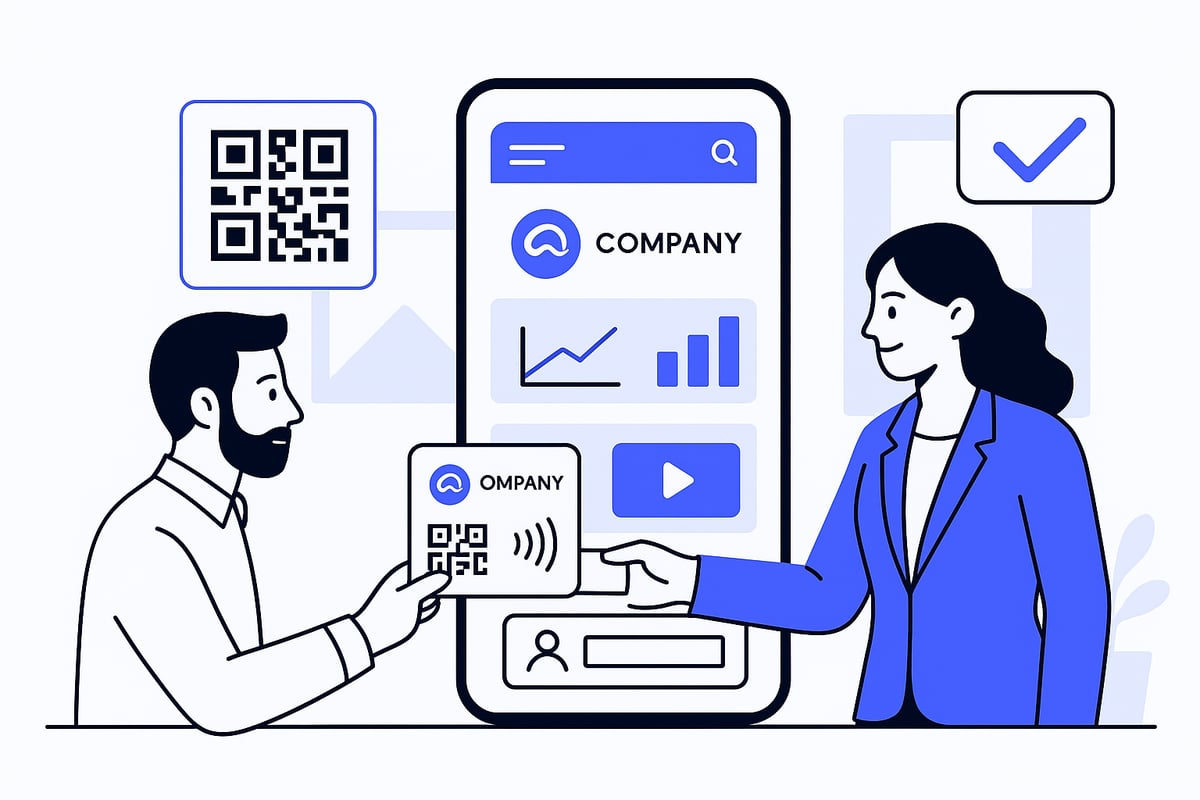
A digital biz card must be incredibly easy to share. Modern cards offer multiple distribution methods, including QR codes, NFC tap, personal links, and seamless integration with email signatures.
Wallet compatibility for Apple and Google Wallet ensures your digital biz card is always accessible, even on the go. Importantly, recipients should not need to download an app or create an account to access your card.
Effective sharing options:
- QR codes and NFC tap for instant exchange
- Personal links for virtual meetings
- Email signature and wallet integration
Accessibility ensures your digital biz card can be shared with anyone, anywhere, at any time.
Lead Capture and CRM Integration
Lead capture is where your digital biz card delivers measurable business value. Built-in lead forms and AI-powered data capture make it easy to collect contacts and sync them directly with your CRM.
Direct integration with platforms like Salesforce or HubSpot enables real-time follow-up, increasing the likelihood of successful connections. According to Benefits of CRM Integration with Digital Cards, organizations see a 630 percent increase in follow-ups when digital biz card data is automatically synced with their CRM.
Key integration features:
- AI-powered lead capture forms
- Instant CRM synchronization
- Automated follow-up workflows
This level of integration transforms your digital biz card into a powerful lead-generation engine.
Security, Compliance, and Data Privacy
Security is non-negotiable for any digital biz card. Choose solutions that prioritize GDPR compliance and enable user-controlled information sharing.
Data should be stored on secure servers with end-to-end encryption to protect sensitive contact details. Many European companies now require GDPR-compliant digital biz card platforms to ensure legal and ethical use of personal information.
Essential security features:
- GDPR and privacy law compliance
- User-controlled sharing settings
- Encrypted data storage and transmission
Prioritizing privacy builds trust and safeguards your professional relationships.
Analytics and Engagement Tracking
A digital biz card should offer robust analytics to track how and when your card is shared, viewed, and followed up on. Real-time statistics help you measure engagement and ROI for all your networking activities.
Marketing teams use these insights to refine campaigns and adjust messaging based on what works best. For example, A/B testing different digital biz card designs can reveal which layouts drive more engagement.
Analytics features to track:
- Number of shares and views
- Follow-up and conversion rates
- ROI calculations for networking efforts
Data-driven insights empower you to optimize your digital biz card strategy for ongoing success.
Step-by-Step Guide: Creating and Launching Your Digital Biz Card Strategy
Building a successful digital biz card strategy in 2026 requires a thoughtful, systematic approach. By following these six essential steps, you can transform your networking and ensure lasting results.
Step 1: Define Your Networking Goals and Audience
Begin by clarifying why you need a digital biz card and who you want to connect with. Are you aiming to generate sales leads, streamline HR onboarding, boost your personal brand, or maximize event networking?
Map out your audience personas. Consider their industries, roles, and preferred contact methods. For example, sales professionals may prioritize instant lead capture, while HR teams value easy distribution across a workforce.
Write down your key objectives. Do you want to increase follow-up rates, improve engagement, or track ROI? Clearly defined goals will guide your digital biz card choices and help you measure success.
Step 2: Select the Right Digital Biz Card Platform
Choosing the best platform is critical for scalability and efficiency. Evaluate providers based on customization, integrations, analytics, user experience, and compliance.
Use this checklist when comparing options:
| Feature | Must-Have | Nice-to-Have |
|---|---|---|
| Custom branding | ✔ | - |
| CRM integration | ✔ | - |
| NFC/QR sharing | ✔ | - |
| Analytics dashboard | ✔ | - |
| Wallet compatibility | ✔ | - |
| AI automation | - | ✔ |
Research user reviews on G2 or Capterra and consider market trends. According to Digital Business Card Market Growth Projections, digital biz card adoption is accelerating, making it vital to select a future-proof solution for your needs.
Step 3: Design and Personalize Your Card
Your digital biz card should reflect your brand identity and engage recipients instantly. Upload your company logo, select custom fonts and colors, and add interactive elements like video backgrounds or product images.
Keep layouts clean and information clear. Prioritize essential details, such as name, role, and contact info. Include compelling calls to action, like scheduling links or downloadable resources.
Personalized digital biz cards see up to 50% more engagement. Test different designs to discover what resonates with your audience. Remember, consistency builds brand recall and trust.
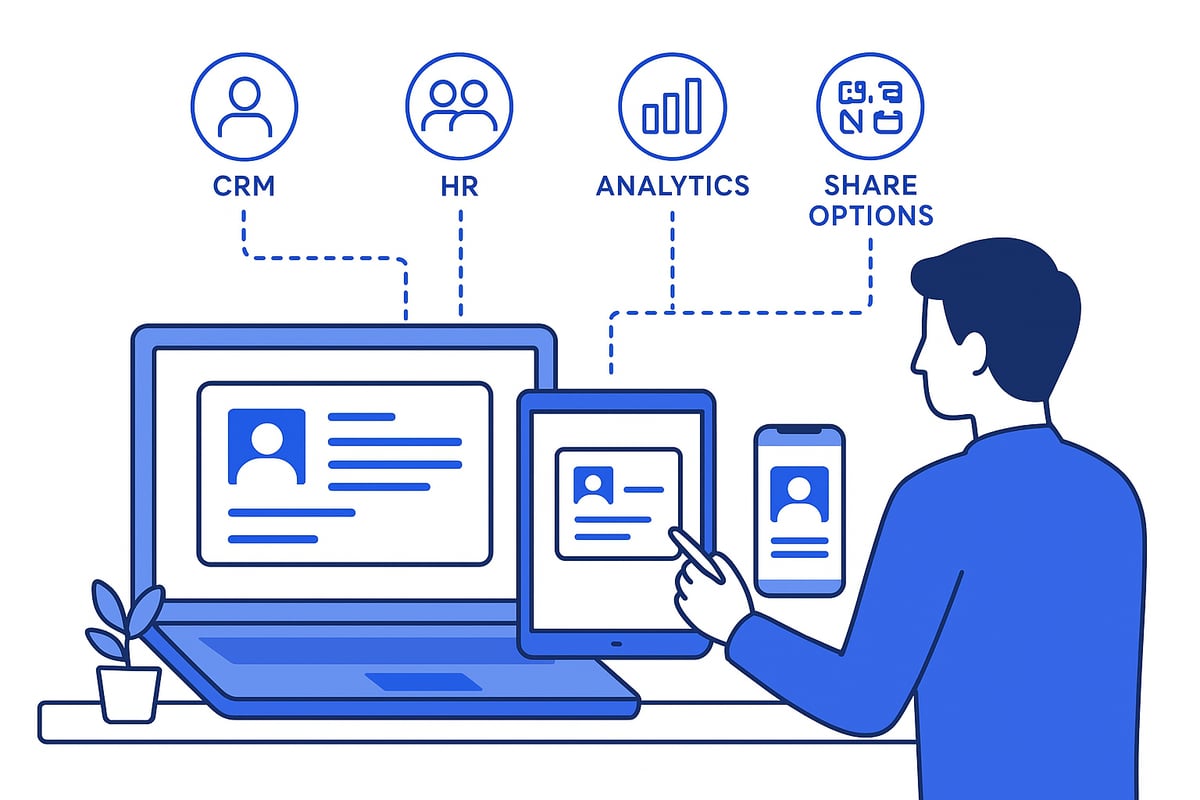
Step 4: Integrate with CRM, HR, and Marketing Tools
Maximize efficiency by connecting your digital biz card platform with core business systems. Set up automated lead capture and contact sync with your CRM, such as Salesforce or HubSpot.
For HR, leverage integrations to distribute cards to new hires or entire teams. Automating this process ensures all employees have up-to-date, branded cards from day one.
Marketing teams can link digital biz cards to campaign landing pages or analytics tools, streamlining lead generation and data tracking. Seamless integration reduces manual effort and improves data accuracy.
Step 5: Share and Distribute Your Digital Biz Card
Make sharing effortless and versatile. Use QR codes, NFC tap, personal URLs, and wallet compatibility for Apple or Google Wallet. Add your digital biz card to email signatures and virtual meeting backgrounds.
At events, print QR codes on badges or banners for quick scanning. For remote networking, send cards via email or chat platforms. The goal is to make it as easy as possible for contacts to receive and save your information.
Train your team on best sharing practices. Consistent distribution increases brand exposure and ensures every interaction is professional and memorable.
Step 6: Track Performance and Optimize
Monitor your digital biz card’s impact using built-in analytics. Track shares, views, leads captured, and follow-up rates. Regularly review these metrics to pinpoint what’s working and where to improve.
A/B test different card designs, calls to action, and sharing methods. Use data to refine your strategy and boost engagement. For example, if a video introduction increases response rates, incorporate it across all cards.
Optimization is ongoing. By measuring and iterating, your digital biz card strategy will evolve alongside your business needs and networking trends. Keep your objectives clear and let analytics guide your next moves for even greater success.
Maximizing ROI: Integrating Digital Biz Cards with Your Business Ecosystem
Integrating your digital biz card strategy with core business tools is essential for maximizing ROI in 2026. As the digital biz card evolves, its true value emerges when it becomes a seamless part of your sales, marketing, HR, and event workflows. By leveraging these integrations, organizations unlock faster follow-ups, richer analytics, and a measurable boost in networking outcomes.
Enhancing Sales and Marketing Workflows
Sales and marketing teams benefit significantly when their digital biz card is directly linked to CRM systems and outreach platforms. Automatic lead capture ensures no opportunity is missed, while real-time syncing means every interaction is tracked and actionable. Teams can embed product demos, schedule meetings, and personalize follow-ups—all from one digital biz card.
Key benefits include:
- Seamless lead transfer to CRM for instant nurturing
- Click-to-schedule meetings directly from the card
- Embedded product videos to boost conversions
Companies using integrated digital biz card solutions report up to 20 percent faster sales cycles. This efficiency is driven by instant data flow, eliminating manual entry and reducing response times, making every touchpoint more impactful.
Empowering HR and Team Management
Human Resources departments are leveraging digital biz card platforms for streamlined team management and brand consistency. Bulk creation tools allow HR to generate on-brand cards for every new employee, ensuring accurate contact details and unified company imagery.
Notable advantages:
- Centralized updates for all staff cards
- Easy onboarding of new hires with templated cards
- Consistent branding across distributed teams
By using a digital biz card solution, HR can automate updates, maintain compliance, and sharpen the company's professional image. These improvements not only save administrative time but also enhance internal and external communication.
Leveraging Digital Cards for Events and Conferences
Events and conferences are prime environments for digital biz card adoption. Organizers and attendees benefit from contactless, instant information exchange, while marketing teams gain real-time analytics on engagement. Providing branded digital biz card access to all participants ensures seamless networking and measurable lead capture.
Additionally, adopting a digital biz card approach aligns with sustainability goals. According to the Environmental Impact of Digital Business Cards, shifting away from paper cards significantly reduces waste and carbon footprint. This not only appeals to eco-conscious stakeholders but also demonstrates organizational responsibility at scale.
Spreadly: The Modern Solution for Digital Biz Card Success
Spreadly stands out as a comprehensive digital biz card platform for individuals, teams, and enterprises. With instant card creation, robust customization, and no need for an app or designer, it empowers users to share their digital biz card via QR, NFC, wallet, email signature, or personal link.
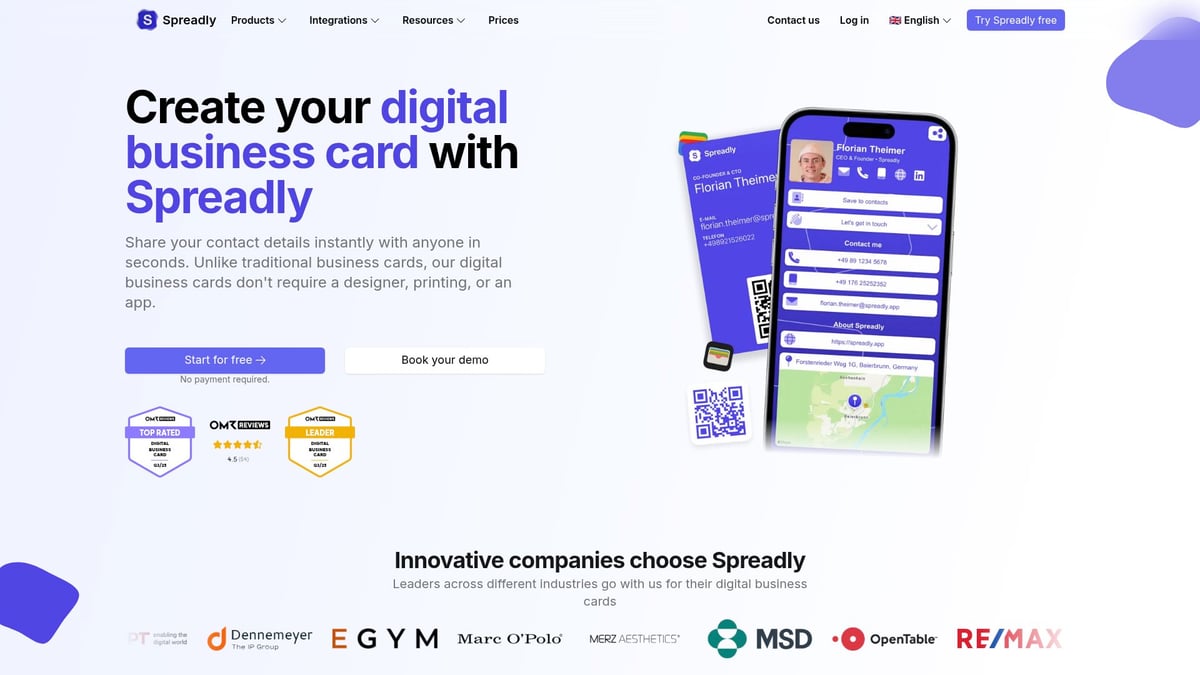
Key features include:
- Built-in lead capture and CRM/HR integrations
- Real-time analytics and GDPR compliance
- Used by leading organizations globally
With Spreadly, users experience 38 percent more engagement and 630 percent more follow-ups, translating directly into measurable ROI. The platform’s scalability and focus on security make it an ideal choice for organizations seeking a future-proof digital biz card solution.
Avoiding Common Pitfalls and Ensuring Long-Term Success
Adopting a digital biz card strategy can transform networking, but long-term success depends on avoiding common traps. By focusing on best practices and continuous improvement, you ensure your digital biz card investment delivers sustained value.
Mistakes to Avoid When Adopting Digital Biz Cards
Launching a digital biz card initiative without a clear plan can lead to costly errors. Avoid these common pitfalls:
- Overcomplicating the card design, which can confuse recipients.
- Neglecting mobile optimization, making cards hard to access on smartphones.
- Failing to integrate the digital biz card with CRM or HR systems, resulting in lost contacts.
- Ignoring security, privacy, and compliance requirements.
For example, some organizations experience data breaches due to poorly secured digital biz card platforms. Always choose solutions with robust security measures and compliance certifications.
Ensuring Team Adoption and Consistent Usage
Team-wide adoption is crucial for digital biz card success. Ensure every employee understands the benefits and proper usage.
- Provide thorough training and onboarding.
- Use centralized management tools for easy updates.
- Regularly update digital biz card templates to keep branding consistent.
- Motivate adoption with analytics dashboards or gamification.
When employees see the impact of their digital biz card, they are more likely to use it consistently and properly.
Maintaining Relevance and Up-to-Date Information
A digital biz card only works if the information is current. Outdated details can lead to missed opportunities and reduced networking effectiveness.
- Schedule regular reviews of contact details and branding.
- Use analytics to identify which parts of your digital biz card need improvement.
- Remember, outdated contact info can cause a 25% drop in networking effectiveness.
Continuous updates ensure your digital biz card always reflects your latest achievements and contact methods.
Measuring and Communicating ROI
Tracking results is essential to demonstrate the value of your digital biz card strategy. Set clear KPIs such as engagement rates, lead capture, and conversions.
- Use analytics tools to monitor card performance.
- Report improvements in engagement and follow-ups to stakeholders.
- Conduct quarterly reviews to showcase ROI and identify areas for optimization.
A well-managed digital biz card initiative drives measurable results, supporting business growth and stakeholder confidence.
The Future of Digital Biz Cards: Trends and Innovations for 2026 and Beyond
The digital biz card landscape is evolving rapidly, with new technologies and user demands reshaping how professionals connect. As you look toward 2026 and beyond, understanding these trends will help you stay ahead and make the most of every networking opportunity.
AI and Automation in Networking
Artificial intelligence is redefining how digital biz card platforms operate. Predictive lead scoring uses historical data and behavioral signals to identify the most promising contacts. Automated follow-ups ensure no opportunity slips through the cracks, while smart contact management organizes connections for you.
AI-driven personalization customizes card content based on the recipient's interests or role. These innovations make digital networking more efficient, reducing manual tasks and boosting conversion rates.
Enhanced Interactivity and Immersive Experiences
The future of the digital biz card includes interactive features that engage recipients. AR and VR capabilities allow users to view 3D product demos or immersive company presentations directly from a card. Gamification elements like badges or points can incentivize engagement at events.
Rich media, animated backgrounds, and clickable elements transform static cards into memorable experiences. These advancements help your digital biz card stand out and leave a lasting impression.
Deeper Integrations with Business Tools
Deep integration is a key driver for digital biz card adoption. In 2026, expect real-time synchronization with sales, marketing, HR, and analytics platforms. Open APIs enable custom workflows, letting organizations automate tasks and gather insights efficiently.
| Integration Type | Benefit |
|---|---|
| CRM (Salesforce) | Real-time lead capture |
| HR Tools | Automated onboarding |
| Marketing | Dynamic campaign tracking |
| Analytics | ROI measurement |
A well-integrated digital biz card system ensures that every new contact is actionable and measurable.
Sustainability and Eco-Friendly Networking
Sustainability remains a top priority for businesses. Adopting a digital biz card reduces paper waste and minimizes your organization's carbon footprint. Companies report up to an 80 percent decrease in networking-related emissions after switching from paper cards.
Beyond environmental impact, digital solutions align with corporate social responsibility goals. Promoting green practices also enhances your brand's reputation among customers and partners.
Globalization and Multilingual Support
As business becomes more global, the digital biz card must cater to diverse audiences. Multilingual support ensures smooth networking across borders, while compliance with local data privacy laws protects sensitive information.
Features to look for include:
- Automatic language detection
- Customizable fields for regional formats
- Built-in GDPR and other local compliance tools
A globally accessible digital biz card helps you connect seamlessly with international partners.
Security, Privacy, and Trust Innovations
Security is essential in digital networking. Next-generation encryption protects card data during transmission and storage. Decentralized data storage, such as blockchain, adds another layer of security and transparency.
User consent controls empower individuals to manage their own information. These innovations build trust and ensure your digital biz card complies with evolving regulations.
Evolving User Expectations and Networking Etiquette
Professionals now expect digital-first networking options. Hybrid approaches blend in-person and virtual exchanges, offering flexibility for every situation. Customization for personal and company branding is no longer optional.
According to industry research, 70 percent of professionals anticipate digital networking as the standard by 2027. Adapting your digital biz card strategy to these expectations will keep you relevant and effective in any professional setting.
As you’ve seen throughout this guide, embracing digital business cards in 2026 is the smart move for professionals and teams who want to stand out, stay connected, and streamline every networking touchpoint. With the right tools, you can keep your contact details updated, integrate with your favorite CRMs, and capture leads seamlessly—all while reflecting your brand’s unique identity. If you’re ready to put these proven strategies into action, why not take the next step and try for free? You’ll discover just how easy and impactful modern networking can be.