Electronic Business Card Guide: Your 2026 Success Toolkit
14 minutes
17th of January 2026
In this article:
- Understanding Electronic Business Cards in 2026
- The Strategic Advantages of Electronic Business Cards
- Step-by-Step Guide: Setting Up Your Electronic Business Card
- Best Practices for Maximizing Electronic Business Card Impact
- Integrating Electronic Business Cards with Your Workflow
- Future Trends: The Evolution of Electronic Business Cards
The way professionals connect is changing rapidly, with traditional paper cards expected to nearly disappear by 2026. In their place, the electronic business card is becoming the new standard for networking among professionals, entrepreneurs, and organizations alike.
This shift brings major benefits, including instant sharing, real-time updates, and eco-friendly practices that align with modern digital workflows. Electronic business cards also integrate seamlessly with tools you already use, making networking faster and smarter.
This article will guide you through everything you need to know about electronic business cards in 2026. You will learn what they are, their advantages, how to choose and set up the right solution, best practices, integration strategies, and future trends.
Understanding Electronic Business Cards in 2026
The business landscape in 2026 is defined by seamless digital interactions. The electronic business card is at the center of this transformation, offering a smart, sustainable alternative to the paper cards of the past. As organizations and professionals move toward digital-first networking, understanding the evolution, technology, and features of electronic business cards is essential for staying ahead.

Definition and Core Concepts
An electronic business card is a digital profile that enables you to share your professional information instantly and securely. Unlike traditional paper cards, which are static and prone to being misplaced, and basic digital business cards, which may only provide simple contact info, electronic business cards are interactive, dynamic, and easily updated.
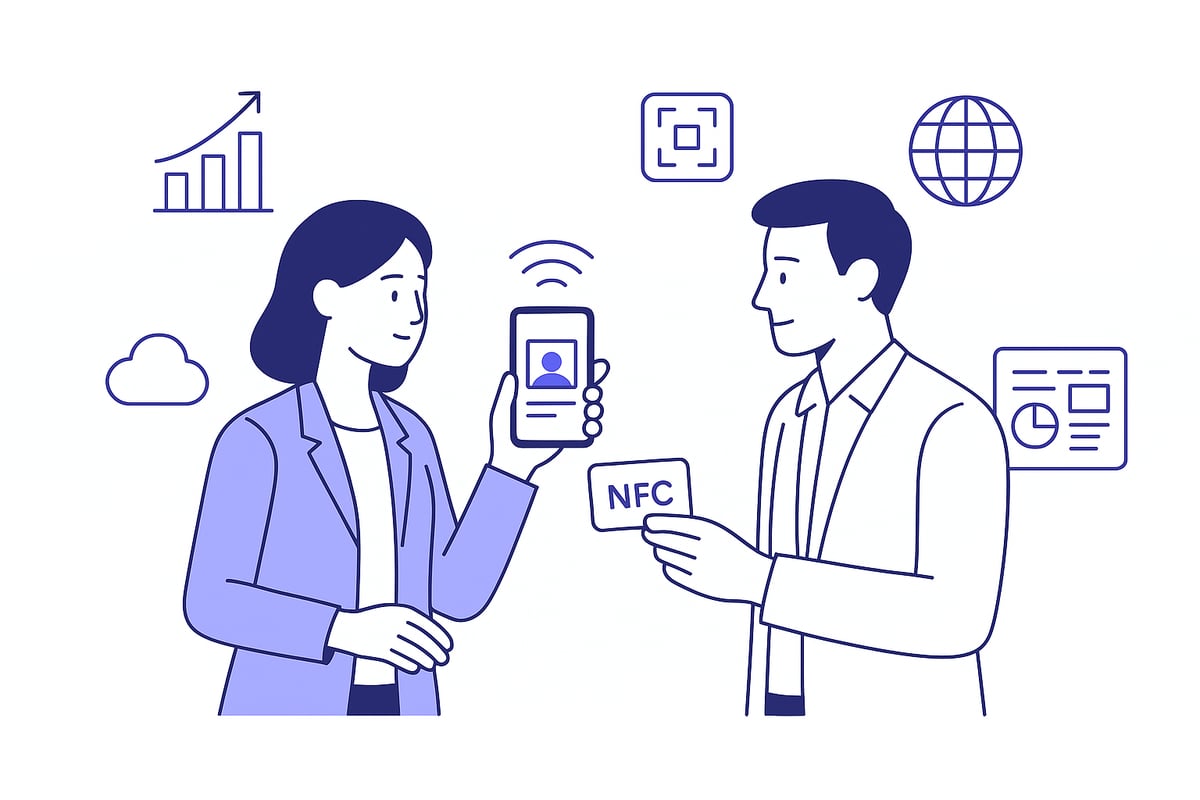
The technology powering electronic business cards includes QR codes, NFC (Near Field Communication), cloud-based profiles, and integration with mobile wallets like Apple Wallet and Google Wallet. By scanning a QR code or tapping an NFC card, contacts can instantly receive your info, saving it directly to their device.
This shift is driven by the rise of virtual and hybrid work environments. In-person networking has evolved, and digital-first connections are now the standard. Professionals expect fast, frictionless ways to exchange details, schedule meetings, and stay updated.
The market reflects this trend. According to Digital Business Card Market Growth, the global digital and electronic business card industry is projected to exceed $400 million in value by 2026, with rapid adoption across sectors.
There are several types of electronic business card solutions:
| Type | Description | Typical Use Case |
|---|---|---|
| App-based | Mobile apps for managing/sharing EBCs | Professionals, teams |
| Web-based | Browser-accessible digital profiles | Cross-device networking |
| Wallet card | Passes for Apple/Google Wallet | Quick sharing, events |
| NFC-enabled cards | Physical cards with NFC chips | Hybrid in-person/virtual |
Industries leading the adoption of electronic business cards include technology, finance, and event management. These sectors value the efficiency, reach, and brand consistency EBCs provide.
Compared to paper cards, electronic business cards reduce costs, eliminate printing delays, and support eco-friendly initiatives. They also offer unmatched convenience, allowing for global sharing without shipping or physical presence.
Key Features and Functionalities
Electronic business cards in 2026 come packed with advanced features designed for modern networking. One major advantage is the ability to update contact information in real time, ensuring your network always has your latest details.
These cards support rich media, allowing users to embed video introductions, project portfolios, social media links, and interactive lead capture forms. This transforms your electronic business card into a dynamic showcase of your professional brand.
Security and privacy are central. Leading solutions include GDPR compliance, customizable user permissions, and robust data encryption, protecting sensitive information during every exchange.
Integration is another core strength. Electronic business cards can connect seamlessly with CRM systems, HR platforms, and calendar tools, automating contact management and streamlining follow-up. Analytics dashboards provide insight into open rates, shares, and engagement, helping you refine your networking strategy.
Accessibility is prioritized through multilingual support, mobile optimization, and offline access, ensuring your electronic business card works for all audiences. Custom branding options let you align your card with company colors, logos, and fonts, reinforcing a consistent, professional image.
With these features, electronic business cards empower professionals to network smarter, faster, and more sustainably in the digital era.
The Strategic Advantages of Electronic Business Cards
The electronic business card is transforming how professionals connect, share, and grow their networks. In today's fast-paced digital landscape, efficiency, brand consistency, and measurable results are essential. These cards offer a toolkit designed for the demands of 2026, providing real advantages over traditional methods.
Networking Efficiency and Reach
The electronic business card enables instant, frictionless sharing of contact details across devices and platforms. With QR codes, NFC taps, and wallet passes, exchanging information takes seconds. This eliminates waiting for print runs or incurring shipping costs, making networking more agile.
Professionals can now share their electronic business card globally, reaching contacts regardless of location. This approach not only saves time but also reduces business card waste. According to Digital Business Card Adoption Statistics, companies have reported significant reductions in physical card use and waste, while seeing follow-up rates increase by up to 630 percent.
| Method | Sharing Speed | Geographic Reach | Cost | Waste |
|---|---|---|---|---|
| Paper Card | Slow | Local | High | High |
| Electronic Business Card | Instant | Global | Low | None |
The electronic business card ensures contacts always have your latest information, further boosting networking outcomes.
Professional Image and Brand Consistency
Presenting a cohesive professional image is easier with an electronic business card. Organizations can deploy custom branding, including logos, company colors, and fonts, across all team cards. This unified look builds trust and recognition, both in-person and online.
With an electronic business card, you can showcase your expertise using video introductions, product demos, and testimonials. These multimedia elements help you stand out at events or virtual meetings, turning a simple introduction into a memorable experience.
Brand consistency is vital for teams and enterprises. The electronic business card guarantees that every representative, from sales to leadership, presents the same high-quality image. This modern approach signals innovation and professionalism to every new contact.
Data-Driven Networking
The electronic business card delivers analytics and automation tools that paper cards simply cannot match. Built-in lead capture forms and CRM syncing automate the follow-up process, reducing manual work and missed opportunities.
With real-time engagement data, you can measure how often your card is viewed, shared, or saved. This allows you to refine your networking strategy and focus on what works. Companies using an electronic business card have reported up to 38 percent higher engagement and improved lead quality.
Integration with scheduling tools further streamlines the process, enabling instant meeting bookings from within the card. The electronic business card is not just a digital alternative—it is a strategic asset for data-driven growth.
Step-by-Step Guide: Setting Up Your Electronic Business Card
Setting up your electronic business card is a strategic process that blends technology with personal branding. Follow these six essential steps to create a professional, modern, and efficient networking tool that will elevate your presence in 2026.
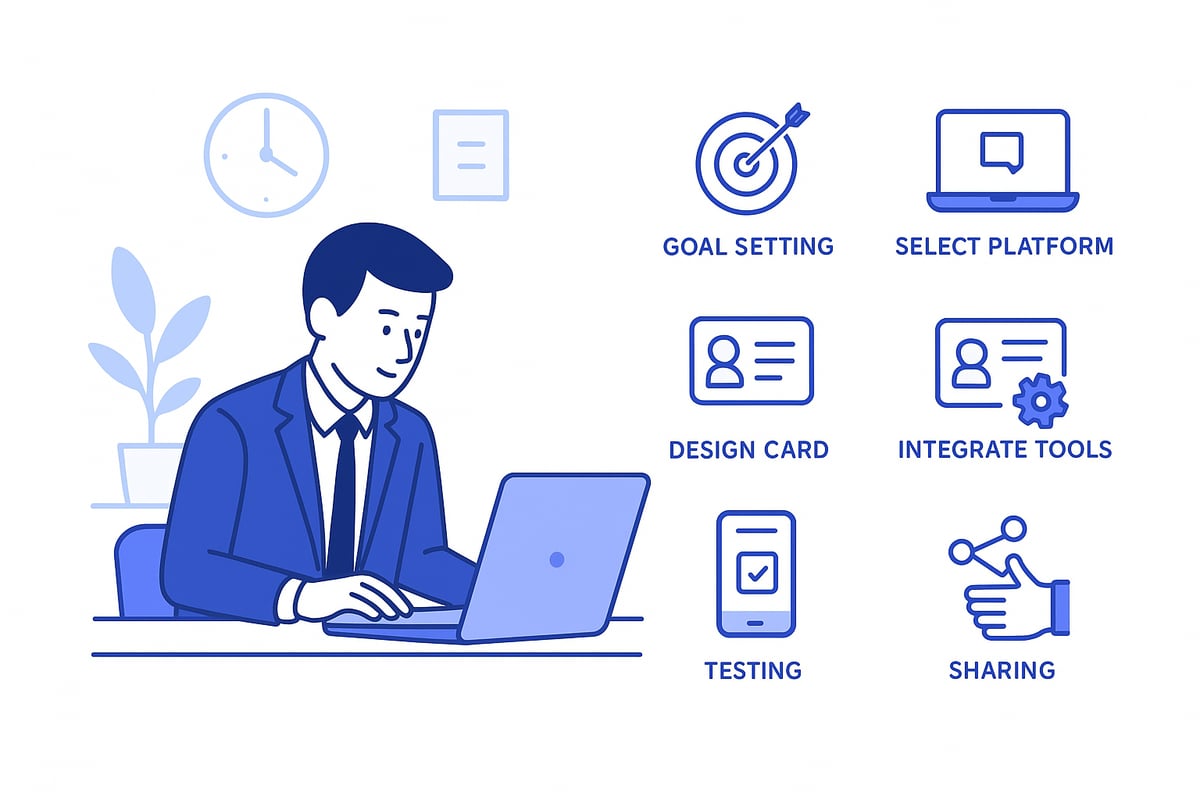
Step 1: Define Your Networking Goals and Requirements
Begin by clarifying your objectives for using an electronic business card. Are you a solo professional seeking to boost personal branding, or a business leader aiming for team-wide consistency?
List your top priorities. These might include:
- Custom branding and design.
- Integration with CRM or HR systems.
- Advanced analytics and engagement tracking.
- Lead capture and scheduling features.
Set specific goals for your electronic business card. For example, do you want to generate leads, streamline contact sharing, or enhance brand awareness? Defining these requirements early ensures your card aligns with your overall networking strategy and supports measurable outcomes.
Step 2: Choose the Right Electronic Business Card Solution
Next, evaluate available platforms to find the best fit for your needs. Key factors include customization options, integration capabilities, ease of use, and compliance with privacy regulations.
Compare leading electronic business card providers by considering:
| Platform | Customization | Integrations | Pricing | Reviews |
|---|---|---|---|---|
| Spreadly | High | CRM, HR | Flexible | Excellent |
| Platform B | Medium | Limited | Moderate | Good |
| Platform C | High | Broad | Premium | Very Good |
Assess whether the solution can scale for teams or entire organizations. Look for robust support, onboarding resources, and demo options. Making an informed choice at this stage will set the tone for a seamless electronic business card experience.
Step 3: Design and Customize Your Card
Design is where your electronic business card truly comes to life. Upload your logo, select brand colors, and choose fonts that match your identity. Opt for layouts that are easy to read and visually appealing.
Enhance your card with multimedia elements:
- Video introductions.
- Interactive portfolios.
- Social media links.
Add interactive features like lead capture forms or scheduling links. Customization not only reflects your professionalism but also makes your electronic business card memorable and engaging for every recipient.
Step 4: Integrate with Your Digital Ecosystem
Seamless integration is crucial for maximizing the value of your electronic business card. Connect your card to CRM, HR, and calendar systems to automate contact management and follow-ups.
Enable wallet integration for Apple or Google Wallet, making your card easily accessible on any device. Activate analytics and tracking features to monitor engagement.
For deeper insights into CRM integration and how it can boost networking efficiency, explore CRM Integration with Digital Business Cards. This can help you automate lead capture and ensure every connection is nurtured effectively.
Step 5: Test and Launch Your Card
Before sharing your electronic business card widely, test it across devices and platforms. Preview how it looks on smartphones, tablets, and desktops to ensure consistency.
Conduct trial shares using QR codes, NFC, and direct links. Request feedback from colleagues or trusted contacts to identify any improvements.
Finalize your electronic business card by making necessary adjustments based on feedback. A thorough testing phase guarantees a polished, professional result that is ready for broad distribution.
Step 6: Share and Promote Your Card
Now, maximize the reach and impact of your electronic business card. Add it to your email signature, social media profiles, and virtual meeting backgrounds. Share the card at events, meetings, and online networking sessions.
Encourage your team to adopt the electronic business card for unified branding. Promote saving your card to digital wallets for easy future access. Consistent sharing and promotion will help you establish a strong digital presence and make a lasting impression on every connection.
Best Practices for Maximizing Electronic Business Card Impact
Mastering the use of your electronic business card requires more than just setting it up. To truly stand out and maximize results, you need to apply proven strategies for personalization, sharing, security, engagement tracking, and team management. These best practices will help you leverage every feature, ensuring your electronic business card drives success in a digital-first networking world.
Personalization and Branding
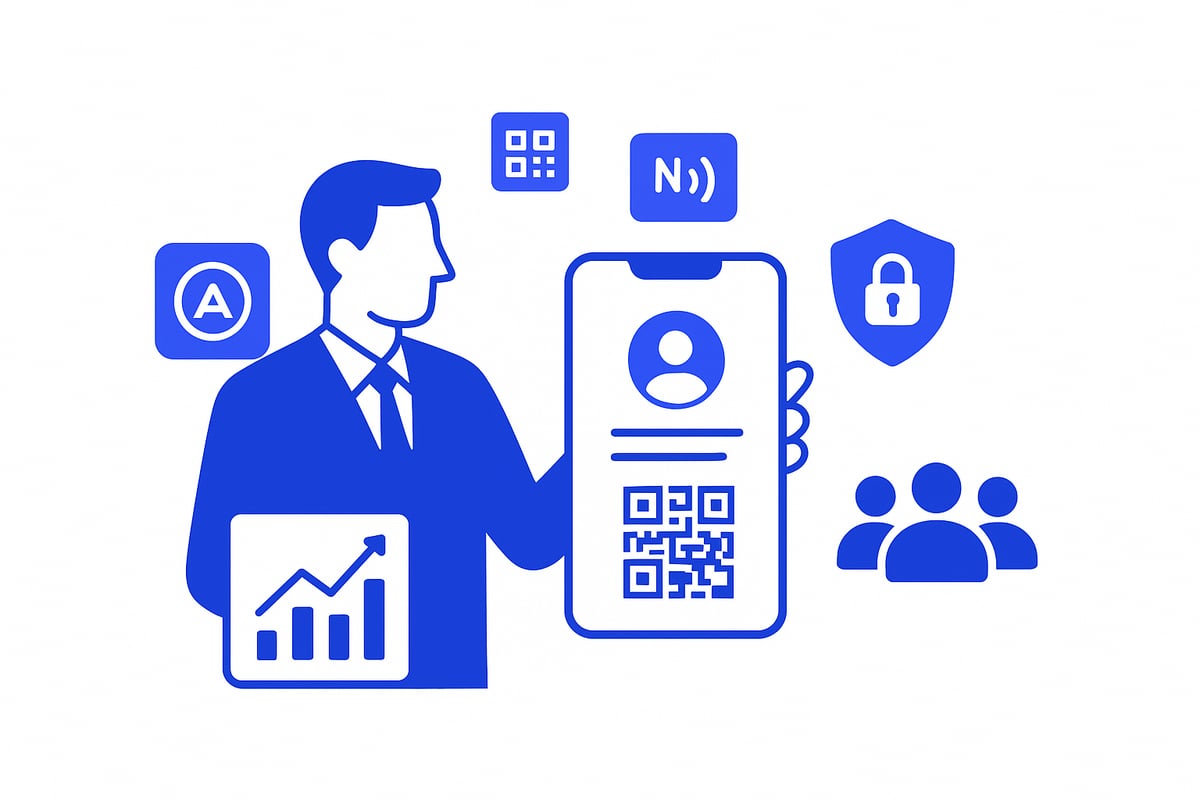
A memorable electronic business card begins with thoughtful design. Align your card with your personal or corporate branding by incorporating logos, color schemes, and consistent fonts. Use high-quality professional photos and, where appropriate, a short video intro to add a human touch.
Regularly refresh your card to reflect new roles, certifications, or offerings. By staying up to date, you ensure contacts always see your most current information. In a rapidly growing market—projected to exceed $400 million by 2026, according to Digital Business Card Market Size—strong branding can help you stand out among competitors using electronic business card solutions.
- Use company colors and logos for instant recognition.
- Add portfolio links and testimonials to showcase expertise.
- Update your card after promotions or major achievements.
Smart Sharing Strategies
Strategic sharing boosts the reach and effectiveness of your electronic business card. Embed your card in email signatures, virtual meeting backgrounds, and social media profiles. This approach ensures your details are accessible in every professional interaction.
Take advantage of QR codes on printed collateral, event badges, and presentations to bridge the gap between physical and digital networking. Encourage your connections to save your card to their digital wallets for quick future access.
- Add your electronic business card to your LinkedIn profile.
- Use NFC-enabled cards for instant in-person sharing.
- Share your card link in event chat rooms or webinars.
Data Security and Privacy
Prioritizing security and privacy is essential when sharing your electronic business card. Implement robust privacy controls to determine which details are visible to different audiences. Choose platforms that offer GDPR compliance, data encryption, and customizable permissions.
Educate yourself and your team on privacy best practices. Regularly review and update permissions to ensure only relevant contacts can access sensitive information on your electronic business card.
- Restrict access to personal phone numbers or addresses.
- Enable two-factor authentication for added security.
- Audit shared cards monthly to maintain compliance.
Measuring and Improving Engagement
Tracking how your electronic business card is received and used is critical for continuous improvement. Use analytics to monitor views, shares, and follow-up rates. Many platforms provide dashboards with actionable metrics to inform your networking strategy.
Experiment with different designs and calls to action through A/B testing. Solicit feedback from trusted contacts to identify areas for enhancement. Use the insights gained to refine your card and maximize its impact.
| Metric | What to Track | Why It Matters |
|---|---|---|
| Views | Number of card opens | Measures reach |
| Shares | How often shared | Indicates engagement |
| Follow-ups | Responses received | Assesses conversion rate |
Team and Enterprise Management
For organizations, managing electronic business card usage at scale ensures consistency and compliance. Centralize card creation and updates to maintain a unified brand image across all employees. Automate onboarding and offboarding through HR integrations, making it easy to keep team details accurate.
Provide training and ongoing support to help staff adopt electronic business card tools effectively. Regular check-ins and best practice sharing will ensure everyone leverages the full capabilities of your solution.
- Use admin dashboards to oversee team cards.
- Set branding templates for company-wide consistency.
- Offer onboarding sessions for new team members.
Integrating Electronic Business Cards with Your Workflow
Integrating your electronic business card into daily workflows is crucial for maximizing its potential. By connecting with the right tools, you streamline networking, automate follow-ups, and keep your professional connections up-to-date.
CRM and Lead Capture Integration
Seamlessly linking your electronic business card to CRM platforms enables instant contact syncing and faster follow-ups. When new leads scan your card, their details are automatically captured and organized.
- Automate lead qualification with embedded forms
- Use AI-powered scanners to extract contact details
- Measure lead quality and response times
For sales teams, this integration reduces manual data entry and enhances accuracy. Businesses adopting electronic business card solutions see improved lead management and more efficient pipelines.
Calendar and Scheduling Tools
Embedding scheduling links within your electronic business card allows contacts to book meetings in just a few clicks. Tools like Calendly or Outlook integration minimize back-and-forth emails and save valuable time.
This approach offers:
- Direct booking from your card
- Automated calendar invites
- Reduced scheduling friction
Clients appreciate the convenience, and you maintain a professional edge by simplifying the process through your electronic business card.
HR and Team Onboarding
When new employees join, automating electronic business card creation ensures consistency and saves administrative effort. Integration with HR systems such as Microsoft Entra ID, BambooHR, or Personio keeps roles and contact details current.
Benefits include:
- Instant card updates for role changes
- Centralized management for large teams
- Streamlined onboarding and offboarding
A scalable electronic business card platform supports growing organizations and maintains brand standards across departments.
Multi-Channel Sharing
With an electronic business card, you can share your details across diverse channels. Use email, social media, NFC, or wallet passes to reach contacts wherever they are.
Consider these sharing methods:
| Channel | Use Case |
|---|---|
| Signature, introductions | |
| Social Media | Profile links, DMs |
| NFC | In-person events |
| Wallet Passes | Quick access on phones |
Tracking engagement helps you identify which electronic business card sharing channels drive the most connections.
Compliance and Security
Protecting privacy is essential when integrating your electronic business card with workflow tools. Ensure all systems meet security standards and provide user education on safe sharing practices.
Key considerations:
- GDPR compliance for all integrations
- Regular audits of permissions and access
- Clear privacy settings for sensitive data
A secure electronic business card strategy builds trust and safeguards your professional relationships.
Future Trends: The Evolution of Electronic Business Cards
The future of networking is being shaped by rapid advances in technology and evolving business needs. As we look toward 2026, several trends are redefining what an electronic business card can do for professionals and organizations alike.
AI and Automation
Artificial intelligence is transforming how electronic business card solutions operate. AI-powered platforms will soon analyze networking patterns and suggest optimal times to share your card or follow up with leads.
These systems can automate reminders, update contact details, and even tailor content based on recipient interests. With automation, the electronic business card becomes a proactive tool, helping you maximize every networking opportunity.
Enhanced Interactivity
Expect electronic business card experiences to become far more interactive. Augmented reality and virtual reality features will allow users to showcase portfolios or products in immersive ways.
Real-time chat and instant video connections can be launched directly from the card, making networking more immediate and engaging. This evolution ensures every electronic business card interaction stands out in a crowded digital space.
Sustainability and Eco-Credentials
Sustainability is a driving force in the adoption of electronic business card solutions. Organizations are reducing their environmental footprint by moving away from paper cards and embracing digital alternatives.
The electronic business card not only cuts down on waste but also supports corporate social responsibility initiatives. As companies report on ESG metrics, digital cards become a visible symbol of eco-friendly transformation.
Globalization and Accessibility
A major advantage of the electronic business card is its ability to bridge global distances. Multilingual support and localization features allow professionals to connect across borders seamlessly.
Accessibility enhancements ensure that users with diverse needs, including those with disabilities, can interact with cards easily. In 2026, the electronic business card will empower inclusive networking on a global scale.
Evolving Standards and Interoperability
Emerging standards are making electronic business card platforms more compatible with a wide range of productivity tools. Open APIs and partnerships enable smooth integration with CRMs, HR systems, and scheduling apps.
This interoperability reduces friction, allowing professionals to manage contacts and workflows more efficiently. As these standards mature, expect more seamless experiences across devices and platforms.
Case Studies and Early Adopters
Leading organizations are already demonstrating the value of innovative electronic business card solutions. Companies in technology, finance, and events report measurable gains in engagement and follow-up rates.
Success stories highlight improvements in brand visibility, sustainability metrics, and operational efficiency. These early adopters offer a glimpse into the future of professional networking, where the electronic business card is a central asset for growth.
Now that you’ve seen how electronic business cards are transforming networking—making connections instant, seamless, and always up to date—why not experience the difference for yourself With Spreadly, you can create a fully branded card, share it anywhere, and see real results in just minutes There’s no need to commit or provide payment details—you can test every feature and see how it fits your workflow risk free If you’re ready to elevate your professional presence and make networking easier in 2026, you can Try for free and start creating your digital card today