What Are Calling Cards and How Do They Work
9 minutes
16th of November 2026
In this article:
- What is the definition of a calling card?
- How do prepaid phone calling cards work?
- Where do hidden fees and limits appear?
- Can I buy a calling card today?
- What is a telephone card in Japan?
- How do calling cards work in a professional setting?
- How can I make a calling card?
- What are digital calling cards and how do they differ?
- Why do calling cards still matter?
- Related terms worth knowing
- FAQ
Call cards, more precisely called calling cards, are cards that let you place calls or introduce yourself without a dedicated device or account. The term covers two main things: prepaid phone cards that sell you a block of long-distance minutes, and personal or business "calling cards" that carry your name and contact details. Both exist to make contact simple, and both have been reshaped by mobile phones and digital sharing.
This article explains the definition of each type, how they work in practice, what to watch for in the fine print, and how digital cards now fill the role that paper once did.
What is the definition of a calling card?
A calling card is a small card used to make contact, either by paying for phone minutes in advance or by handing someone your details. The word has two meanings that developed separately, and context tells you which one is meant.
The older meaning comes from 18th and 19th century etiquette, when visitors left a small card with their name at a home to announce a visit. That tradition evolved into the modern business card.
The telecom meaning is more recent. A prepaid phone card lets you pay in advance for calling time, usually for domestic or international long-distance calls. You do not need a landline contract or a mobile plan to use one.
A third usage appears in video games, where "calling cards" are profile banners or emblems that display a player's identity and achievements. That is a separate topic, and the rest of this article focuses on the telecom and professional meanings.
How do prepaid phone calling cards work?
A prepaid calling card works by giving you a PIN and an access number that connect your call to a carrier and deduct the cost from your stored balance. You buy the card, dial the access number, enter the PIN, then dial the destination number.
The process follows a consistent sequence:
- Purchase. You pay a fixed amount, either for a physical card or as a digital PIN delivered online.
- Activation. Some cards are active at sale; others require a call or online step first.
- Dialing. You call a toll-free or local access number and enter the PIN.
- Routing. The system identifies your balance and routes the call to the destination.
- Deduction. The per-minute rate for that destination is subtracted from the balance, and the system announces the minutes remaining.
Rates vary by destination, which is why a card marketed for calls to one country may be poor value for another. The card usually shows its own rate table or points to one online.
Where do hidden fees and limits appear?
Hidden fees appear in the terms of the card rather than in the headline price, and they can cut the usable minutes sharply. The US Federal Communications Commission documents this clearly in its guidance on prepaid phone cards.
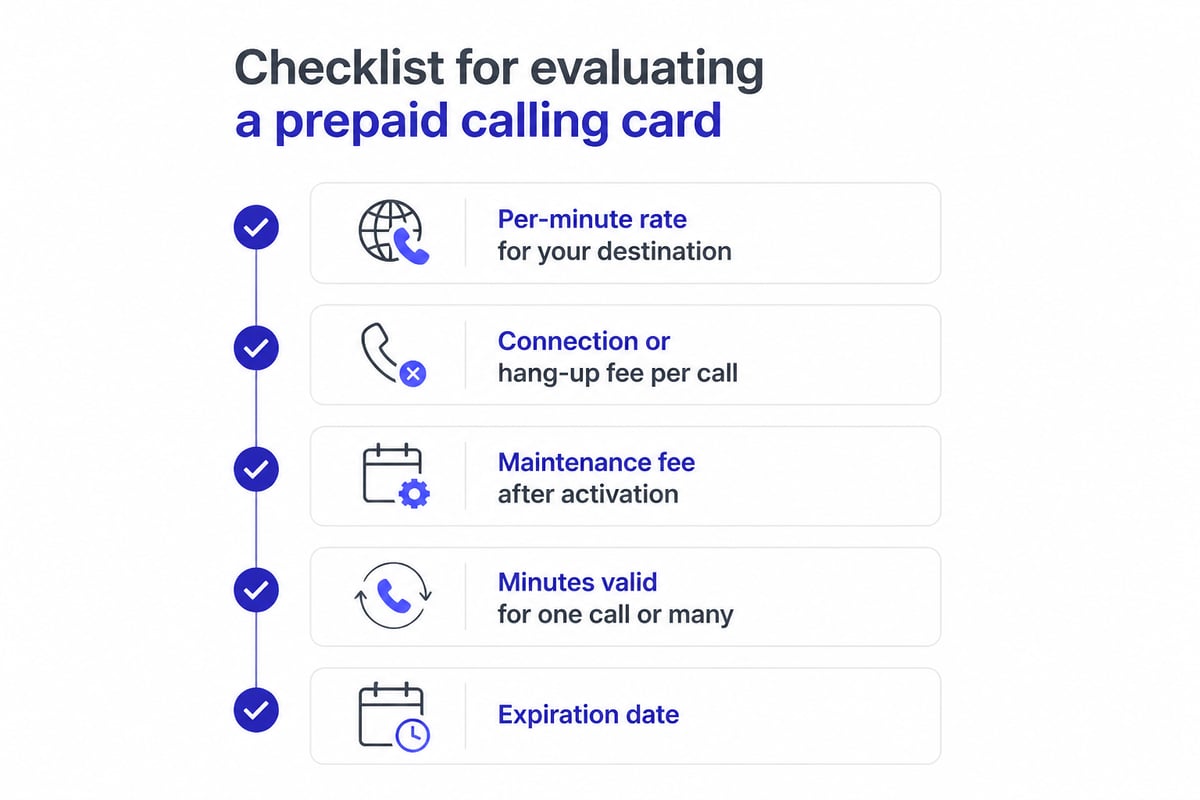
The FCC notes that some cards advertised as offering hundreds or thousands of minutes for a few dollars delivered only a fraction of those minutes because of hidden fees and surcharges. Common deductions include:
- Post-call, disconnect or hang-up fees taken after each call, so many short calls drain a balance faster than one long call.
- Maintenance fees charged on a recurring basis after activation, even when the card sits unused.
- Single-call minutes. The FCC warns that advertised minutes may apply to only one call rather than being shared across several calls.
- Expiration dates. Unused minutes can be lost when a card expires, so the date matters as much as the price.
A practical test before buying is to calculate the effective cost per minute for the length of call you actually make. A card that looks cheap at 60 minutes per call may be expensive at five minutes per call once a connection fee applies to each one.
Can I buy a calling card today?
Yes, you can buy a calling card, though the market is smaller than it was before mobile and internet calling became standard. Prepaid phone cards are still sold at convenience stores, supermarkets and online retailers, often aimed at people who call abroad regularly or lack a contract phone.
Digital PINs have largely replaced the plastic card. You pay online, receive a PIN by email or text, and dial the access number from any phone.
For most professionals, however, messaging apps and voice-over-IP services have taken over the work of international calling cards. The prepaid card now serves a narrower group: travelers without local service, households without broadband, and callers to destinations where app-based calling is unreliable.
If you do buy one, read the terms first and keep the PIN secure. A PIN works like cash, because anyone who has it can spend the balance.
What is a telephone card in Japan?
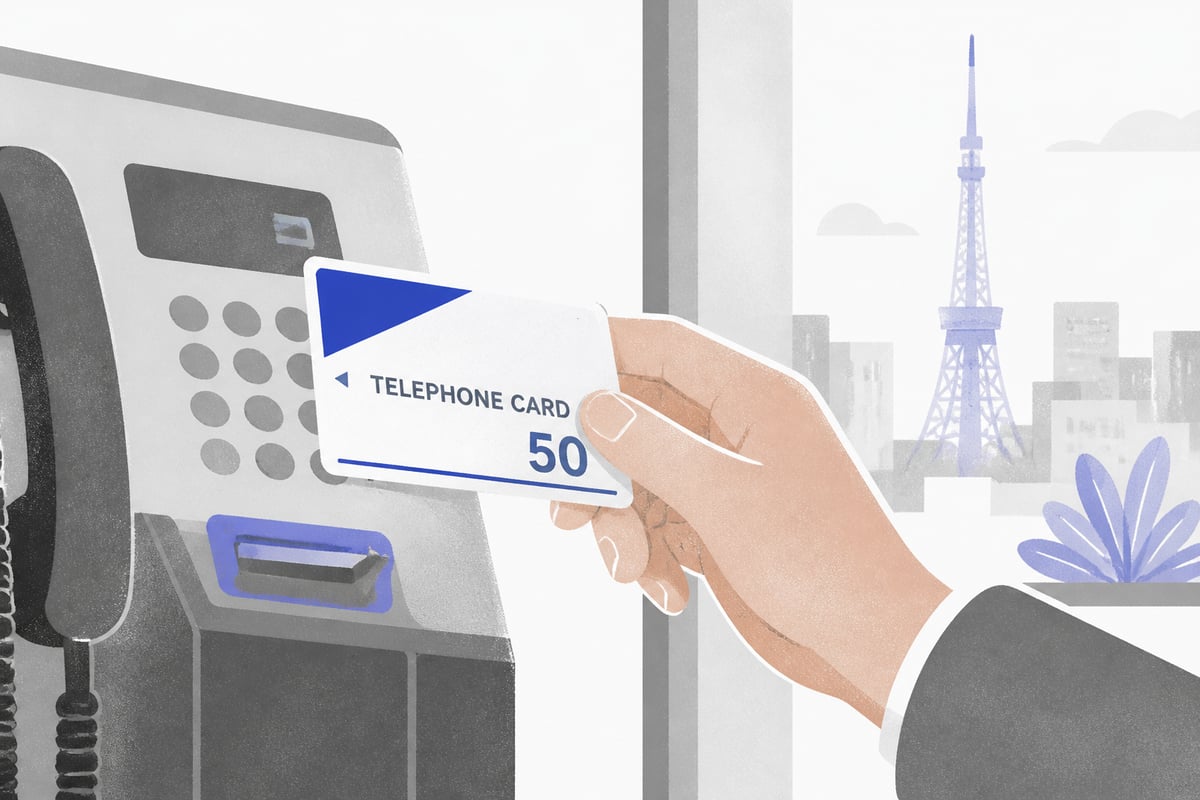
A telephone card in Japan is a prepaid card inserted into a public pay phone, which deducts the call cost directly rather than using a PIN. These cards were a familiar part of Japanese daily life for decades and became collectible items, with designs featuring anime, landmarks and commemorative themes.
Unlike a PIN-based calling card, the Japanese phone card is read by the machine itself and shows the remaining units. Mobile phones have reduced pay phone use, so the cards are now less common in everyday life.
The comparison is useful because it shows the two technical models for prepaid calling: a physical card read by a terminal, and a PIN entered over an access number.
How do calling cards work in a professional setting?
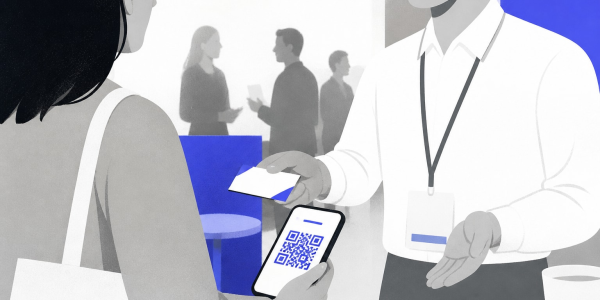
In a professional setting, a calling card is a small item that carries your name, role, company and ways to reach you, handed over at a first meeting. It does the same job as the Victorian visiting card, adapted for modern commerce.
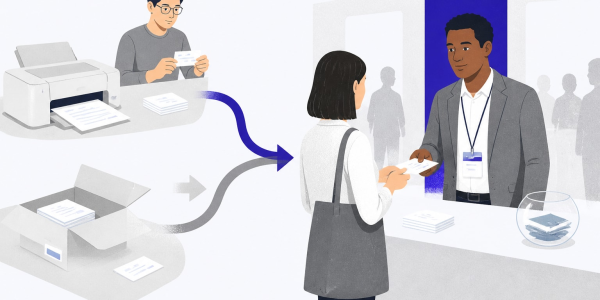
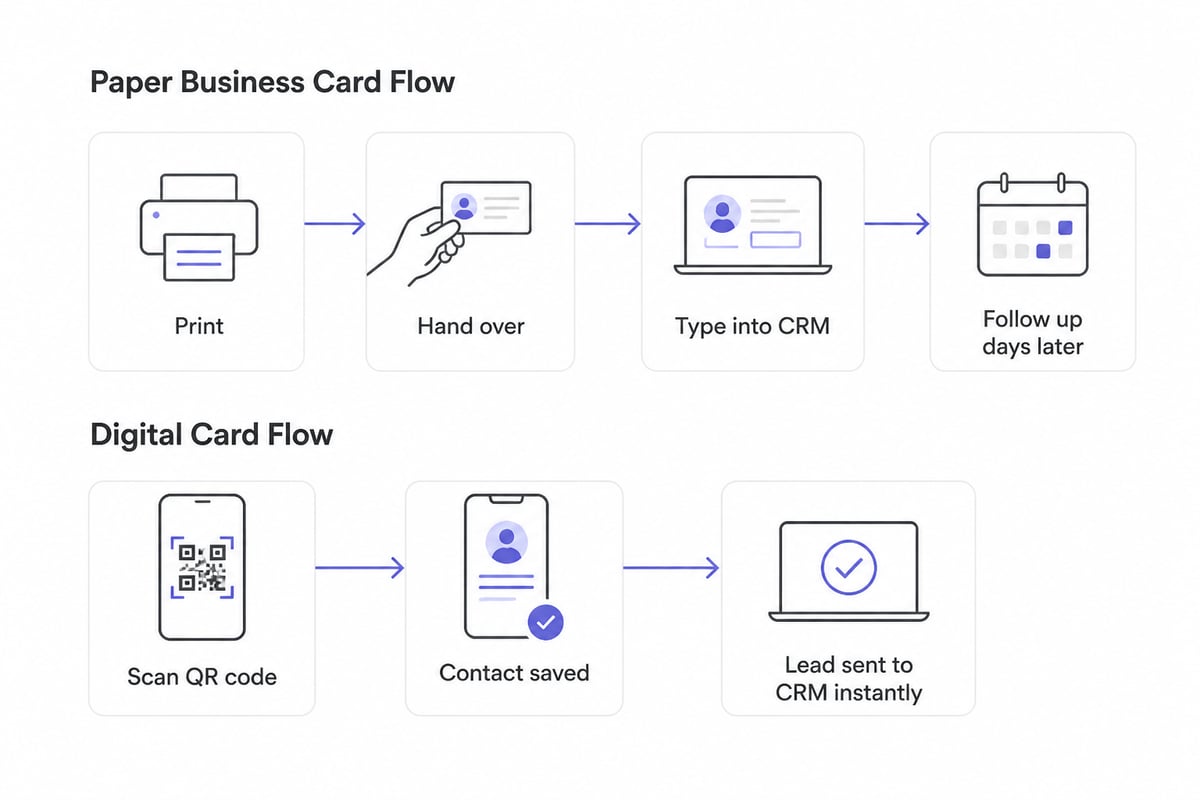
The traditional format is paper, typically printed in bulk. That creates a familiar set of problems:
- Details go out of date after a job change, a new phone number or a rebrand.
- Cards get lost, left in jacket pockets or discarded after an event.
- Someone must type or scan the details into a CRM, and many never do.
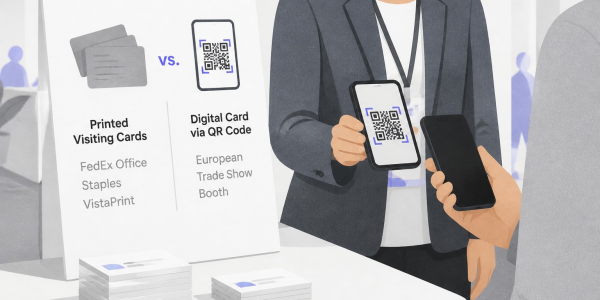
For sales and event teams, that last step is where leads quietly disappear. A stack of cards collected at a trade show is only valuable if each contact reaches follow-up quickly, and manual entry slows that down. The costs add up in ways that are easy to underestimate, as laid out in this look at the hidden costs of paper business cards.
How can I make a calling card?
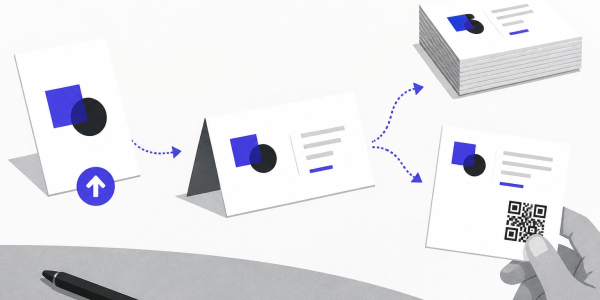
You can make a calling card by choosing a format, writing the essential details, designing a layout and either printing it or publishing it digitally. The right route depends on how often your details change and how many people need cards.
For a single printed card, the steps are straightforward:
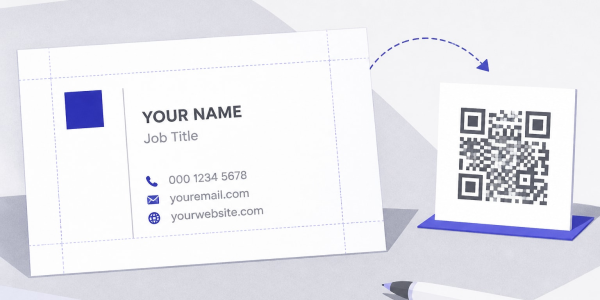
- List the essentials: name, role, company, phone, email and one web address.
- Pick a clean layout with readable type and enough white space.
- Add your logo and brand colors if the card represents a company.
- Proofread every number and address before printing.
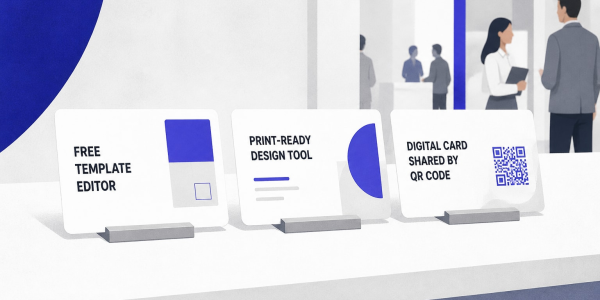
Printing works for a one-off. It becomes inefficient when a team of dozens or hundreds needs cards, because every promotion, relocation or number change triggers a reprint. Templates can speed up the design work, and this collection of personal calling cards templates shows common layouts.
For teams, creating cards in bulk from existing HR data avoids manual design altogether, as described in this guide to automatically creating business cards at scale.
What are digital calling cards and how do they differ?
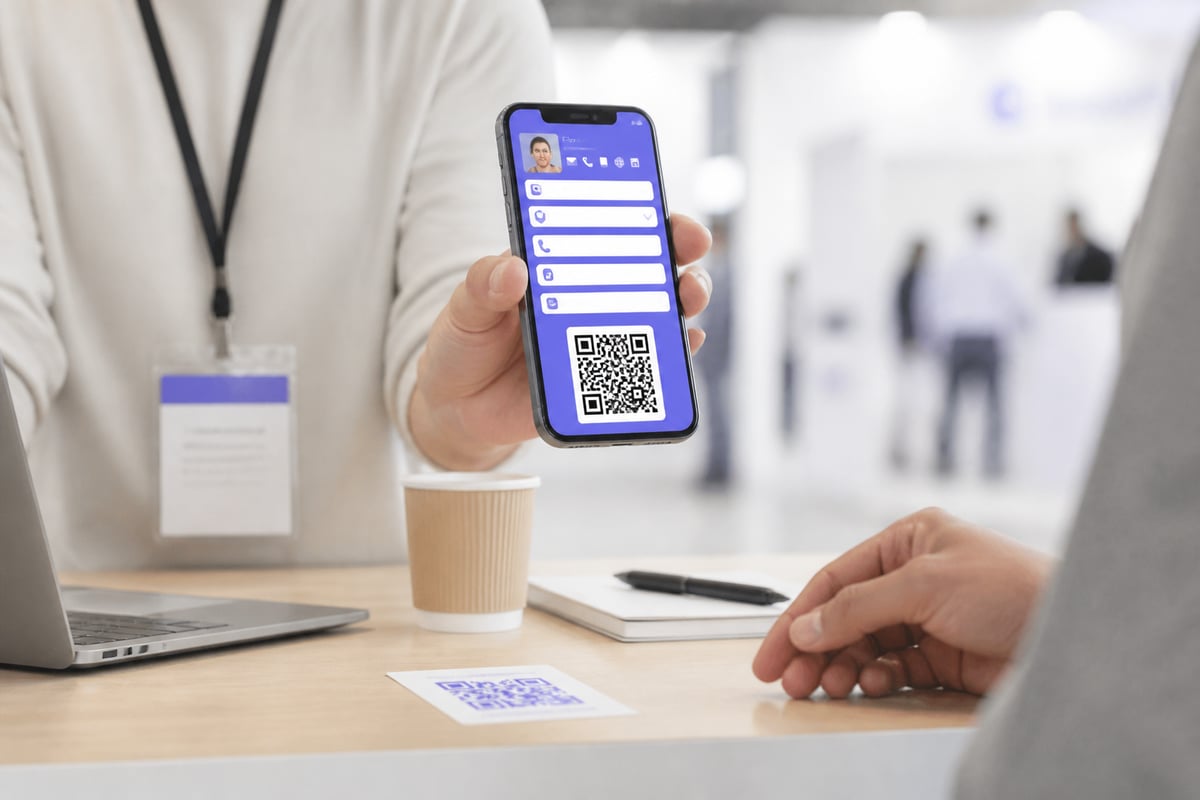
Digital calling cards are web-based contact cards shared by link, QR code, NFC tap or phone wallet, and they can be updated at any time without reprinting. They replace the static paper card with a live page that always shows current details.
The sharing methods are the main practical difference:
- Link. A personal URL works in messages, email and social profiles.
- QR code. The recipient scans it with a phone camera and lands on your card.
- NFC. A tap on a compatible card or tag opens the card on the other person's phone.
- Wallet pass. The card sits in Apple Wallet or Google Wallet for quick access.
A digital card can also hold more than a paper one: a video, a product brochure, a booking link or a lead form. For a salesperson at a trade fair, a form on the card lets a prospect leave details instead of waiting for you to ask, which is the logic behind digital business cards for trade fairs.
Spreadly's approach shows how this works at company scale. Contact details can stay current through one link and QR code, so reprints are not needed after a job or number change. Lead capture can send contacts to your CRM, and the platform is used by a large number of professionals worldwide.
Individuals who want to start without a rollout can use the Free Digital Business Card, which shares contact details by QR code, Apple Wallet, Google Wallet or link.
Why do calling cards still matter?
Calling cards still matter because the underlying need, making contact simple and memorable, has not changed even as the format has. A first meeting still ends with someone asking how to reach you, and a fast, reliable answer shapes the follow-up.
For telecom cards, the relevance is practical. They remain a low-barrier way to reach a number without a contract, as long as you understand the fee structure.
For professional cards, the stakes are commercial. Leads that are not captured and followed up within days tend to go cold, and event teams measure their return on exactly that gap. Accuracy also matters: a wrong digit on a printed card cannot be corrected, while a digital card can be fixed in seconds. Where contacts arrive as paper, a scanner can close part of the gap. Spreadly offers a business card scanner for paper cards you receive, and this guide explains how to digitize business cards.
For HR and IT teams, there is a governance angle. Contact details and branding spread across hundreds of employees, and keeping them consistent is easier when cards are generated from a single source of truth instead of designed individually.
Related terms worth knowing
Several terms overlap with calling cards, and knowing them helps when comparing options:
- Prepaid phone card: a card or PIN that stores a calling balance.
- Visiting card: the historical name for a card left to announce a visit.
- Business card: the modern professional version, now printed or digital.
- NFC card: a physical card with a chip that shares a digital profile on tap.
- QR business card: a card that opens a contact page when scanned, covered in this guide to QR business cards.
- Networking card: a card designed for events, often with extra links or media.
FAQ
Do calling cards expire?
Many prepaid phone cards carry an expiration date, and unused minutes can be lost when it passes. The FCC advises checking the date before purchase, since some cards also charge maintenance fees that reduce the balance over time.
Are calling cards the same as business cards?
Not exactly, though the terms overlap. A business card is the modern professional form of the traditional calling card, while a prepaid calling card is a telecom product for buying phone minutes.
Can a digital card replace a paper calling card?
For most business purposes, yes. A digital card shares the same details through a link, QR code or tap, and it stays current without reprinting.
Start by checking how many of the paper cards in your team's bag still show correct details, then decide whether a one-time print run still makes sense. If you attend trade shows or manage contact data across a company, a digital card that updates in one place and sends leads to your CRM removes most of the manual work, and you can Try Spreadly free to see how quickly a branded card can be set up.