International Business Card: Culture, Format & Best Practices
10 minutes
11th of June 2026
In this article:
- Understanding International Business Card Standards
- Cultural Etiquette in International Business Card Exchange
- Design Elements for International Business Cards
- The Digital Transformation of International Business Cards
- Practical Implementation Strategies
- Compliance and Data Privacy Considerations
- Measuring International Business Card Effectiveness
- Lead Capture at International Events
- Technology Integration for Seamless International Networking
- Future Trends in International Business Card Technology
Expanding into international markets requires more than just a great product or service. The way you present yourself matters significantly, and your business card serves as your first tangible impression. An international business card isn't simply a translated version of your domestic card; it's a carefully crafted communication tool that respects cultural norms, accommodates diverse formatting requirements, and ensures your contact information remains accessible across borders and time zones.
Understanding International Business Card Standards
Physical specifications vary considerably worldwide. While North America uses the standard 3.5 × 2 inches (88.9 × 50.8 mm) format, most of Europe and Asia follow different dimensions. The international standard business card size measures 85 × 55 mm (approximately 3.35 × 2.17 inches), slightly smaller than its American counterpart. Japan uses 91 × 55 mm cards, which are slightly wider to accommodate longer character-based text.
These dimensional differences have practical implications. An international business card designed for one market may not fit standard cardholders or wallets in another region. Understanding standard business card sizes and dimensions worldwide ensures your cards work seamlessly across markets.
Material and Print Considerations
International markets show distinct preferences for card materials and finishes:
- Asia-Pacific: Thick, high-quality paper stock with matte or glossy finishes
- Europe: Recycled or eco-friendly materials increasingly preferred
- Middle East: Ornate designs with gold foiling or embossing
- North America: Standard cardstock with simple, clean designs
Print quality expectations also differ. Japanese business culture, for example, places tremendous value on presentation quality, viewing a poorly printed card as disrespectful. European markets increasingly favor sustainability, making recycled paper and minimal ink usage advantageous.
Cultural Etiquette in International Business Card Exchange
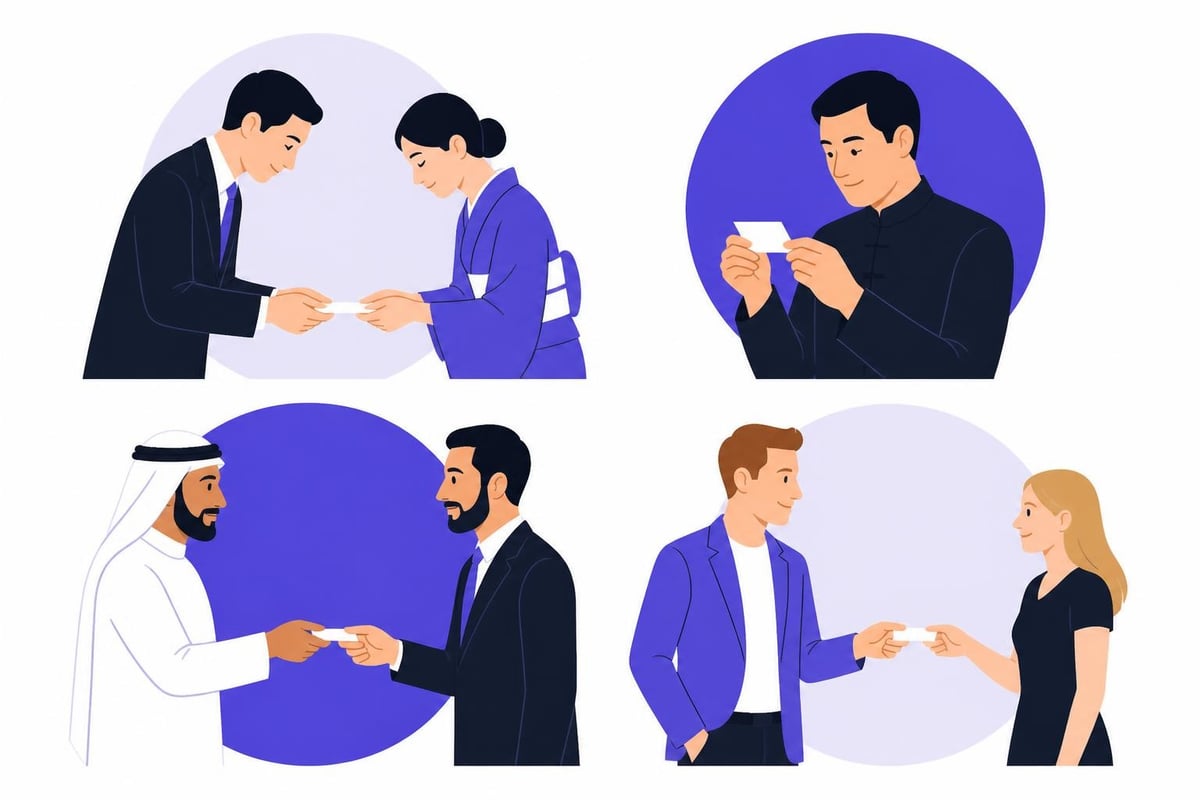
The physical exchange of business cards carries different meanings across cultures. What seems polite in New York might be offensive in Tokyo, making cultural awareness essential for international business success.
Cultural differences in business card etiquette around the world significantly impact professional relationships. In Japan, the practice of meishi koukan (business card exchange) is ceremonial. Cards must be presented with both hands, with text facing the recipient, accompanied by a slight bow. Receiving a card with one hand or immediately pocketing it without examination shows disrespect.
Regional Exchange Protocols
Asia-Pacific Practices
The region places exceptional importance on business card ceremonies. Chinese professionals examine cards carefully before placing them in card holders, never wallets. Korean business culture emphasizes hierarchy, requiring you to present cards to senior members first. Throughout Asia, writing on someone's card in their presence is taboo.
Middle Eastern Customs
In Arab countries, always present and receive cards with your right hand, as the left hand is considered unclean. Business cards should feature Arabic text on one side when operating in these markets, demonstrating cultural respect and facilitating communication.
European Approaches
Western European countries generally maintain more relaxed protocols, though professionalism remains paramount. Cards are typically exchanged at the beginning or end of meetings. Northern European countries value simplicity and directness in both design and exchange, while Southern European markets appreciate more elaborate presentations.
Latin American Standards
Business relationships in Latin America develop through personal connections. Cards are exchanged frequently but casually, often accompanied by warm handshakes. Translation into Spanish or Portuguese shows commitment to the market.
Design Elements for International Business Cards
Creating an effective international business card requires strategic design decisions that transcend simple translation. Your card must communicate professionalism while accommodating multiple languages and cultural preferences.
Bilingual and Multilingual Formatting
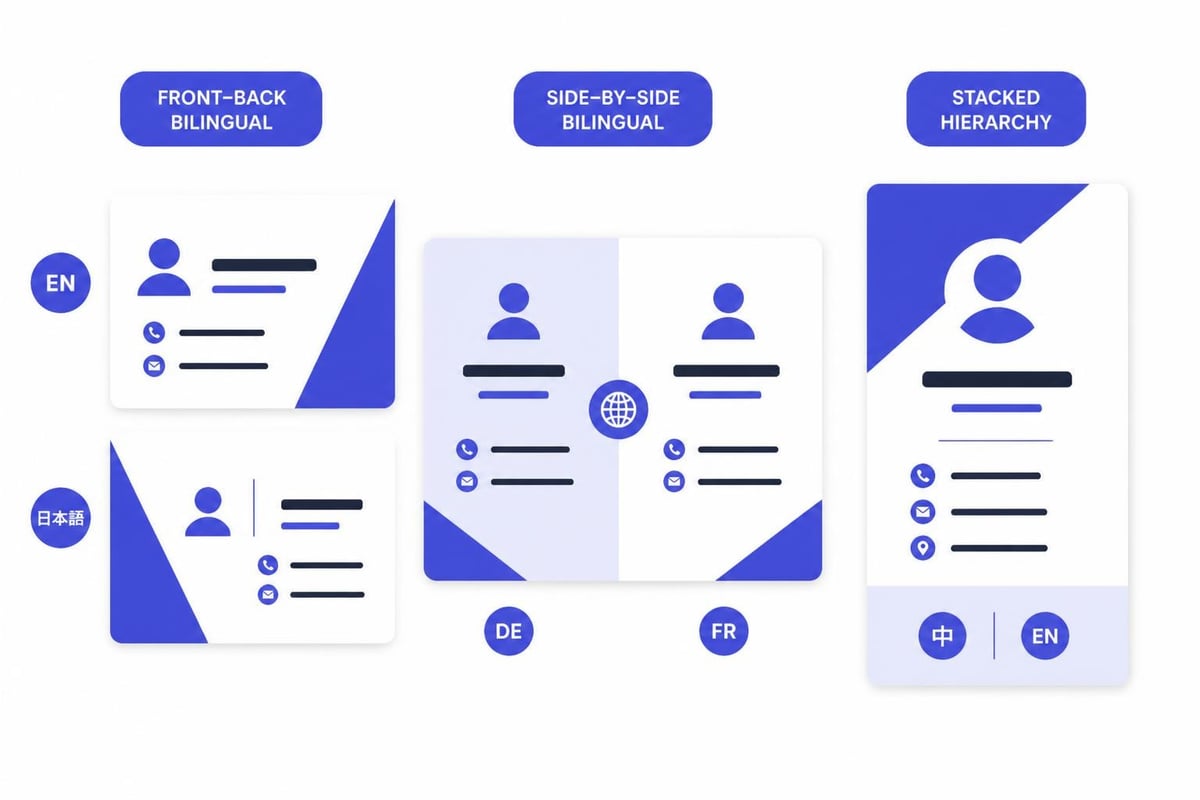
Most international business cards feature dual-language designs:
| Format Option | Best For | Considerations |
|---|---|---|
| Front/Back | Different markets | One side per language; clear separation |
| Side-by-Side | Single market | Both languages visible; requires compact text |
| Stacked | Asian markets | Primary language prominent; secondary below |
| Separate Cards | Multiple regions | Dedicated card per market; higher printing cost |
The front/back approach proves most versatile, dedicating one side to your home language and the reverse to the local language. This format works particularly well when navigating international business travel etiquette, allowing you to present the appropriate side based on context.
Essential Information Hierarchy
Different cultures prioritize different information elements:
- Asian markets: Company name and title take precedence over individual names
- Western markets: Individual name and direct contact information emphasized
- Middle Eastern markets: Family name and organizational hierarchy important
- Nordic countries: Egalitarian approach with less emphasis on titles
Typography and readability matter significantly. Roman alphabet text typically requires less space than Asian character sets. Japanese characters need larger point sizes for legibility, while Arabic requires right-to-left layout considerations. Choose universally readable fonts, avoiding decorative typefaces that may not translate well culturally.
The Digital Transformation of International Business Cards
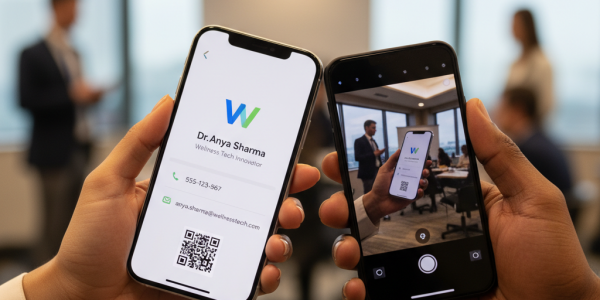
Traditional paper cards face inherent limitations in international contexts. Time zones complicate follow-ups, physical cards get lost during travel, and information becomes outdated between reprints. Digital solutions address these challenges while respecting international business card etiquette across diverse markets.
Advantages of Digital International Business Cards
Instant updates across all markets ensure consistency. When your phone number, email, or position changes, digital cards reflect updates immediately without reprinting thousands of cards across multiple countries. This capability proves invaluable for international teams where personnel changes happen frequently.
Multilingual capabilities expand beyond physical constraints. A digital business card can offer language selection, automatically displaying content in the recipient's preferred language. This personalization demonstrates cultural sensitivity while ensuring comprehension.
Environmental sustainability resonates globally. European markets particularly value eco-conscious business practices, and eliminating paper card waste aligns with corporate sustainability goals. Digital cards produce zero physical waste while maintaining unlimited distribution capability.
Key Features for International Digital Cards
Modern digital business cards serve international professionals through specialized capabilities:
- QR code sharing: Universal recognition eliminates language barriers in sharing
- Wallet integration: Apple Wallet and Google Wallet work globally
- CRM synchronization: Automatic contact uploads across time zones
- Rich media embedding: Videos, portfolios, and presentations transcend language
- Real-time analytics: Track engagement across different markets
The ability to embed scheduling tools proves particularly valuable internationally. Instead of coordinating across time zones via email, recipients can book meetings directly through integrated calendars that automatically adjust for time differences.
Practical Implementation Strategies
Successfully deploying an international business card strategy requires systematic planning and execution. Whether maintaining physical cards for traditional markets while adopting digital solutions for tech-forward regions, or transitioning entirely to digital platforms, implementation affects networking effectiveness.
Audit Your Current Approach
Begin by evaluating existing business card practices:
- Inventory current card versions across all markets
- Assess cultural appropriateness of designs and content
- Gather feedback from international partners and clients
- Identify pain points in current exchange and follow-up processes
- Calculate costs of printing, shipping, and updating across regions
This assessment reveals gaps between your current state and best practices, highlighting where improvements deliver maximum impact.
Market-Specific Customization
Rather than using identical cards everywhere, tailor your international business card approach to each major market:
High-Tech Markets (North America, Northern Europe, Singapore) Focus on digital-first solutions with optional physical cards. These markets readily adopt QR codes, NFC technology, and mobile wallet integration. Professional networks expect instant digital connectivity.
Traditional Business Cultures (Japan, Korea, Middle East) Maintain premium physical cards while introducing digital as supplementary. These markets still value ceremonial exchange, so physical cards remain essential. Digital cards serve as follow-up tools rather than primary exchange methods.
Emerging Markets (Southeast Asia, Latin America, Africa) Hybrid approaches work best. Mobile penetration is high, but internet reliability varies. Digital cards with offline capability ensure accessibility, while physical cards provide backup.
Team Coordination and Brand Consistency
For organizations with international teams, maintaining brand consistency across markets while respecting local preferences requires centralized management. Digital business cards for teams enable headquarters to control brand elements while allowing regional customization.
Centralized systems should provide:
| Feature | Benefit | Implementation |
|---|---|---|
| Template library | Brand consistency | Pre-approved designs per market |
| Automated provisioning | Rapid deployment | HR system integration |
| Update cascading | Instant changes | Cloud-based synchronization |
| Usage analytics | ROI measurement | Tracking across regions |
| Compliance controls | Regulatory adherence | GDPR, data residency rules |
Compliance and Data Privacy Considerations
International business card deployment intersects with complex data privacy regulations. The European Union's General Data Protection Regulation (GDPR) affects how you collect, store, and share contact information, even for business cards.
GDPR and International Data Transfers
When sharing an international business card digitally, you're potentially transferring personal data across borders. GDPR requires:
- Explicit consent for data collection and storage
- Right to deletion when recipients request removal
- Data minimization principles (collect only necessary information)
- Transparent privacy policies explaining data usage
Traditional paper cards complicate compliance because you cannot track who possesses your information or enforce deletion requests. Digital platforms with European data hosting address these requirements systematically.
Regional Privacy Variations
Different regions impose distinct requirements:
- California (CCPA): Similar to GDPR with consumer rights emphasis
- China (PIPL): Strict data localization and government access requirements
- Brazil (LGPD): GDPR-inspired with local enforcement
- Australia (Privacy Act): Reasonable steps standard for protection
Choosing platforms with regional data centers and compliance certifications simplifies adherence across markets.
Measuring International Business Card Effectiveness
Traditional paper cards offer no measurement capability. You distribute cards but lack data on whether recipients engage, save your information, or take action. This blind spot hampers optimization and ROI assessment.
Trackable Metrics for International Networking
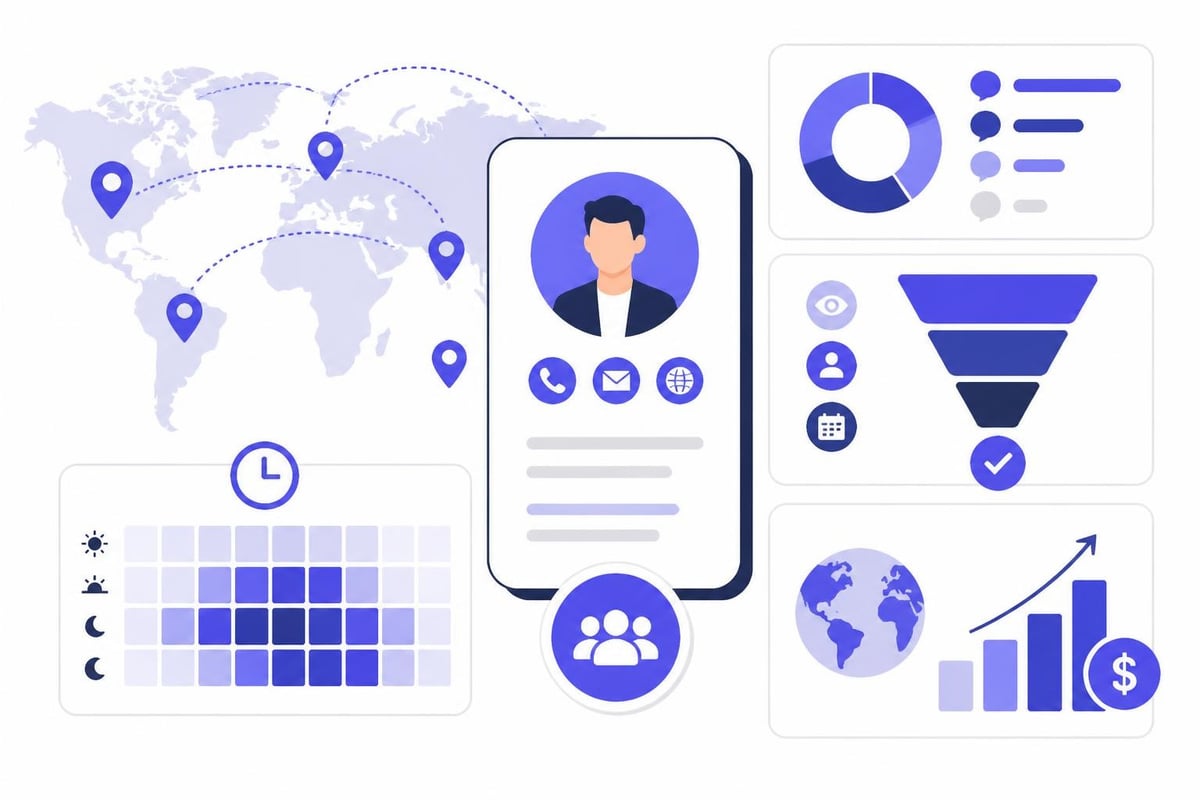
Digital international business cards provide actionable analytics:
Engagement metrics reveal which markets and contacts show highest interest. View counts indicate initial interest, while click-through rates on specific elements (phone, email, website) show intent. Calendar booking rates demonstrate conversion from contact to meeting.
Geographic data shows where your networking efforts gain traction. Identifying high-engagement regions helps allocate travel budgets and partnership resources effectively. Time-of-day data assists in scheduling follow-ups across time zones.
Content performance guides optimization. Which embedded videos get watched? Which product showcases generate leads? Which language versions perform best? These insights refine your international business card strategy over time.
A/B Testing for Cultural Optimization
Digital platforms enable testing different approaches across markets:
- Test formal versus casual tone in different regions
- Compare minimalist versus detailed designs
- Evaluate response to different calls-to-action
- Measure effectiveness of various media types
This data-driven approach replaces guesswork with evidence, continuously improving international networking effectiveness.
Lead Capture at International Events
Trade shows, conferences, and international exhibitions generate hundreds of contacts in days. Traditional business card collection creates follow-up bottlenecks: manually entering contact information, deciphering handwriting across languages, and delayed CRM updates that cause lost opportunities.
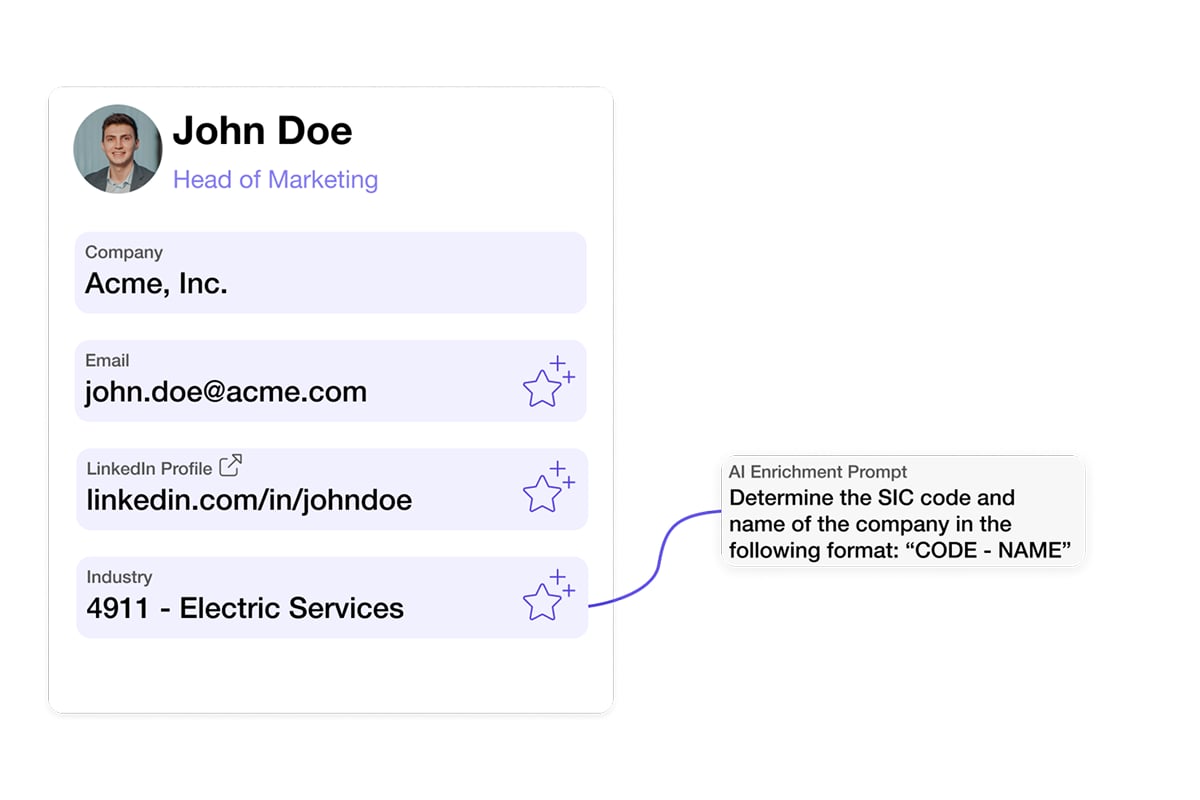
Modern lead capture solutions transform this process. Rather than collecting paper cards and spending hours on data entry, digital scanning captures contact information instantly with AI-powered accuracy. The technology recognizes multiple languages, extracts data from various card formats, and syncs directly with your CRM in real-time.
This streamlined approach proves particularly valuable at international events where language barriers complicate manual entry. Scanning badges at European conferences, collecting cards at Asian trade shows, or capturing LinkedIn QR codes at global networking events becomes uniform and efficient. Custom field mapping ensures captured data aligns with your CRM structure, eliminating formatting inconsistencies across markets.
Technology Integration for Seamless International Networking
Your international business card should function as part of your broader business ecosystem, not as an isolated tool. Integration capabilities determine practical utility across markets and teams.
CRM and Business System Connections
Leading platforms synchronize with major CRM systems including Salesforce, HubSpot, Pipedrive, Microsoft Dynamics, and regional favorites. This integration ensures contacts captured internationally flow directly into your sales pipeline without manual transfer.
Automation reduces errors inherent in manual processes. When an international prospect receives your digital card and saves your information, their details enter your CRM automatically, tagged with source, location, and engagement data. Follow-up workflows trigger based on prospect behavior, ensuring timely outreach despite time zone differences.
HR System Integration for Team Deployment
Organizations with international teams benefit from HR integration. Systems like Microsoft Entra ID, BambooHR, and Personio connect with card platforms, automatically provisioning cards for new hires and updating information when employees change roles or locations.
This automation proves essential when managing teams across regions. Manual card management for hundreds or thousands of employees across dozens of countries becomes administratively impossible. Automated provisioning ensures consistency while reducing IT workload.
Calendar and Scheduling Coordination
Time zone complexity disappears with integrated scheduling. Rather than email chains attempting to coordinate between Tokyo, Munich, and New York, embedded scheduling links let international contacts book meetings directly. Calendar integration automatically adjusts for time zones, preventing booking confusion and no-shows.
Future Trends in International Business Card Technology
The evolution of international business cards continues accelerating as technology advances and cultural practices shift. Understanding emerging trends helps future-proof your networking strategy.
Augmented Reality and Enhanced Experiences
AR-enabled business cards create immersive experiences when scanned. Point your phone at a card and see 3D product demonstrations, virtual office tours, or interactive portfolios. This technology transcends language barriers through visual communication while creating memorable impressions.
Blockchain-Based Verification
Professional credential verification becomes increasingly important in international business. Blockchain technology embedded in digital cards can verify certifications, employment history, and professional affiliations without intermediary checks. This capability proves valuable in markets where credential fraud concerns exist.
AI-Powered Personalization
Artificial intelligence will increasingly customize card presentations based on recipient context. The same digital card might emphasize different information, use different languages, or highlight different services based on the industry, role, or geographic location of the person viewing it.
Sustainability Pressure
Environmental consciousness continues growing globally, particularly in European and Asia-Pacific markets. Organizations face increasing pressure to eliminate paper waste, making digital-first approaches not just practical but expected. Companies maintaining paper cards risk appearing environmentally indifferent to sustainability-conscious markets.
Successfully navigating international business requires respecting cultural differences while maintaining practical efficiency in an increasingly connected world. Modern digital solutions honor traditional business card etiquette expectations while solving the logistical challenges of global networking. Whether you're an individual expanding internationally or an enterprise managing teams across continents, Spreadly provides customizable digital business cards that adapt to any market, update instantly across all regions, and integrate seamlessly with your existing business systems.