Print NFC Cards: Complete Guide for Business Networking
10 minutes
24th of July 2026
In this article:
- Understanding NFC Card Technology and Printing Requirements
- Selecting the Right Printing Method
- Design Considerations and Technical Specifications
- Material Selection and Durability Factors
- Programming and Data Configuration
- Integration with Digital Business Card Platforms
- Quality Control and Testing Procedures
- Customization Options and Brand Alignment
- Security Features and Data Protection
- Cost Analysis and Budget Planning
- Production Timeline and Planning Considerations
- Environmental Considerations and Sustainable Options
- Distribution Strategies and Deployment Best Practices
- Emerging Trends and Future Developments
The way professionals exchange contact information has evolved dramatically over the past few years. Traditional paper business cards are being replaced by intelligent alternatives that combine physical presence with digital capabilities. When businesses decide to print NFC cards, they unlock a powerful networking tool that bridges the tangible experience of handing someone a card with the instant digital connectivity modern professionals expect. These cards contain embedded Near Field Communication chips that enable smartphones to instantly access contact information, digital profiles, and rich media content with a simple tap.
Understanding NFC Card Technology and Printing Requirements
Near Field Communication technology enables wireless data transfer between devices over short distances, typically a few centimeters. When you print NFC cards, you're creating physical cards embedded with tiny chips and antennas that communicate with smartphones when brought into proximity. The fundamentals of NFC chips reveal how these components work together to create seamless data exchange without requiring battery power in the card itself.
The printing process requires careful consideration of chip placement, antenna design, and material compatibility. Unlike standard business cards, NFC cards must maintain the integrity of the embedded technology while delivering professional visual appeal.
Key Components of NFC Business Cards
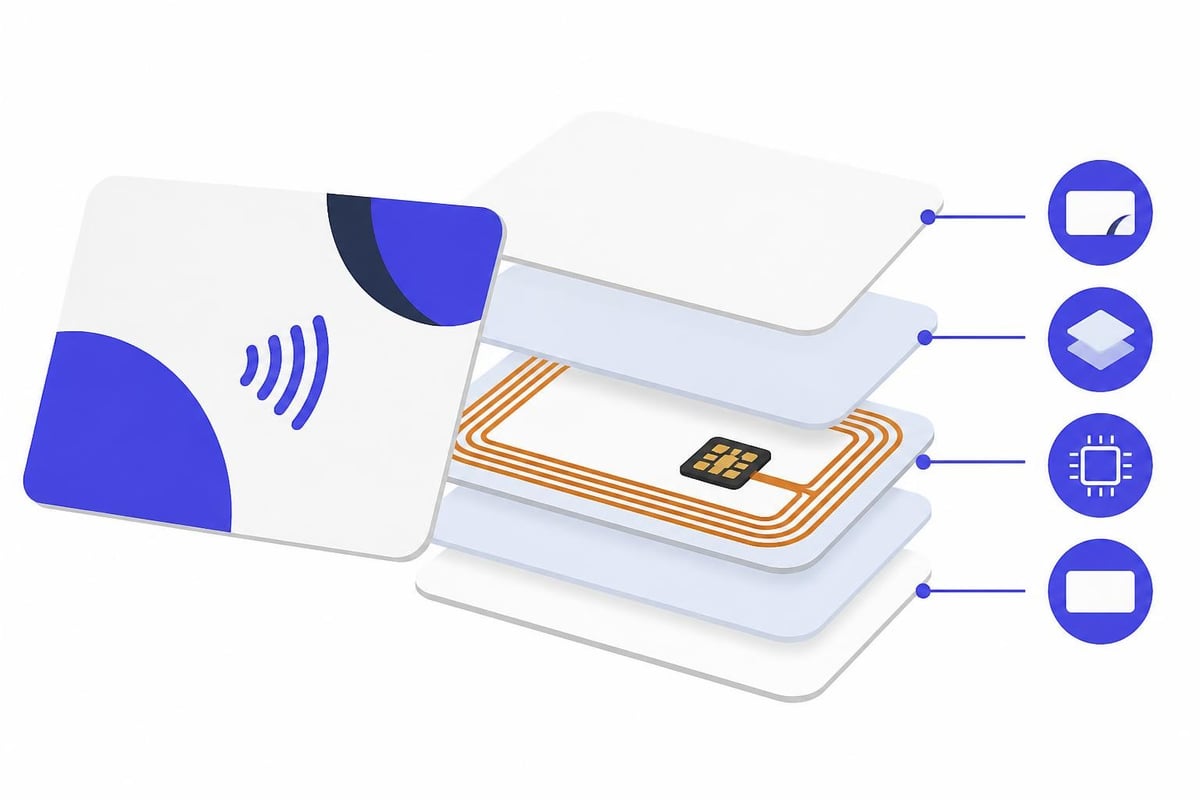
Every NFC card consists of three essential elements that work together:
- NFC chip storing the digital information and controlling data transfer protocols
- Antenna coil enabling wireless communication between the chip and reader device
- Card substrate providing structure and printable surface while protecting internal components
The chip selection determines storage capacity, read range, and compatibility with different smartphone models. Most modern NFC cards use chips compliant with ISO 14443 standards, ensuring broad compatibility across Android and iOS devices.
Selecting the Right Printing Method
When businesses print NFC cards, they must choose from several printing technologies, each offering distinct advantages. The selection depends on order quantity, design complexity, budget constraints, and timeline requirements.
| Printing Method | Best For | Quality Level | Minimum Order | Cost Per Unit |
|---|---|---|---|---|
| Thermal Retransfer | Small to medium batches | Excellent | 100+ cards | Medium-High |
| Offset Printing | Large production runs | Outstanding | 500+ cards | Low (bulk) |
| Digital Printing | Quick turnarounds | Good to Very Good | 50+ cards | Medium |
| Screen Printing | Specialty finishes | Excellent | 250+ cards | Medium |
Thermal Retransfer Printing for Premium Quality
Thermal retransfer printing delivers exceptional results for professional NFC cards. This process transfers ink from a ribbon onto the card surface using heat, creating vibrant colors and sharp details. The technique works particularly well with PVC materials and maintains print quality even around chip areas.
Organizations seeking customized NFC products often choose this method for its reliability and professional output. The process accommodates variable data printing, making it ideal for personalizing cards with individual names, titles, and contact information.
Offset Printing for Volume Production
For larger quantities, offset printing provides cost-effective solutions without compromising quality. This traditional printing method excels at reproducing consistent colors and fine details across thousands of cards. Various printing technologies for NFC cards demonstrate how offset techniques deliver superior results for medium to large production runs.
The setup costs are higher initially, but per-unit costs decrease significantly with volume. Businesses ordering 1,000 or more cards typically find offset printing the most economical choice.
Design Considerations and Technical Specifications
Creating effective NFC card designs requires balancing aesthetic appeal with technical constraints. The embedded chip and antenna occupy specific card areas that designers must accommodate in their layouts.
Safe Zones and Chip Placement
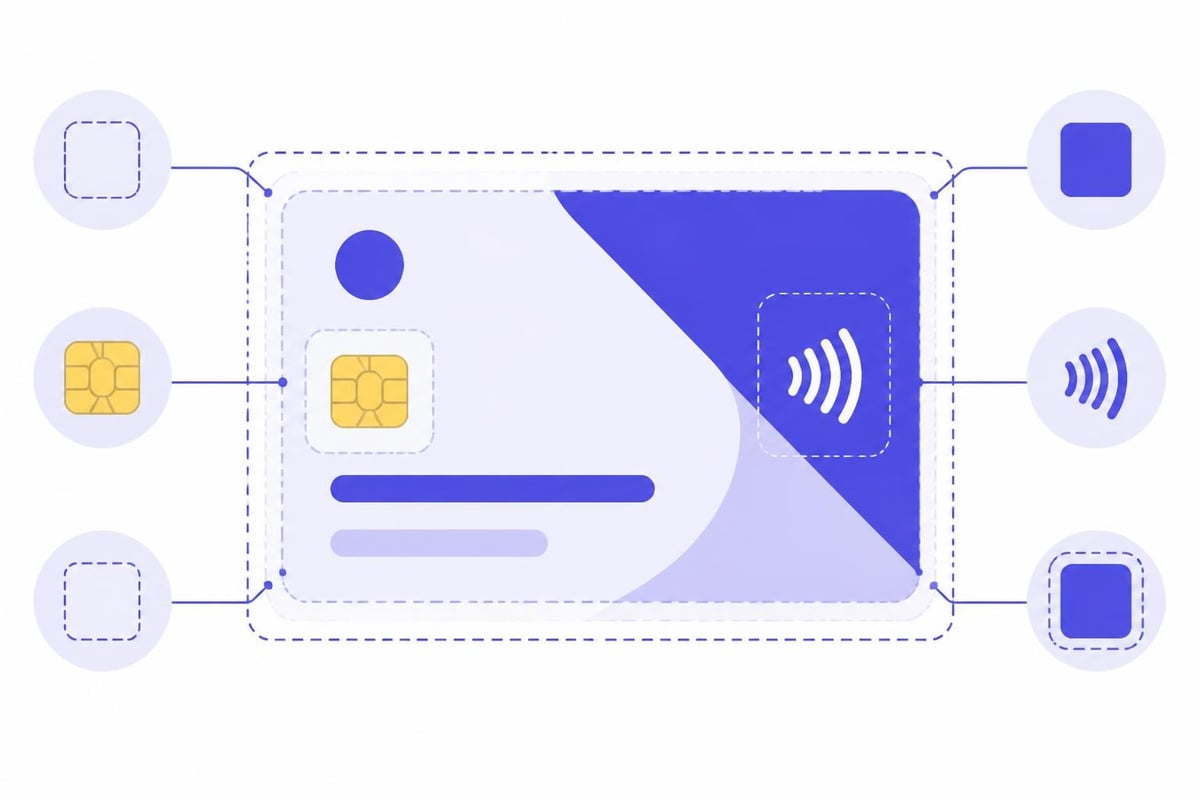
Every NFC card has designated areas where the chip and antenna reside. Designers must avoid placing critical visual elements in these zones to prevent damage during production. Following detailed printing instructions ensures your design specifications align with manufacturing requirements.
Critical design guidelines include:
- Maintain 3mm margins around all card edges for bleed and cutting tolerance
- Reserve the chip area (typically centered or positioned in lower quadrants) for technical components
- Use CMYK color mode rather than RGB for accurate color reproduction
- Design at 300 DPI resolution minimum for sharp, professional output
- Account for card thickness (standard 0.76mm to 0.84mm) in layered designs
The antenna typically forms a rectangular coil around the card perimeter, hidden between card layers. Your printed design appears on the outer surfaces without revealing internal components.
Material Selection and Durability Factors
The substrate material directly impacts both printability and card longevity when you print NFC cards. PVC (polyvinyl chloride) remains the most popular choice, offering excellent durability and print receptiveness. Understanding printable NFC tags helps businesses select materials that match their specific use cases.
Material Options and Their Benefits
Different card materials serve different professional contexts:
- Standard PVC: Durable, cost-effective, accepts various printing methods, ideal for general business use
- Composite PVC-PET: Enhanced durability, better heat resistance, suitable for high-wear environments
- Recycled PET: Environmentally conscious option, maintains good print quality, appeals to sustainability-focused brands
- Wood or Metal Composite: Premium aesthetic, distinctive tactile experience, higher cost but memorable impact
Card thickness affects both perceived quality and NFC performance. Standard business card thickness (0.76mm) works well, though some premium options use thicker substrates up to 0.84mm for added heft and durability.
Programming and Data Configuration
Before cards reach end users, the NFC chips must be programmed with appropriate data. When you print NFC cards, programming can happen before, during, or after the printing process, depending on your production workflow.
Data Types and Encoding Options
NFC chips can store various data formats:
- URL links directing to digital business card profiles or company websites
- vCard information containing structured contact details for direct phone imports
- Plain text messages or instructions for specific use cases
- App launches triggering specific mobile applications on compatible devices
Most business networking applications use URL encoding, pointing to hosted digital profiles that can be updated without reprogramming the physical cards. This approach provides flexibility as contact information changes over time.
Integration with Digital Business Card Platforms
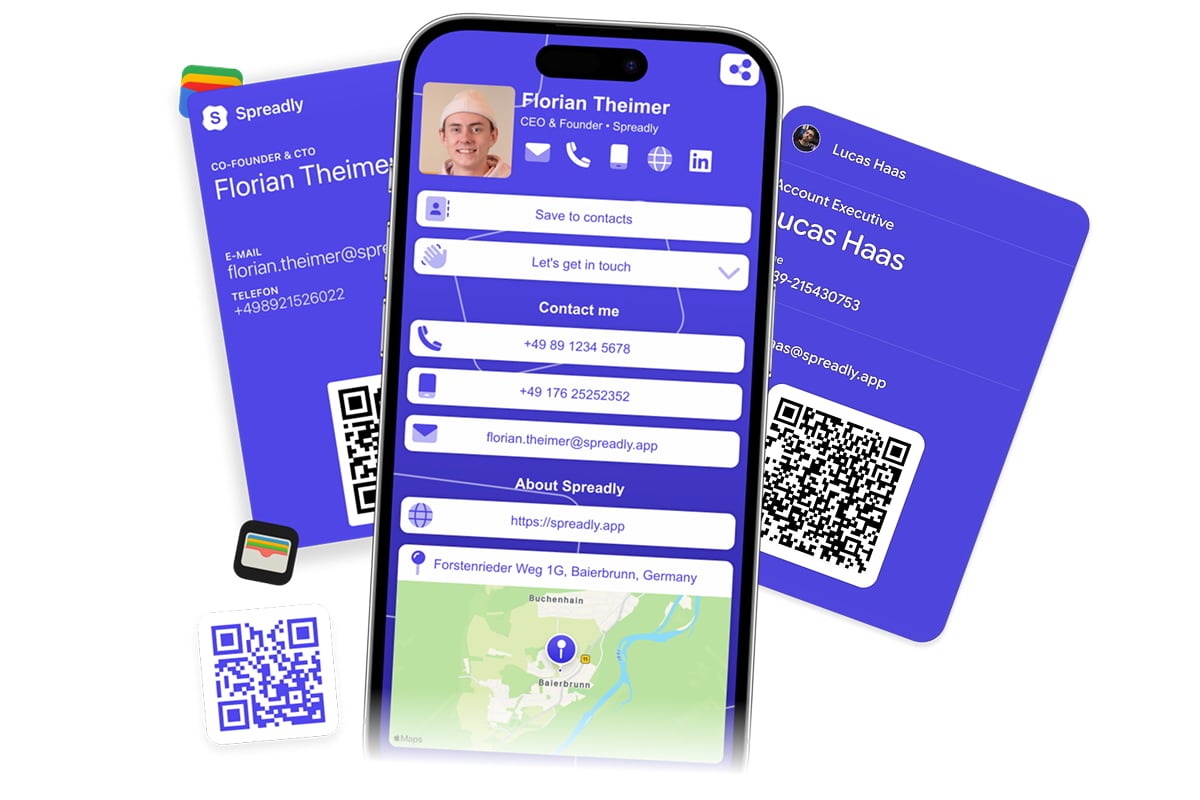
The true power of NFC cards emerges when they connect physical networking moments with comprehensive digital ecosystems. Modern professionals use these cards as entry points to rich, interactive profiles containing videos, portfolios, scheduling links, and lead capture forms.
Digital business cards for teams demonstrate how organizations can standardize their networking approach while maintaining individual personalization. When employees tap their NFC cards to prospects' phones, they're sharing far more than contact details; they're providing access to complete professional profiles that drive engagement and conversions.
These integrated systems often include analytics showing when cards were tapped, which content was viewed, and how recipients engaged with the shared information. This data transforms networking from a qualitative activity into a measurable business process.
Lead Capture and CRM Synchronization
Progressive organizations combine NFC cards with sophisticated lead management systems. When someone taps an NFC card and views the digital profile, that interaction can automatically create records in CRM platforms, tag prospects based on where they were met, and trigger follow-up workflows.
The automation reduces manual data entry and ensures no networking opportunity falls through the cracks. Sales teams particularly benefit from this seamless connection between physical meetings and digital pipeline management.
Quality Control and Testing Procedures
Professional production of NFC cards requires rigorous quality assurance at multiple stages. Testing should verify both printing quality and NFC functionality before cards are distributed.
Essential quality checkpoints include:
- Visual inspection for color accuracy, alignment, and print defects
- NFC functionality testing with multiple smartphone models (both iOS and Android)
- Read range verification ensuring cards respond at appropriate distances
- Data accuracy confirmation checking that encoded information matches specifications
- Durability testing for scratch resistance and general wear
Batch testing protocols typically sample a percentage of each production run rather than testing every individual card. For critical deployments, organizations may request 100% functional testing with corresponding documentation.
Customization Options and Brand Alignment
When businesses print NFC cards, customization extends far beyond adding a logo. Modern production capabilities enable sophisticated personalization that reinforces brand identity and creates memorable networking experiences.
| Customization Element | Options Available | Impact on Cost | Brand Value |
|---|---|---|---|
| Card Shape | Standard, rounded corners, custom die-cut | Low to High | High |
| Finish | Matte, glossy, soft-touch, textured | Low | Medium |
| Special Effects | Metallic ink, spot UV, embossing | Medium to High | High |
| Personalization | Individual names, titles, photos | Low to Medium | Very High |
Advanced Finishing Techniques
Premium NFC cards often incorporate special finishes that create distinctive tactile and visual experiences. Spot UV coating highlights specific design elements like logos or names, creating dimensional contrast. Metallic inks add shimmer and sophistication, particularly effective for luxury brands or executive-level cards.
Insights into printing on NFC cards reveal how different finishing techniques interact with NFC functionality. Some metallic elements can interfere with chip performance if placed incorrectly, making expert guidance valuable during the design phase.
Security Features and Data Protection
As NFC cards contain digital information and enable instant data transfer, security considerations become paramount. Responsible organizations implement protections that safeguard both the cardholder and recipients who interact with the cards.
Built-in Security Measures
Modern NFC implementations include several security layers:
- Read-only encoding: Prevents unauthorized modification of chip data after programming
- Password protection: Restricts write access to authorized systems only
- Encrypted data transmission: Protects information during transfer between card and phone
- HTTPS connections: Ensures secure data exchange when cards link to web-based profiles
Research into secure manual password input frameworks using NFC cards demonstrates ongoing innovation in NFC security technologies. While most business networking applications don't require such advanced security, understanding available protections helps organizations make informed decisions.
Cost Analysis and Budget Planning
Determining the true cost to print NFC cards requires considering multiple factors beyond the per-card production price. Organizations should evaluate total investment including design, programming, shipping, and potential reprints due to staff changes.
Price Factors and Volume Economics
Per-card costs decrease significantly with volume:
- 50-100 cards: $3-$8 per card depending on customization
- 500-1,000 cards: $1.50-$4 per card with standard features
- 2,000+ cards: $0.80-$2 per card for basic designs
- 10,000+ cards: $0.50-$1.50 per card for large enterprise orders
Additional costs may include design services ($200-$1,000 for professional layouts), custom programming ($0.25-$1 per card for complex data structures), and expedited production ($100-$500 surcharges for rush orders).
Production Timeline and Planning Considerations
Understanding production timelines helps organizations plan their card deployments effectively. When you print NFC cards, the process involves multiple stages that each require specific timeframes.
Typical production schedule breakdown:
- Design finalization and approval: 3-7 business days
- Chip procurement and programming: 2-5 business days
- Printing and manufacturing: 5-10 business days
- Quality control and testing: 1-3 business days
- Shipping and delivery: 2-7 business days depending on location
Total timelines typically range from two to four weeks for standard orders. Rush production can compress this to 7-10 business days with premium pricing and simplified designs.
Environmental Considerations and Sustainable Options
As organizations become more environmentally conscious, sustainable approaches to print NFC cards have emerged. While NFC technology requires electronic components, several eco-friendly alternatives minimize environmental impact.
Recycled PET materials provide comparable durability to virgin PVC while reducing plastic waste. Some manufacturers offer biodegradable options, though these typically sacrifice longevity for environmental benefits. The key is matching card lifespan to actual usage patterns rather than over-engineering for unnecessary durability.
Digital-first approaches that use NFC cards as supplements to primarily digital profiles represent another sustainable strategy. By emphasizing the digital profile accessed via digital business cards, organizations reduce the number of physical cards needed while maintaining networking effectiveness.
Distribution Strategies and Deployment Best Practices
Successfully deploying NFC cards requires more than just printing and distributing them. Organizations should implement structured deployment strategies that maximize adoption and usage.
Employee Onboarding and Training
When introducing NFC cards to teams, provide clear instructions on:
- How to demonstrate the tap-to-share functionality to prospects
- Alternative sharing methods when NFC isn't available (QR codes, links)
- Best practices for networking with technology-enhanced cards
- Troubleshooting common issues like phone compatibility
Many professionals initially feel uncertain about using technology during networking. Brief training sessions and demonstration videos build confidence and increase card usage rates.
Emerging Trends and Future Developments
The technology behind NFC cards continues evolving, with innovations expanding their capabilities and applications. Research into body-scale NFC networking for wearable devices suggests future possibilities for even more seamless contact sharing and data exchange.
In 2026, we're seeing increased integration between NFC cards and augmented reality experiences, where tapping a card triggers immersive 3D content on smartphones. Advanced analytics platforms now track not just when cards are tapped, but how recipients engage with the subsequent content, providing unprecedented insights into networking effectiveness.
Sustainability improvements include longer-lasting card materials and more efficient manufacturing processes that reduce waste. Some forward-thinking manufacturers are developing cards with replaceable NFC chips, allowing organizations to update technology without replacing entire card stock.
Modern networking demands tools that bridge physical interactions with digital engagement, and NFC cards deliver exactly that combination. Whether you're equipping a sales team, preparing for a major conference, or enhancing your personal professional presence, the ability to print NFC cards that connect seamlessly to rich digital profiles creates lasting competitive advantages. Spreadly transforms traditional networking by combining customizable NFC cards with comprehensive digital business card platforms, enabling you to share contact details, portfolios, and lead capture forms instantly while maintaining complete brand control and measuring every interaction. Start creating your connected networking ecosystem today and experience how integrated digital and physical tools drive measurable business results.