Free Business Card Printing: Options, Costs & Alternatives
11 minutes
14th of July 2026
In this article:
- Understanding Free Business Card Printing in 2026
- Design-First Approaches to Free Business Cards
- The Hidden Costs of Free Business Card Printing
- Digital Business Cards as Cost-Effective Alternatives
- Features Modern Professionals Need
- Making the Right Choice for Your Networking Strategy
- Free Digital Business Card Platforms
- Implementation Best Practices
- Measuring Networking ROI
- Industry-Specific Considerations
Business cards remain essential tools for professionals, entrepreneurs, and sales teams looking to make lasting impressions. While traditional printed cards have been the standard for decades, the landscape of free business card printing has evolved significantly in 2026. Understanding your options-from genuinely free printed cards with limitations to innovative digital alternatives-can help you make networking more effective without breaking your budget. This comprehensive guide explores what free business card printing really means, compares available services, and examines modern approaches that might better serve your networking goals.
Understanding Free Business Card Printing in 2026
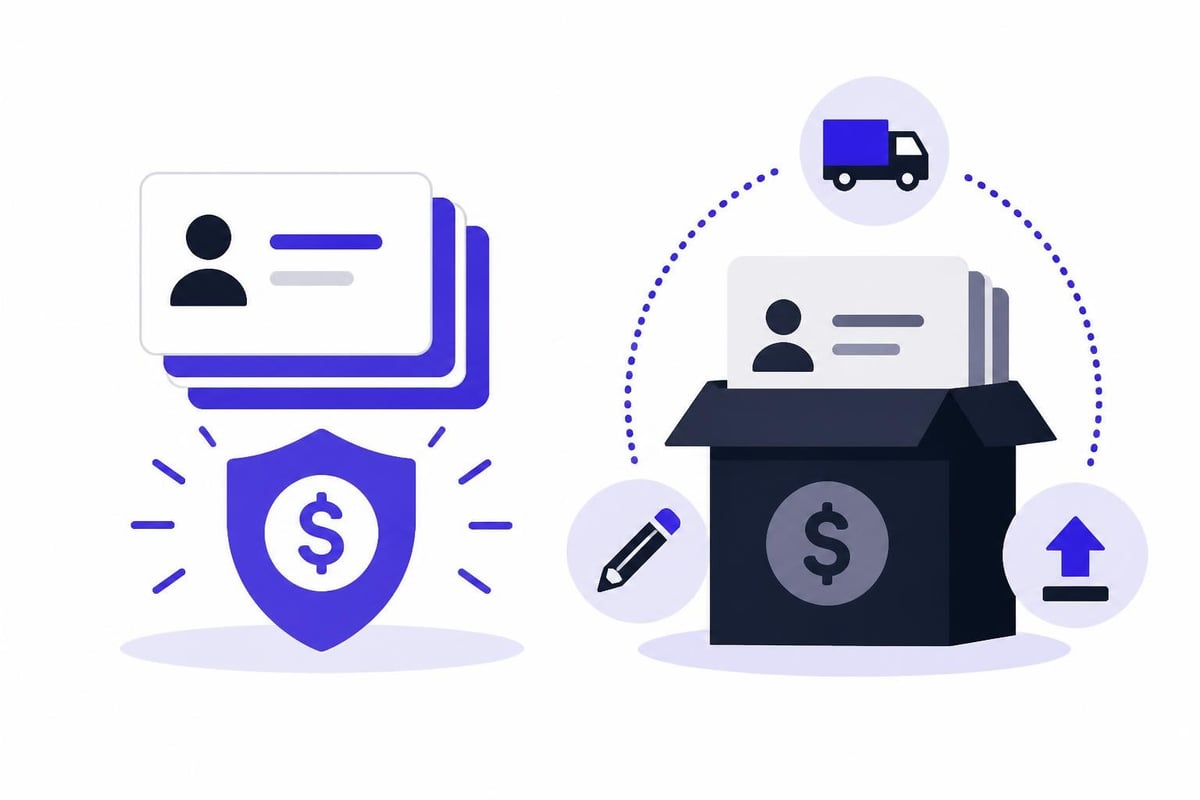
The concept of free business card printing typically involves certain trade-offs that professionals need to understand before ordering. Most services offering complimentary printed cards generate revenue through upgraded features, shipping fees, or minimum order requirements that quickly add costs.
What "Free" Really Means
When companies advertise free business card printing, they usually provide a limited quantity of cards with basic specifications. These promotions often include standard cardstock, limited design templates, and minimal customization options. The catch frequently appears in the form of mandatory shipping charges, watermarked designs, or requirements to create premium accounts.
Common limitations include:
- Maximum quantities (typically 50-250 cards)
- Restricted paper stock options
- Basic templates only
- Slower production and shipping
- Mandatory branding or watermarks
- Setup or design fees
Some services like 4OVER4 offer 200 free printed business cards on 14pt gloss or uncoated paper through loyalty programs, though shipping fees typically apply.
Traditional Print Services Offering Free Options
Several established printing companies provide genuinely free business card printing with varying restrictions. Understanding each service's specific model helps you evaluate whether the offer fits your needs.
Unisource Print provides a free online business card maker with premium 16PT cardstock, allowing complete online design and ordering. Their approach focuses on quality materials while limiting design complexity for free-tier users.
| Service Provider | Free Quantity | Cardstock Quality | Design Flexibility | Shipping Cost |
|---|---|---|---|---|
| 4OVER4 | 200 cards | 14pt gloss/uncoated | Template-based | Varies by program |
| Unisource Print | Varies | Premium 16PT | Online maker | Standard rates |
| Various Local Printers | 50-100 cards | Basic stock | Very limited | Often waived |
| Online Platforms | 100-250 cards | Standard | Template only | $5-15 typical |
According to TechRadar's 2025 guide, services like Vistaprint consistently rank among top providers, though their truly free options have decreased as quality expectations have risen.
Design-First Approaches to Free Business Cards
Creating business cards without upfront design costs has become simpler with web-based tools. These platforms democratize professional design, though understanding their limitations helps set realistic expectations.
Online Business Card Makers
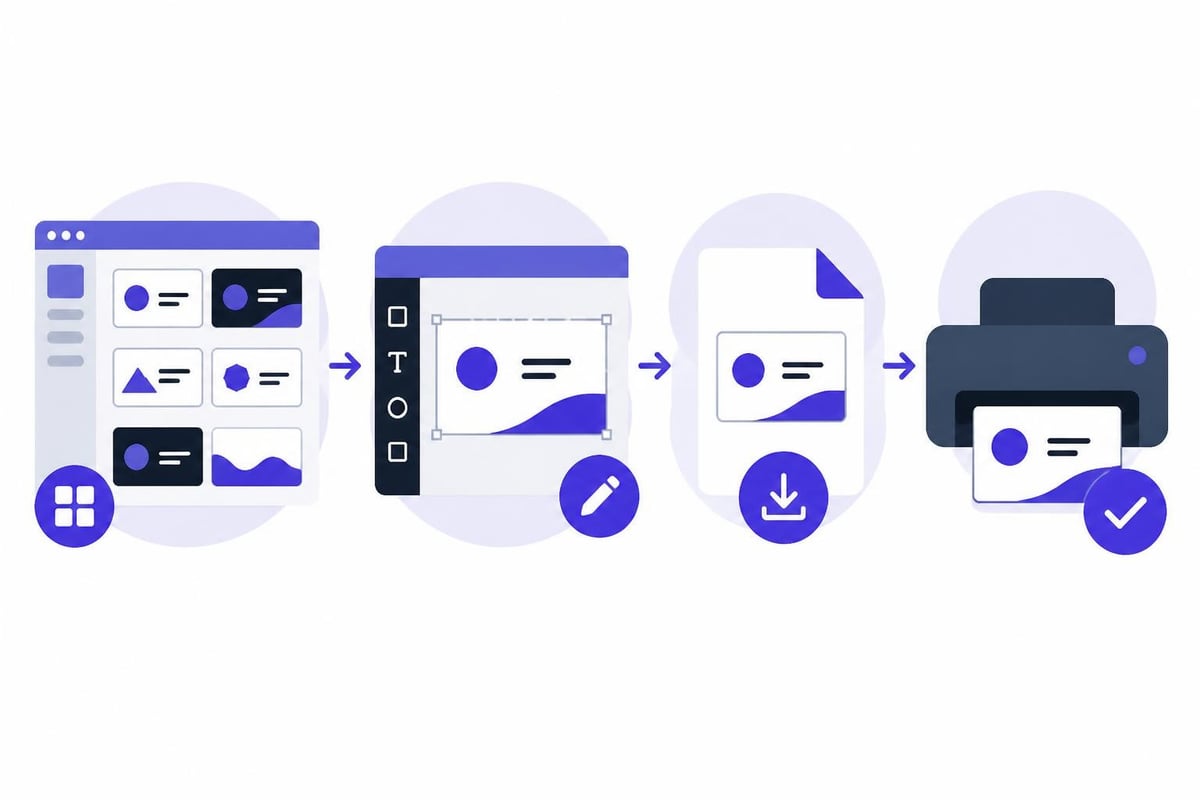
Free business card generators allow users to create designs without graphic design expertise. BusinessCardMaker.net provides modern templates with instant customization, generating high-quality PDF or PNG downloads without signup requirements or watermarks.
The advantages of online makers include:
- Instant preview capabilities showing exactly how cards will appear
- Brand color matching to maintain visual consistency
- Multiple export formats suitable for various printing methods
- Template variety spanning industries and professional styles
- No software installation required for design work
PixConvert's business card generator enables professional design in seconds with customizable brand colors and standard-size PDF downloads. These tools work best when you have a clear vision of your desired aesthetic and can work within template constraints.
Print-at-Home Solutions
FreePDFCards represents another category-services that create printable files for home printing. This approach offers maximum cost savings but requires access to quality printers and cardstock.
Home printing considerations:
- Paper quality matters: Standard printer paper feels unprofessional; invest in perforated cardstock
- Color accuracy varies: Monitor colors may not match printer output
- Cutting precision: Clean edges require proper tools or steady hands
- Ink costs accumulate: Color printing expenses add up quickly
- Time investment: Printing and cutting 100 cards takes significant effort
For small batches or immediate needs, home printing provides complete control. However, the time and material costs often exceed ordering from professional services when producing larger quantities.
The Hidden Costs of Free Business Card Printing
While free business card printing sounds attractive, calculating total cost of ownership reveals expenses that often go unconsidered during initial evaluation.
Beyond the Base Price
Production costs represent just one component of business card investment. Smart professionals consider the complete lifecycle when evaluating networking tools.
| Cost Category | Traditional Printed Cards | Digital Alternatives |
|---|---|---|
| Initial Design | $0-50 (if using templates) | $0-30/month |
| Printing (100 cards) | $0-20 (promotional) | $0 |
| Reprinting (outdated info) | $15-25 per update | $0 |
| Shipping per order | $5-15 | N/A |
| Annual updates (4x) | $60-100 | Included |
| Storage space | Physical space needed | Cloud-based |
Update and Reprint Challenges
Traditional cards become outdated whenever your contact information changes. Professionals who change roles, phone numbers, or email addresses face recurring costs that quickly surpass initial savings.
Reprint scenarios that add costs:
- Job title promotions
- Company rebranding initiatives
- Phone number changes
- Office relocations
- Email address updates
- Adding social media profiles
Jukebox Print offers downloadable print-ready files, but each design iteration requires new printing, making frequent updates expensive.
Digital Business Cards as Cost-Effective Alternatives
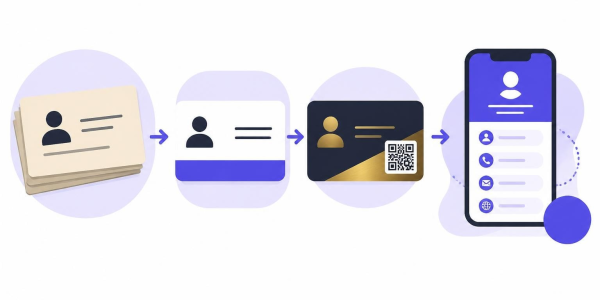
The evolution of networking technology has introduced digital solutions that eliminate printing costs entirely while offering superior functionality. These modern approaches address the core limitations of free business card printing through instant updates and enhanced sharing capabilities.
Advantages of Going Digital
Digital business cards transform how professionals share contact information, moving beyond the constraints of paper-based networking. The shift represents more than cost savings-it fundamentally improves how connections are made and maintained.
Key benefits include:
- Instant updates across all previously shared cards
- Rich media integration including videos, portfolios, and documents
- Analytics tracking showing who viewed your information
- Environmental sustainability eliminating paper waste
- Unlimited sharing without inventory concerns
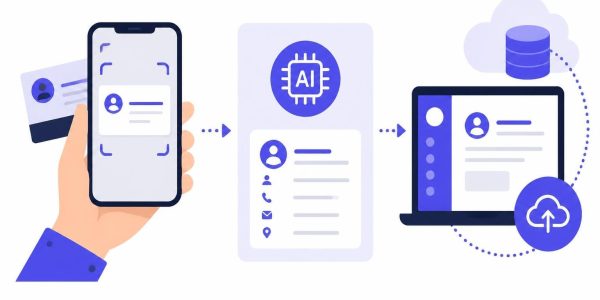
- CRM integration for automatic contact syncing
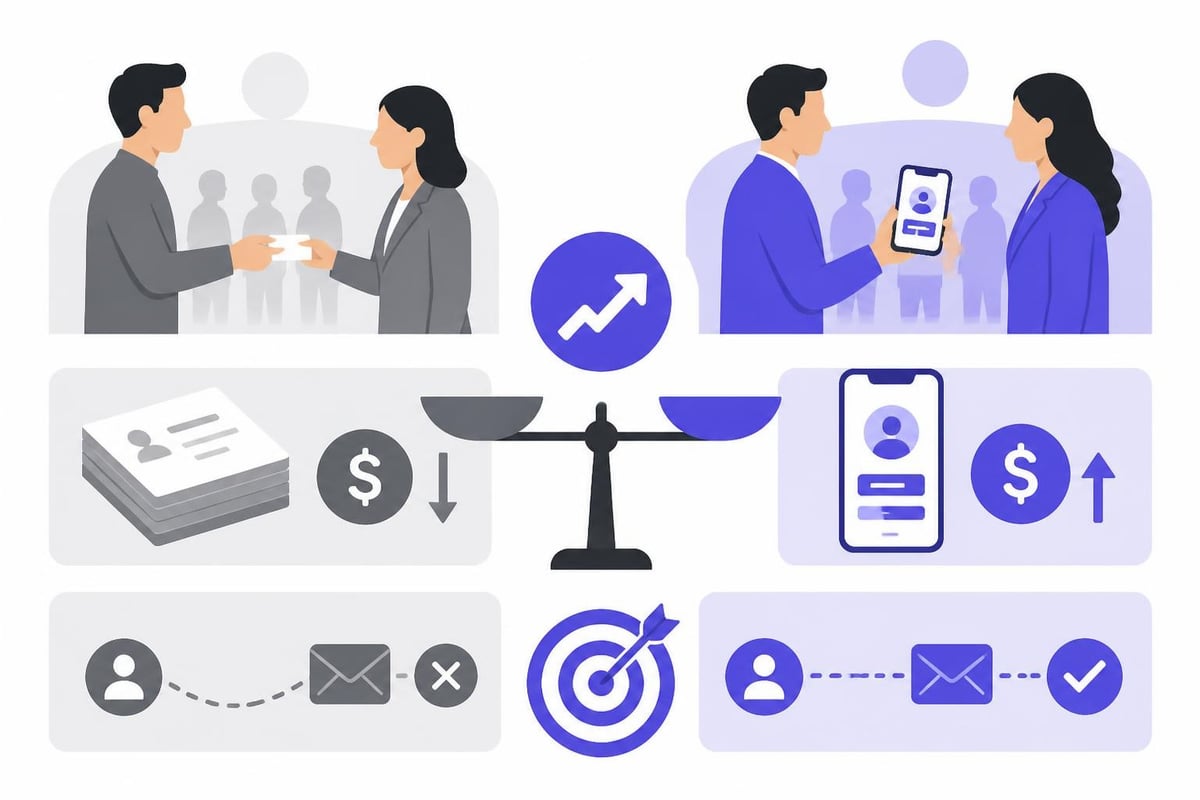
Professionals using digital cards report higher engagement rates and faster follow-up conversions compared to traditional printed alternatives.
Cost Comparison Over Time
Examining costs across typical professional timelines reveals where digital solutions provide superior value. A sales representative attending monthly networking events illustrates this clearly.
Three-year cost projection:
Traditional printed cards approach:
- Initial order (500 cards): $0 (promotional)
- Shipping: $12
- Reprint for job change (Year 1): $20
- Reprint for new contact info (Year 2): $20
- Reprint for company rebrand (Year 3): $25
- Total: $77
Digital card approach:
- Initial setup: $0
- Monthly updates: $0
- Sharing capacity: Unlimited
- Total: $0
The calculation becomes more dramatic for teams. A sales organization with 20 representatives requires 10,000 initial cards plus inevitable updates, quickly reaching thousands in printing costs that digital solutions eliminate.
Features Modern Professionals Need
Today's networking environment demands more than static contact information. Evaluating free business card printing requires understanding whether the medium supports contemporary professional requirements.
Essential Networking Capabilities
Professional networking in 2026 extends far beyond exchanging names and phone numbers. Effective business cards now serve as gateways to comprehensive professional identities.
- Video introductions that convey personality and expertise
- Portfolio links showcasing recent work and achievements
- Scheduling integration enabling immediate meeting bookings
- Lead capture forms for two-way information exchange
- Social proof through LinkedIn profiles and testimonials
- Custom branding reflecting corporate identity standards
Traditional free business card printing cannot accommodate these elements. The physical format restricts content to what fits on a 3.5" × 2" surface, forcing professionals to choose between essential contact details.
Team and Enterprise Considerations
Organizations face unique challenges that individual freelancers don't encounter. Digital business cards for teams address corporate requirements that printed cards struggle to meet, including centralized brand control and automated updates.
Enterprise-specific needs:
- Brand consistency enforcement across distributed teams
- Automated provisioning for new hires
- HR system integration for automatic updates
- Compliance tracking for regulated industries
- Usage analytics measuring networking effectiveness
- Centralized deactivation when employees depart
Free business card printing services rarely offer batch ordering tools or brand management systems. Each team member typically orders independently, creating consistency challenges and administrative overhead.
Making the Right Choice for Your Networking Strategy
Selecting between free business card printing and modern alternatives requires honest assessment of your networking patterns, update frequency, and professional goals.
When Printed Cards Still Make Sense
Despite digital advantages, certain situations favor traditional printed business cards. Understanding these scenarios helps professionals make context-appropriate decisions.
Printed cards work best when:
- Your contact information remains stable for years
- You network primarily with traditional industries expecting paper cards
- Events or venues lack reliable internet connectivity
- You need physical leave-behinds for bulletin boards or reception areas
- Your brand identity depends on tactile elements like embossing or specialty finishes
Industries such as law, financial planning, and real estate often maintain strong printed card traditions where physical exchange carries symbolic weight.
Hybrid Approaches
Many professionals adopt combined strategies, leveraging strengths of both formats. This balanced approach provides flexibility across diverse networking situations.
Effective hybrid models:
| Scenario | Primary Tool | Backup Option |
|---|---|---|
| Trade show booth | Digital with QR code display | Small printed stack |
| Client meetings | Digital share via phone | Printed for those requesting |
| Networking events | Digital primary exchange | Printed for technology-resistant contacts |
| Conference speaking | Digital in presentation slides | Printed for offline follow-up |
The hybrid approach recognizes that networking effectiveness depends more on recipient preferences than your personal tool choice. Offering both options demonstrates professionalism and adaptability.
Free Digital Business Card Platforms
As the networking landscape evolves, several platforms now offer genuinely free digital business card solutions without the limitations plaguing printed alternatives.
Platform Comparison
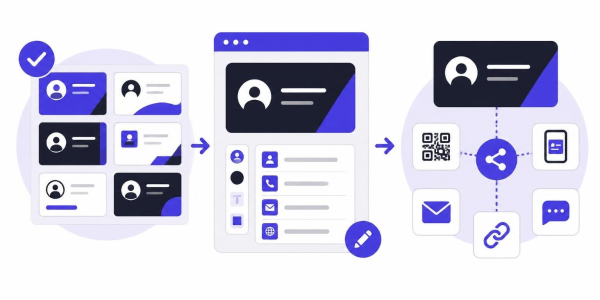
GoFastCARDS exemplifies modern digital card platforms, providing professional cards instantly via QR code or link with no credit card required. These services eliminate traditional printing constraints while adding powerful features.
What to evaluate in digital platforms:
- Creation speed and ease of use
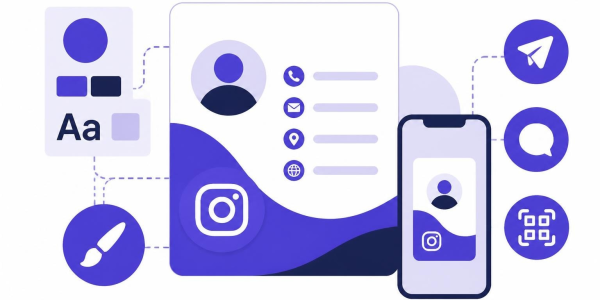
- Customization flexibility (colors, logos, fonts)
- Sharing method variety (QR, NFC, link, wallet)
- Update process simplicity
- Analytics and tracking capabilities
- Integration with existing tools
- Team management features
- Support and onboarding quality
The best platforms balance simplicity for individual users with power features for growing organizations. Free tiers should provide genuine value rather than merely serving as restrictive trial versions.
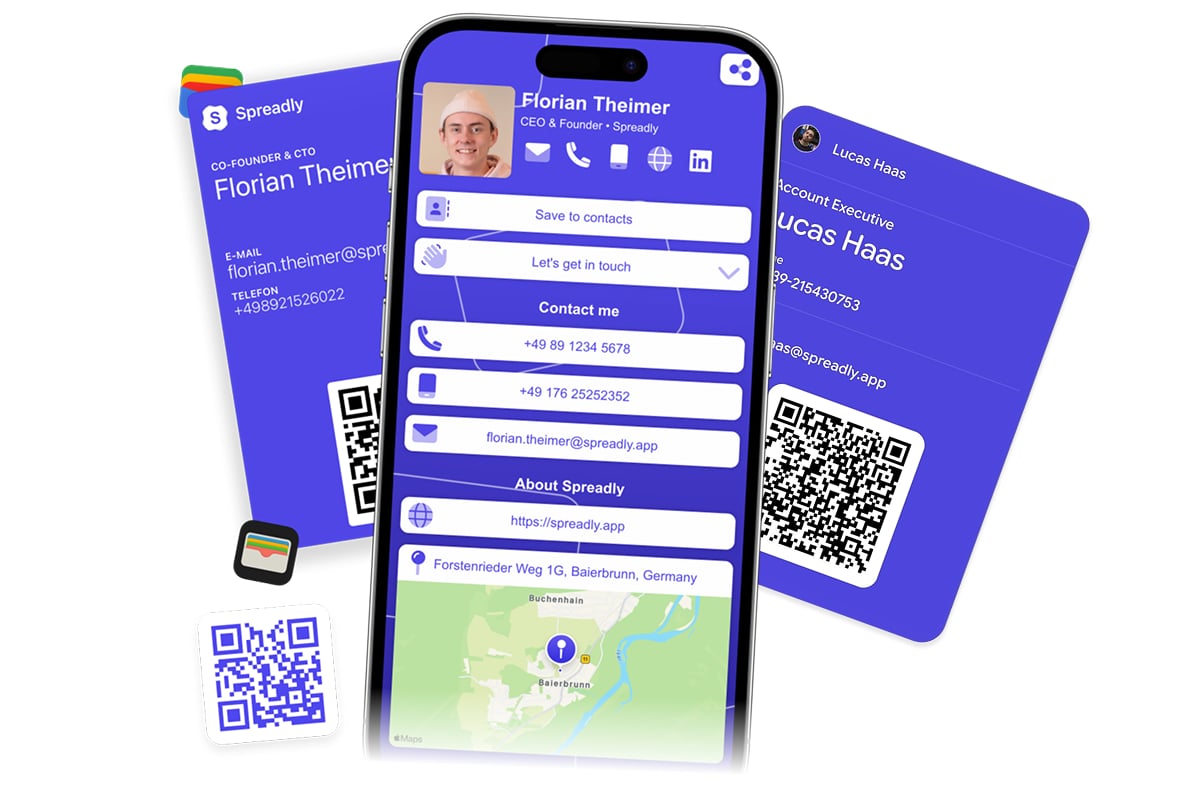
Professionals seeking polished, always-current contact sharing often find digital business cards eliminate the recurring costs and limitations associated with free business card printing while providing superior networking outcomes. These solutions work across all devices without requiring recipients to download apps, removing friction from the connection process.
Environmental and Sustainability Considerations
Beyond cost and functionality, the environmental impact of networking tools increasingly influences professional decisions. Conscious businesses evaluate the sustainability implications of their choices.
Environmental factors:
- Paper production and waste from discarded outdated cards
- Shipping emissions from multiple reprint orders
- Ink and chemical usage in printing processes
- Landfill contribution from unused card inventory
- Carbon footprint of digital infrastructure (minimal per user)
Organizations with sustainability commitments find that eliminating printed business cards aligns with broader environmental goals while simultaneously reducing costs.
Implementation Best Practices
Whether choosing free business card printing or digital alternatives, implementation quality determines networking success. Strategic deployment maximizes return on investment.
Optimizing Free Printed Cards
If budget constraints or industry norms require printed cards, these strategies improve outcomes despite platform limitations.
Maximize printed card effectiveness:
- Include QR codes linking to complete digital profiles
- Prioritize essential information over comprehensive details
- Choose timeless designs that won't quickly feel dated
- Order conservatively to reduce waste from updates
- Track distribution to understand which events generate connections
- Supplement with digital for comprehensive information sharing
The QR code bridge strategy particularly helps, allowing printed cards to serve as gateways to richer digital content that remains current despite card age.
Digital Card Deployment Strategies
Digital cards offer immediate deployment advantages but require different strategic thinking than printed alternatives.
Launch your digital card effectively:
- Add cards to email signatures for automatic sharing
- Create prominent QR codes for office displays and presentations
- Enable Apple Wallet and Google Wallet for recipient convenience
- Integrate with CRM systems for seamless contact management
- Train team members on consistent sharing approaches
- Establish brand guidelines for customization boundaries
- Monitor analytics to identify high-performing sharing methods
The flexibility of digital platforms allows continuous optimization based on actual networking performance rather than guessing before printing thousands of cards.
Measuring Networking ROI
Professional networking represents time and resource investment that deserves measurement and optimization. Both free business card printing and digital alternatives should prove their value through trackable outcomes.
Key Performance Indicators
Smart professionals track metrics that reveal whether their networking tools generate real business results.
Essential networking metrics:
| Metric | Traditional Cards | Digital Cards |
|---|---|---|
| Cards distributed | Manual tracking required | Automatic share counting |
| Recipient engagement | Unknown after handoff | View and click analytics |
| Contact information accuracy | Degrades over time | Always current |
| Follow-up conversion rate | Manual CRM entry | Automatic sync available |
| Cost per connection | Divide total cost by cards distributed | Typically $0 |
| Update frequency impact | High cost per change | No marginal cost |
Digital platforms provide inherent advantages in tracking and attribution, helping professionals understand which networking activities generate the highest return.
Continuous Improvement Approaches
The best networking strategies evolve based on measured results rather than assumptions. Regular review and refinement separate effective networkers from those simply going through motions.
Quarterly review questions:
- Which sharing methods generated the most qualified connections?
- How many recipients actually contacted you after receiving your card?
- Did any information become outdated, and how quickly was it corrected?
- What percentage of networking investments converted to business relationships?
- How does your current approach compare to alternatives in cost and effectiveness?
This analytical approach transforms networking from hopeful activity into strategic business development with clear ROI justification.
Industry-Specific Considerations
Different professional sectors have unique networking norms and expectations that influence the printed versus digital decision.
Sales and Business Development
Sales professionals exchange contact information more frequently than most other roles, making cost-per-share and update flexibility critical factors. Free business card printing rarely scales to the volume requirements of active sales teams.
Sales-specific priorities:
- Rapid follow-up capability with automated CRM entry
- Lead capture tools for reciprocal information collection
- Portfolio integration to showcase relevant case studies
- Scheduling links to accelerate meeting booking
- Performance tracking to identify successful networking venues
Professional Services
Consultants, attorneys, accountants, and similar professionals often network in traditional settings where printed cards maintain cultural significance, yet they also need modern capabilities.
Hybrid approaches work particularly well in professional services, maintaining traditional credibility while leveraging digital efficiency for actual relationship development and follow-up.
Technology and Startups
Innovation-focused sectors typically embrace digital-first approaches enthusiastically. Teams at tech companies, startups, and digital agencies often prefer solutions that demonstrate their forward-thinking positioning.
These organizations frequently prioritize team-wide digital card platforms that integrate with their existing technology stacks and support rapid scaling as teams grow.
Free business card printing offers legitimate cost savings for professionals with stable information and traditional networking patterns, but the total cost of ownership often exceeds initial expectations once updates, shipping, and limitations are considered. Modern digital business cards eliminate these recurring expenses while providing superior functionality, instant updates, and powerful integrations that traditional printed cards cannot match. Whether you choose printed, digital, or hybrid approaches, success depends on strategic implementation and continuous optimization based on measured results. Spreadly provides a comprehensive digital business card solution that lets you create, customize, and share professional contact information in under two minutes, with rich media support, team management capabilities, and seamless CRM integration-all starting completely free.