Preferred Ways to Share Digital Business Cards 2026
6 minutes
3rd of June 2026
In this article:
- Apple Wallet Leads the Digital Revolution
- QR Code Sharing Remains a Reliable Standard
- Lock Screen QR Codes Transform Instant Accessibility
- Google Wallet Gains Significant Ground
- NFC Cards Maintain Strategic Relevance
- What These Trends Reveal About Digital Networking
- The Future of Digital Business Card Sharing
Digital networking has fundamentally transformed how professionals exchange contact information. Based on comprehensive data from 1,000,000 Spreadly users, distinct patterns have emerged in how people prefer to share their digital business cards. The insights reveal a clear winner: easily accessible, instantly scannable options dominate the landscape. The shift toward wallet-integrated solutions and lock screen accessibility demonstrates that professionals prioritize speed and convenience above all else.
Apple Wallet Leads the Digital Revolution
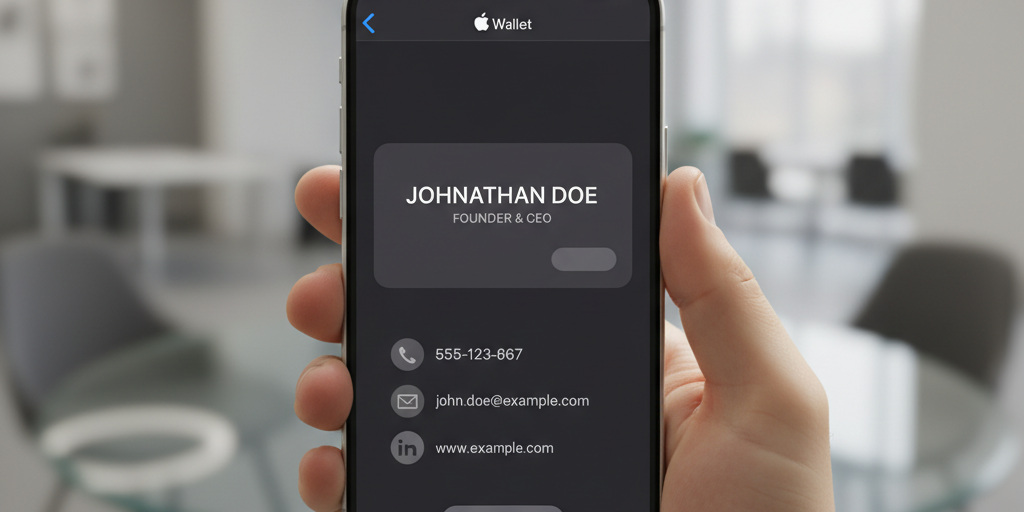
Apple Wallet has emerged as the dominant sharing method, capturing 34.7% of all digital business card shares—a remarkable 152% increase compared to 2025. This explosive growth reflects a fundamental shift in how professionals approach networking. The integration of digital business cards into Apple Wallet has become increasingly seamless, allowing users to access their contact information instantly without opening additional apps.
The appeal of Apple Wallet extends beyond mere convenience. For companies, it represents a powerful branding opportunity. Organizations can maintain complete control over the visual design and brand identity while empowering employees to share their contact details independently. This balance between corporate consistency and individual autonomy has made Apple Wallet particularly attractive to enterprise users.
Why Apple Wallet Dominates
The platform's success stems from its frictionless user experience. Recipients can save contact information with a single tap, and the card remains permanently accessible in their wallet—right alongside their payment cards and loyalty programs. According to research from Doorway, Apple Wallet usage has grown by 66 million users since 2020, demonstrating sustained momentum in wallet adoption for professional networking.
QR Code Sharing Remains a Reliable Standard
QR codes continue to hold strong, representing 28.1% of all shares with a 25% year-over-year growth. This enduring popularity reflects the universal accessibility of QR technology. Unlike wallet-specific solutions, QR codes work across all smartphone platforms, making them the most inclusive sharing method available.
The continued relevance of QR codes in 2026 is supported by broader adoption trends. According to eMarketer projections, over 102.6 million consumers in the United States alone use smartphone QR scanners. This widespread familiarity has eliminated the learning curve that once hindered QR adoption, making it a natural choice for professional networking.
Professionals appreciate QR codes for their versatility. They can be displayed on smartphone screens, printed on physical materials, or embedded in email signatures. This flexibility makes QR codes ideal for both planned networking events and spontaneous encounters. The technology bridges the gap between digital convenience and traditional business card functionality.
Lock Screen QR Codes Transform Instant Accessibility
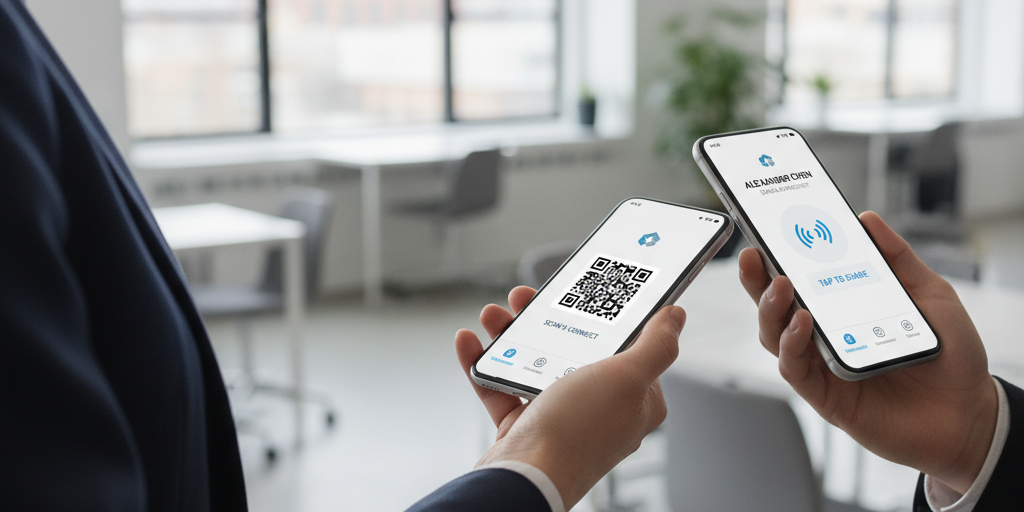
Perhaps the most dramatic trend in 2026 is the explosive growth of lock screen QR codes, which now account for 13.2% of shares—a staggering 749% increase from 2025. This innovation addresses a fundamental pain point: the time and friction involved in unlocking a phone, opening an app, and navigating to a business card.
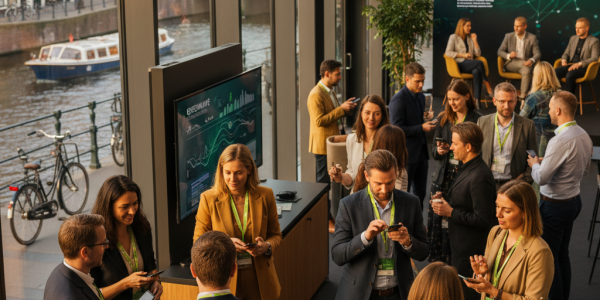
Lock screen widgets and specialized lock screen QR code solutions have made sharing contact information nearly instantaneous. Professionals can simply wake their phone and present their lock screen, allowing others to scan without any additional steps. This approach has proven especially valuable at busy networking events where speed matters.
The dramatic adoption rate suggests that this sharing method may be reaching a tipping point. As more platforms incorporate lock screen functionality and users discover its convenience, it could potentially rival traditional QR codes as a primary sharing mechanism. The combination of zero-friction access and universal scanning compatibility makes it particularly appealing to professionals who network frequently.
Google Wallet Gains Significant Ground
Google Wallet has experienced impressive growth, now representing 7.9% of shares with a 194% increase compared to 2025. While still trailing Apple Wallet in overall market share, this growth trajectory indicates strong momentum within the Android ecosystem. The platform offers similar benefits to its Apple counterpart: instant accessibility, professional presentation, and permanent storage of contact information.
The adoption of digital business cards on Google Wallet represents a critical development for companies seeking cross-platform networking solutions. Organizations can now provide wallet-integrated business cards to employees regardless of their device preference, ensuring consistent brand representation across both major mobile platforms.
For professionals using Android devices, Google Wallet integration provides the same seamless experience that has made Apple Wallet so successful. The rapid growth suggests that as awareness increases and more platforms support Google Wallet integration, its market share will continue to expand substantially.
NFC Cards Maintain Strategic Relevance
NFC cards account for 6.9% of shares, showing a 124% increase from 2025. While representing a smaller overall percentage, this growth is significant within the context of NFC business card adoption trends. Physical NFC cards offer a unique value proposition: they combine the tangibility of traditional business cards with the instant digital transfer of modern technology.
The appeal of NFC cards extends beyond functionality to impression management. The tap-to-share experience creates a memorable interaction that stands out in networking situations. For professionals in competitive industries, this differentiation can be valuable. According to market research, the global NFC business card market is projected to grow at a compound annual growth rate of 14.8% through 2034, indicating sustained long-term demand.
NFC technology also addresses a specific challenge in professional settings: connectivity independence. Unlike QR codes that require camera access, NFC works through proximity alone. This makes it particularly effective in dimly lit environments or situations where displaying a screen might be impractical.
What These Trends Reveal About Digital Networking
The data from one million Spreadly users paints a clear picture: ease of access and instant scanning capabilities determine adoption. The methods experiencing the highest growth—Apple Wallet, lock screen QR codes, and Google Wallet—all prioritize minimizing the steps between intent and execution.
This trend reflects broader changes in professional expectations. In 2026, networking happens faster and more spontaneously than ever before. Professionals expect to exchange information in seconds, not minutes. Solutions that require multiple app opens, navigation steps, or explanations simply cannot compete with options that work immediately.
The growing importance of wallet integration also signals a shift in how companies think about employee empowerment. By providing Spreadly digital business cards that integrate with Apple Wallet and Google Wallet, organizations maintain brand consistency while giving employees the flexibility to network independently. This approach has become increasingly relevant as remote work and distributed teams make centralized business card management impractical.
The Future of Digital Business Card Sharing
Looking ahead, several trends seem poised to accelerate. Lock screen accessibility will likely become a standard feature rather than an innovative option, as its dramatic growth demonstrates clear user preference. Wallet integration will continue expanding as both Apple and Google invest in making their wallet platforms more capable and versatile.
The data also suggests that diversity in sharing methods will remain important. Different networking contexts favor different approaches. Quick encounters at conferences benefit from lock screen QR codes, while formal business meetings might call for the professional polish of wallet-integrated cards. The most effective digital business card solutions will continue to support multiple sharing methods, allowing users to choose the best option for each situation.
For organizations evaluating digital business card solutions, these trends provide clear guidance. Platforms that prioritize instant accessibility, support wallet integration, and eliminate friction in the sharing process will deliver the best results. The 152% growth in Apple Wallet usage and 749% increase in lock screen QR codes demonstrate that users overwhelmingly prefer solutions that respect their time and streamline the networking process.
As digital networking continues to evolve, the fundamental principle revealed by this data remains constant: the easiest solution wins. Whether through wallet integration, lock screen widgets, or traditional QR codes, the methods that minimize steps and maximize convenience will capture market share. This insight should guide both individual professionals choosing their networking tools and companies selecting digital business card platforms for their teams.