Business Card Scanner with CRM Integration Guide 2026
12 minutes
29th of June 2026
In this article:
- The Critical Role of Automated Contact Capture
- Essential Integration Capabilities
- AI-Powered Enhancement Features
- Mobile and Desktop Scanning Options
- Lead Qualification and Routing
- Security and Compliance Considerations
- Integration with Digital Business Card Ecosystems
- Measuring ROI and Effectiveness
- Emerging Trends and Future Developments
- Selecting the Right Solution for Your Organization
Professional networking generates hundreds of business cards at conferences, trade shows, and client meetings. Converting these paper contacts into actionable leads traditionally consumed hours of manual data entry, introduced errors, and delayed follow-ups. A business card scanner with CRM integration solves this challenge by automating the capture, digitization, and synchronization of contact information directly into your customer relationship management system. This technology enables sales teams to focus on relationship building rather than administrative tasks while ensuring no valuable connection falls through the cracks.
The Critical Role of Automated Contact Capture
Manual business card management creates significant productivity bottlenecks for sales and marketing professionals. After networking events, stacks of paper cards accumulate on desks, requiring time-consuming data entry into CRM platforms. This process introduces multiple failure points that impact sales effectiveness.
Research on business card exchange networks demonstrates that professional connections form the foundation of business development, yet many of these connections never materialize into opportunities due to delayed or incomplete follow-up. The gap between collecting a card and entering it into a CRM system can stretch from days to weeks, by which time the initial connection has cooled.
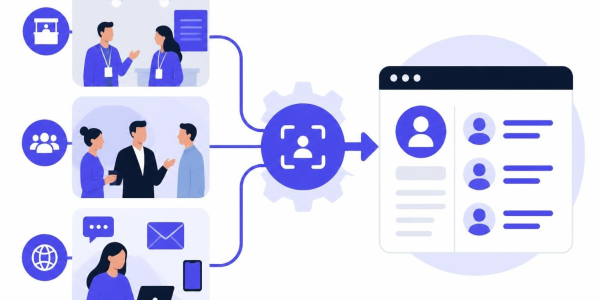
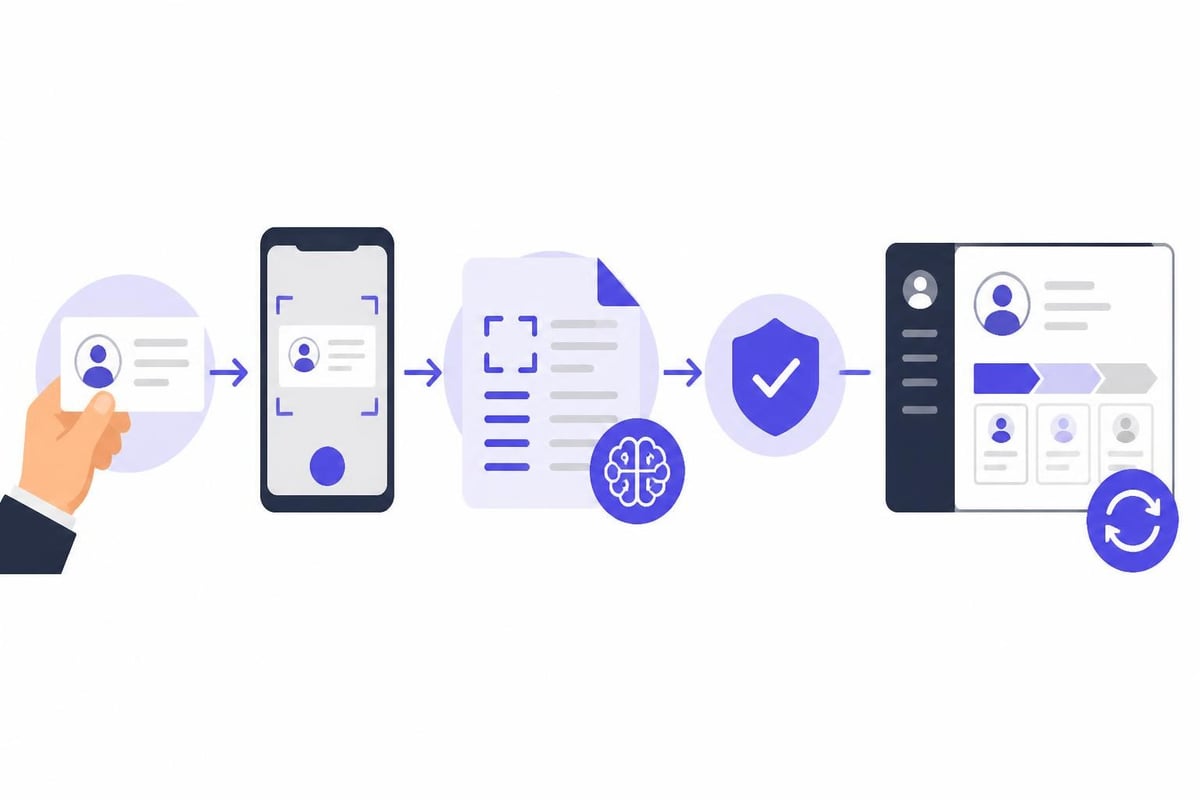
A business card scanner with CRM integration eliminates these delays through instant digitization. Modern scanning solutions use optical character recognition (OCR) and artificial intelligence to extract names, titles, phone numbers, email addresses, and company details within seconds. Advanced systems even identify social media profiles and enrich contact records with additional business intelligence.
Speed and Accuracy Advantages
The efficiency gains from automated scanning are measurable and significant. Sales representatives attending a three-day conference might collect 50-100 business cards. Manual entry of this volume requires 3-5 hours of focused work, assuming 2-3 minutes per card. A business card scanner with CRM integration reduces this to 5-10 minutes total, representing a 95% time savings.
Accuracy improvements are equally important. Advanced binarization techniques for camera-captured business card images have dramatically improved recognition rates, with modern systems achieving 95-98% accuracy on standard business cards. AI-powered validation catches common OCR errors, flagging unusual email formats or incomplete phone numbers for human review.
| Feature | Manual Entry | Business Card Scanner with CRM Integration |
|---|---|---|
| Time per card | 2-3 minutes | 5-10 seconds |
| Accuracy rate | 85-90% (typing errors) | 95-98% (AI-verified) |
| Follow-up delay | 2-7 days | Immediate |
| Data enrichment | Manual research | Automatic LinkedIn/company lookup |
| CRM sync | Batch upload | Real-time integration |
Essential Integration Capabilities
Not all business card scanners offer equal CRM connectivity. The most effective solutions provide native integrations with major platforms like Salesforce, HubSpot, Pipedrive, Microsoft Dynamics, and emerging tools like Attio and Salesflare. Native integrations ensure bidirectional data flow, automatic field mapping, and real-time synchronization.
Field Mapping and Customization
Different businesses track different information. B2B companies might prioritize company size and industry verticals, while service providers need detailed contact preferences and project interests. A robust business card scanner with CRM integration allows custom field mapping, ensuring scanned data populates the correct CRM fields.
Advanced platforms enable you to define custom fields during the scanning process. For example, at a trade show booth, your team might add notes about prospect interests, budget timeline, or specific products discussed. These contextual details sync alongside basic contact information, creating complete lead records that enable personalized follow-up.
The benefits of open-source CRM systems for small and medium enterprises include flexibility in customization, which extends to scanner integration. Many modern scanning solutions offer API access, allowing businesses to create tailored workflows that match their unique sales processes.
Multi-Platform Synchronization
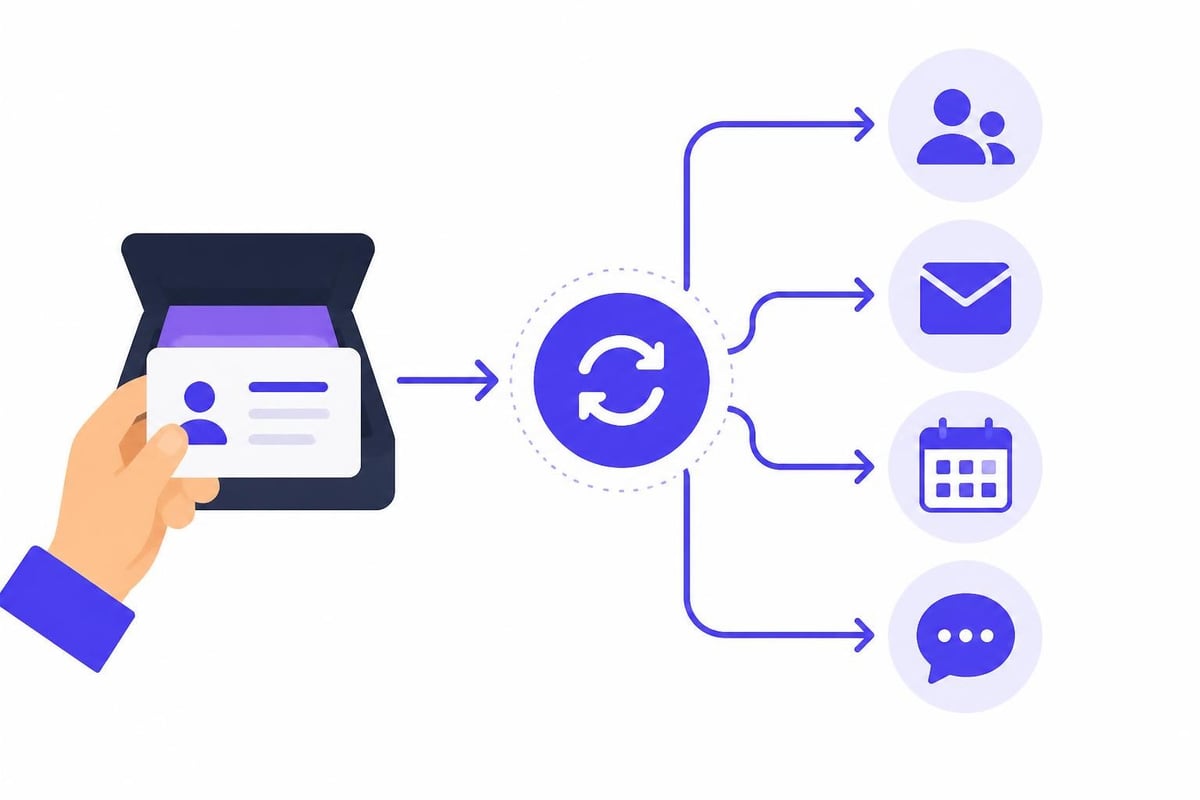
Today's sales teams work across multiple tools simultaneously. A contact scanned at an event should appear not only in your CRM but also in email marketing platforms, calendar systems, and communication tools. Leading business card scanner solutions with CRM integration support multi-platform synchronization, pushing contact data to Google Contacts, Outlook, and specialized sales engagement platforms.
This distributed approach ensures every team member has access to the latest contact information regardless of which system they primarily use. Marketing can immediately add new contacts to nurture campaigns, while account executives see them in their daily prospecting dashboards.
AI-Powered Enhancement Features
Modern business card scanners transcend basic OCR functionality by incorporating artificial intelligence that adds value beyond simple digitization. These enhancements transform raw contact data into actionable intelligence.
Automatic Data Enrichment
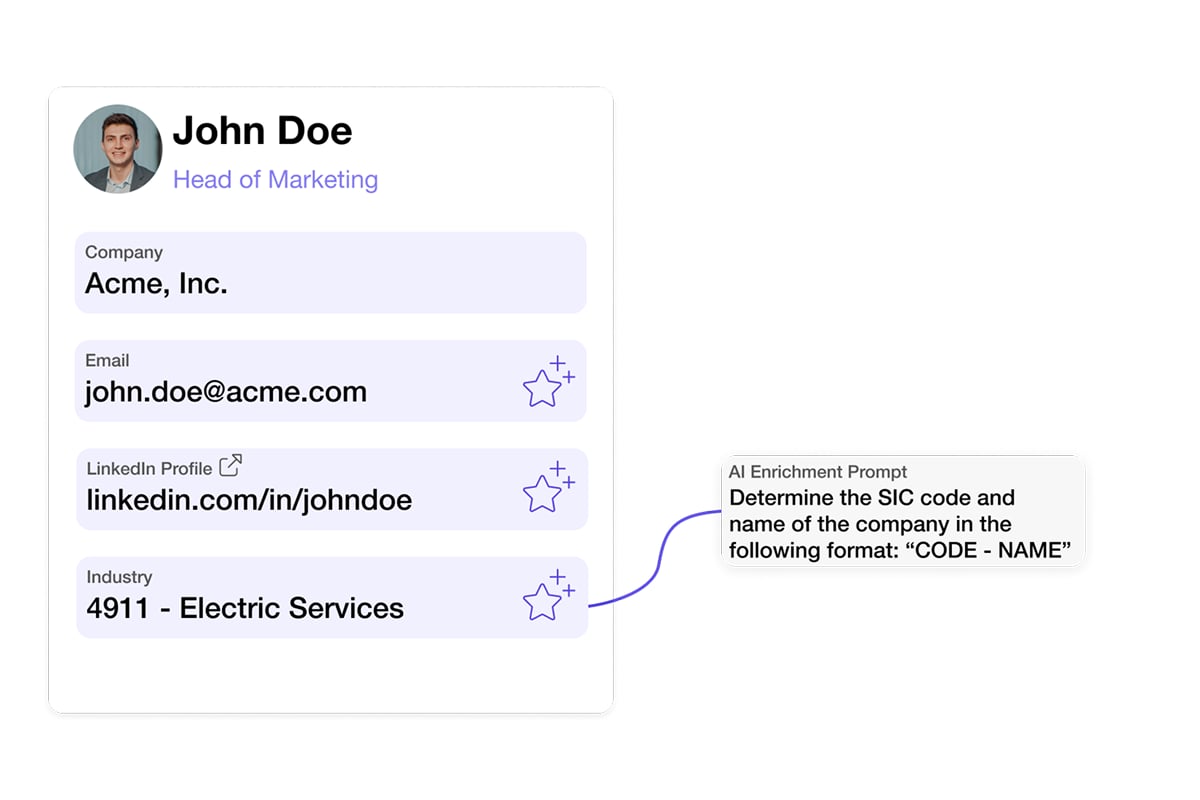
When you scan a business card, AI systems can automatically research the contact and company, appending details like:
- Company size, revenue, and industry classification
- Recent news, funding rounds, or leadership changes
- Social media profiles (LinkedIn, Twitter, company pages)
- Organizational hierarchy and reporting structure
- Technology stack and vendor relationships
This enrichment happens in real-time, so by the time you open your CRM, you have a comprehensive profile rather than just name and phone number. Sales representatives can personalize their outreach with relevant context, significantly improving response rates.
Duplicate Detection and Merging
Contact database hygiene is an ongoing challenge for CRM administrators. A business card scanner with CRM integration should identify when a scanned card matches an existing contact, offering to update the record rather than creating a duplicate. Sophisticated systems recognize variations in job titles, phone numbers, or email addresses, flagging potential duplicates for review.
Some platforms use fuzzy matching algorithms that catch duplicates even when information differs slightly-for example, "Bob Smith" versus "Robert Smith" at the same company. This prevents database bloat and ensures your team always works with accurate, consolidated contact records.
Mobile and Desktop Scanning Options
The flexibility to scan business cards from any device increases adoption and ensures no contact goes uncaptured. Most modern solutions offer both mobile apps and desktop capabilities, each suited to different workflow scenarios.
Mobile-First Scanning
Sales professionals at conferences, client sites, and networking events need immediate capture capabilities. Mobile scanning apps like those offered by Scan2Lead and VisiScanner enable on-the-spot digitization using smartphone cameras. Advanced mobile scanners support batch processing, allowing users to photograph multiple cards in succession and review them later.
The immediacy of mobile scanning enables same-day follow-up, a critical advantage in competitive sales environments. You can scan a card during a conversation, add contextual notes, and trigger an automated follow-up sequence before leaving the event venue.
Mobile scanning also supports offline functionality, a crucial feature for international events or venues with limited connectivity. Cards scanned offline queue for synchronization once network access returns, ensuring no contacts are lost.
Desktop and Bulk Processing
For businesses that accumulate business cards in bulk-trade show exhibitors, receptionists at office lobbies, or sales teams returning from multi-day events-desktop scanning offers efficient batch processing. Flatbed scanners or dedicated business card readers process dozens of cards per minute, making them ideal for periodic high-volume capture.
Desktop solutions typically offer more sophisticated validation interfaces, displaying scanned data in spreadsheet-like views where administrators can verify accuracy before CRM import. This hybrid approach balances automation with quality control, particularly important for enterprise deployments where data accuracy standards are stringent.
Lead Qualification and Routing
Capturing contact information represents only the first step in effective lead management. A business card scanner with CRM integration should support automated lead qualification and routing based on predefined criteria.
Scoring and Prioritization
Not all contacts hold equal sales potential. Advanced scanning platforms enable lead scoring rules that automatically prioritize contacts based on:
- Job title and seniority level
- Company size and industry
- Geographic location
- Product interests indicated during conversation
- Engagement level at events
High-scoring leads can trigger immediate notifications to account executives, while lower-priority contacts enter automated nurture sequences. This intelligent routing ensures sales resources focus on opportunities with the highest potential value.
Trade show and event scanning often includes custom tagging functionality. Your team might categorize scanned contacts by product interest, booth interaction type, or qualification status (hot, warm, cold). These tags flow into your CRM, enabling sophisticated segmentation for follow-up campaigns.
Spreadly's lead capture solution streamlines this entire process by allowing you to scan business cards, trade show badges, or QR codes in seconds, with AI-powered data completion and real-time CRM synchronization. You can define custom fields linked directly to your CRM, eliminating manual data entry and making trade show ROI immediately visible.
Territory and Team Assignment
Enterprise sales organizations divide prospects by territory, industry, or account size. A business card scanner with CRM integration should automatically route contacts to the appropriate sales representative based on these criteria. For example, a contact from a Fortune 500 company in the Northeast might automatically assign to the enterprise account executive covering that region.
This automation prevents the common scenario where multiple team members contact the same prospect, creating confusion and appearing unprofessional. Clear ownership established at the point of capture ensures coordinated, consistent follow-up.
Security and Compliance Considerations
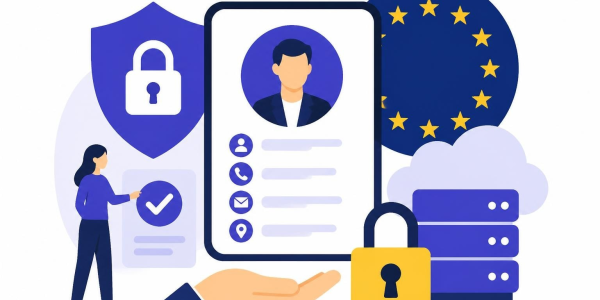
Business contact information represents sensitive data subject to privacy regulations like GDPR, CCPA, and industry-specific requirements. When evaluating a business card scanner with CRM integration, security and compliance features deserve careful attention.
Data Protection Standards
Professional scanning solutions should offer:
- End-to-end encryption for data in transit and at rest
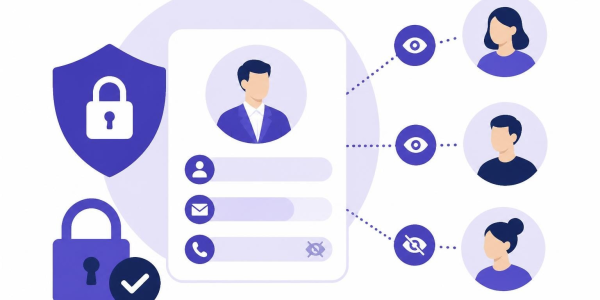
- Role-based access controls limiting who can view or export contact data
- Audit logging tracking all access and modifications to contact records
- Data residency options ensuring information stays within specific geographic regions
- Regular security assessments and compliance certifications
European businesses should prioritize GDPR-compliant solutions that provide clear data processing agreements and enable contact consent management. The ability to mark contacts who have explicitly opted in to communications helps marketing teams maintain compliance while maximizing outreach effectiveness.
Consent and Opt-Out Management
Scanning a business card doesn't automatically grant permission for marketing communications. Leading platforms integrate consent capture into the scanning workflow, prompting users to note whether the contact agreed to follow-up, expressed interest in specific products, or requested no contact.
This consent data synchronizes with your CRM and email marketing platforms, automatically suppressing contacts who haven't opted in from promotional campaigns while still allowing legitimate business follow-up. Automated opt-out processing honors unsubscribe requests across all systems, reducing compliance risk.
Integration with Digital Business Card Ecosystems
The networking landscape is evolving beyond physical cards toward digital business cards that update automatically and support richer media. A forward-looking business card scanner with CRM integration should handle both physical and digital contact exchange.
QR Code and NFC Scanning
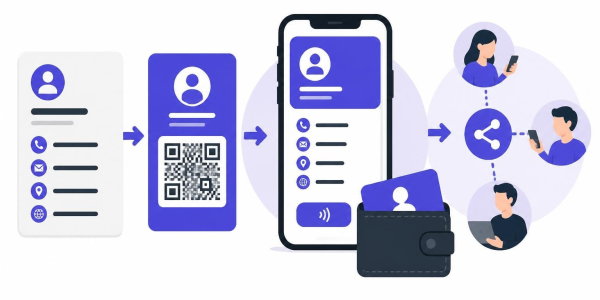
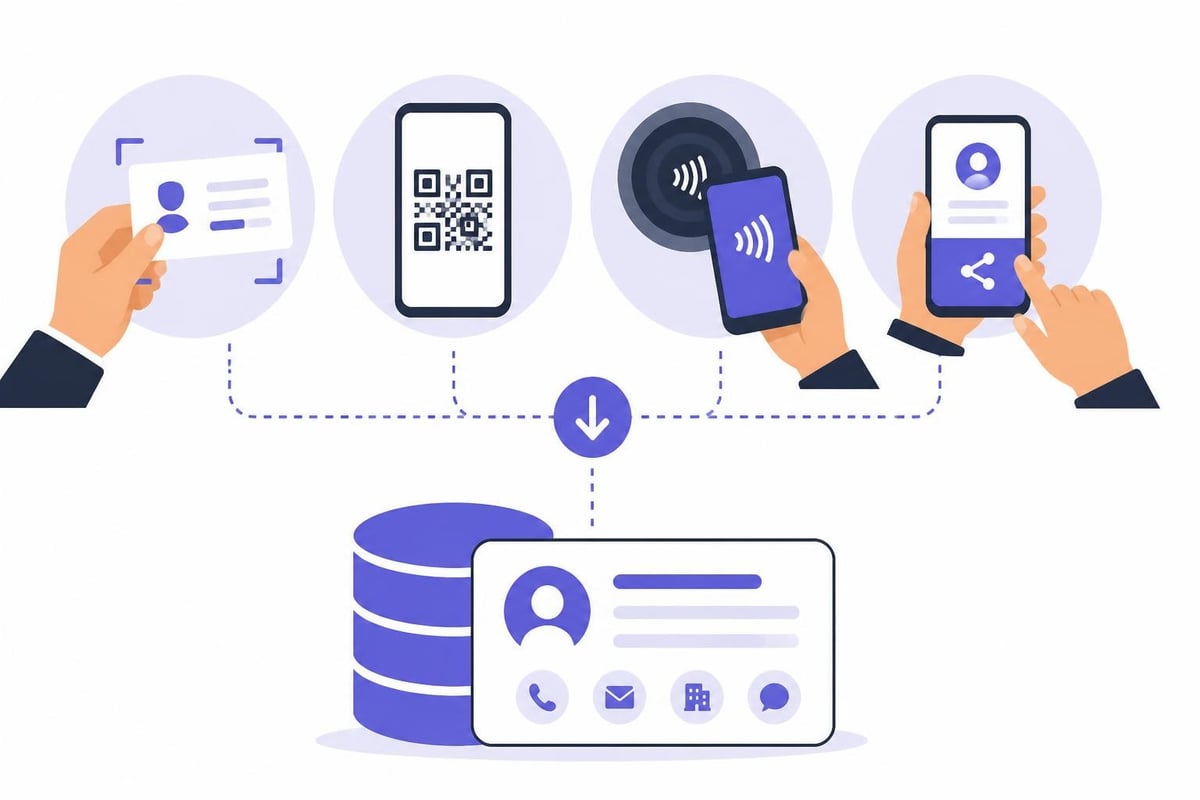
Many professionals now share digital contact information via QR codes or NFC tags. Modern scanning apps recognize these formats alongside physical cards, extracting vCard data directly without OCR processing. This approach offers perfect accuracy since no text recognition is required.
Digital contact exchange also enables two-way information sharing. When you scan someone's digital card, they might simultaneously capture your details, creating mutual CRM entries and ensuring both parties have accurate contact information. This reciprocal exchange strengthens professional connections and eliminates the asymmetry of traditional card exchange.
Platform Integration for Teams
Organizations deploying digital business cards for teams benefit from centralized contact management. When team members exchange digital cards with prospects, those contacts can automatically sync to a shared CRM, creating company-wide visibility into networking activities. Marketing can identify accounts where multiple employees have connections, enabling coordinated account-based marketing strategies.
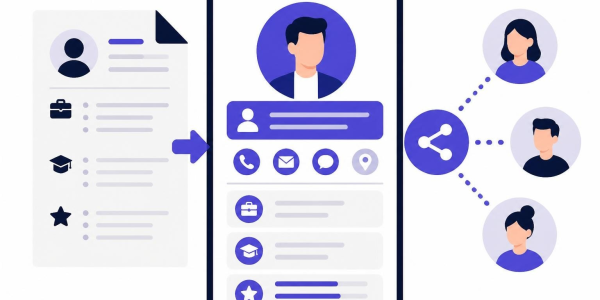
Integration between digital card platforms and business card scanners creates a comprehensive contact management ecosystem. Physical cards from external contacts get digitized and stored alongside digital cards from colleagues, building a unified network database accessible across your organization.
Measuring ROI and Effectiveness
Like any sales technology investment, business card scanning with CRM integration should deliver measurable returns. Key performance indicators help quantify the impact and justify ongoing investment.
Time Savings Metrics
Calculate the hours saved by multiplying your team's weekly networking contacts by the time required for manual entry. A sales team of 10 people each collecting 20 cards weekly saves approximately 13 hours per week at 2 minutes per manual entry versus 10 seconds per scan. Over a year, this represents 676 hours-equivalent to four months of full-time work.
Value this time at your average sales representative cost (salary plus benefits) to determine direct cost savings. For a team where the average fully loaded cost is $75 per hour, annual savings exceed $50,000. Additional value comes from opportunity cost-those hours can be redirected to revenue-generating activities like prospecting and customer meetings.
Conversion Rate Improvements
Track how automated scanning affects lead conversion rates. Metrics to monitor include:
| Metric | Pre-Scanner Baseline | Post-Implementation | Improvement |
|---|---|---|---|
| Time to first follow-up | 4.2 days | 0.5 days | 88% faster |
| Contact-to-meeting conversion | 12% | 18% | 50% increase |
| Data completeness | 67% | 94% | 40% improvement |
| Duplicate contact rate | 23% | 4% | 83% reduction |
Faster follow-up directly correlates with higher conversion rates. Contacts reached within 24 hours of initial meeting are 4-7 times more likely to engage than those contacted after a week. A business card scanner with CRM integration makes same-day follow-up standard practice rather than exceptional effort.
Pipeline Velocity Impact
Beyond individual lead conversion, measure how scanning technology affects overall pipeline health. Organizations report that automating contact capture increases pipeline velocity by ensuring more prospects enter qualification stages. When manual data entry created bottlenecks, many contacts never made it into the CRM at all, representing lost opportunity.
Track the number of new opportunities sourced from scanned contacts quarterly. Compare this to the previous period when manual entry was standard. Many organizations discover that 20-30% more networking contacts convert to opportunities simply because they're consistently captured and followed up.
Emerging Trends and Future Developments
The business card scanner with CRM integration category continues evolving rapidly as AI capabilities advance and professional networking becomes increasingly digital. Understanding emerging trends helps organizations make future-proof technology choices.
Conversational AI Integration
Next-generation scanning platforms are incorporating conversational AI that can draft personalized follow-up messages based on scanned contact information and contextual notes. These systems analyze the contact's role, company, and conversation topics to suggest relevant outreach content, reducing the time from scan to meaningful engagement.
Some platforms now offer voice note capture during or immediately after conversations, transcribing key discussion points and linking them to the scanned contact record. This creates richer context for follow-up than basic contact details alone, enabling truly personalized outreach at scale.
Predictive Analytics
Advanced CRM integration will increasingly leverage machine learning to predict which scanned contacts are most likely to convert based on historical patterns. By analyzing characteristics of contacts who previously became customers, predictive models can automatically prioritize new scans, ensuring sales teams focus on the highest-probability opportunities.
These systems might flag that contacts from companies in growth phases, holding specific titles, in certain industries, with particular pain points mentioned, have historically converted at 3x the average rate. Such insights transform contact capture from administrative necessity to strategic intelligence gathering.
Augmented Reality Enhancement
Experimental platforms are exploring augmented reality features that overlay contact information and CRM data in real-time during conversations. Imagine meeting someone at a conference, seeing their CRM profile appear in your AR glasses, and knowing immediately that they're an existing customer, a qualified prospect, or connected to one of your colleagues. This contextual awareness enables more informed, productive conversations.
While still emerging, AR-enhanced networking represents the logical evolution of business card scanning-moving from post-conversation data capture to in-conversation intelligence enhancement.
Selecting the Right Solution for Your Organization
With numerous business card scanner options offering CRM integration, selecting the optimal platform requires evaluating your specific requirements against available capabilities.
Critical Evaluation Criteria
Integration depth: Does the scanner offer native integration with your specific CRM platform, or only generic CSV export? Native integrations provide better field mapping, real-time sync, and bidirectional data flow.
Scanning accuracy: Request accuracy statistics for cards in languages and formats common in your industry. Test the system with actual cards from your network to validate real-world performance.
Mobile and offline capabilities: If your team frequently works in areas with limited connectivity, offline scanning with later synchronization is essential.
Customization flexibility: Can you define custom fields, create scanning workflows, and configure lead routing rules that match your sales process?
Security and compliance: Verify that the platform meets your industry's regulatory requirements and offers appropriate data protection features.
Pricing model: Evaluate whether per-user, per-scan, or flat-rate pricing makes sense for your usage volume. Some platforms charge per contact scanned while others offer unlimited scanning within team licenses.
Trial and Pilot Programs
Most business card scanner providers offer free trials or pilot programs. Structure your evaluation to test:
- Scanning accuracy across diverse card formats and languages
- CRM integration reliability and sync speed
- User adoption and ease of use for non-technical team members
- Support responsiveness and implementation assistance
- Actual time savings compared to existing manual processes
Involve representatives from sales, marketing, and CRM administration in the pilot. Each stakeholder brings different perspectives on requirements and will identify issues that might not be apparent to a single evaluator.
Modern business card scanning with CRM integration has transformed networking efficiency, eliminating manual data entry bottlenecks while accelerating follow-up and improving lead conversion rates. Organizations that automate contact capture gain measurable advantages in time savings, data accuracy, and sales velocity. Spreadly takes this efficiency further by combining AI-powered business card scanning with customizable digital cards that update instantly across all platforms, integrate seamlessly with leading CRMs like Salesforce and HubSpot, and enable teams to capture, manage, and follow up on contacts without administrative friction. Start creating your modern digital business card ecosystem today and experience networking that actually converts to business results.