Sales Lead Capture Solution: A Complete 2026 Guide
12 minutes
25th of June 2026
In this article:
- Why Traditional Lead Capture Methods Fail
- Essential Features of a Sales Lead Capture Solution
- Integration Architecture for Maximum Impact
- Lead Qualification and Scoring Frameworks
- Compliance and Data Protection Considerations
- Measuring Sales Lead Capture Solution Performance
- Mobile-First Capabilities for Modern Sales Teams
- Team Deployment and Change Management
- Advanced Analytics and Revenue Attribution
- Selecting the Right Sales Lead Capture Solution
- Future Trends in Lead Capture Technology
In 2026, sales teams face a paradox: more networking opportunities than ever before, yet lead quality and follow-up rates continue to decline. The typical sales professional meets dozens of prospects at trade shows, conferences, and networking events each month, only to lose contact information, forget context, or fail to follow up promptly. A sales lead capture solution addresses this challenge by automating the collection, organization, and distribution of prospect information, ensuring no opportunity slips through the cracks. This technology has evolved beyond simple business card scanners to become integrated systems that connect networking moments directly to CRM platforms, sales workflows, and revenue forecasting tools.
Why Traditional Lead Capture Methods Fail
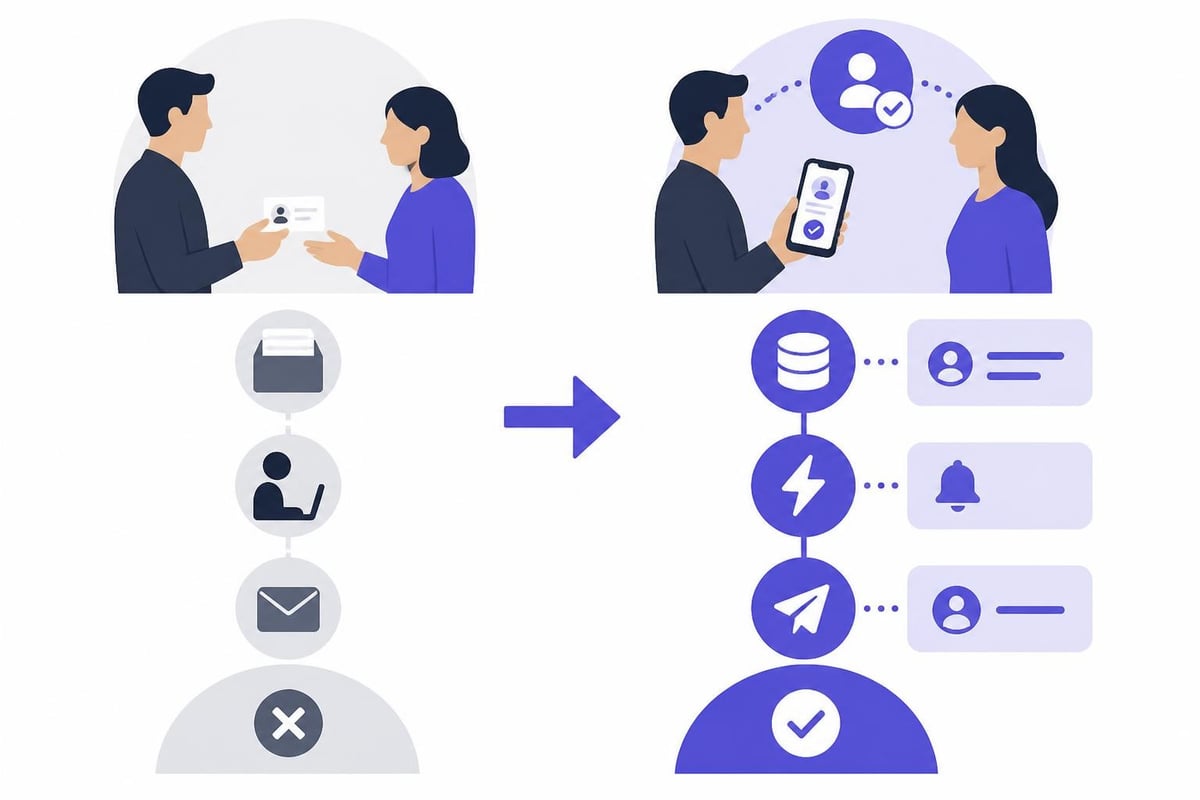
Manual lead collection creates bottlenecks that cost businesses millions in lost opportunities. Sales representatives juggle paper business cards, scribbled notes, and smartphone photos that rarely make it into CRM systems.
The statistics paint a clear picture. According to research, up to 80% of trade show leads never receive follow-up contact, primarily due to disorganized capture processes. When sales teams rely on manual data entry, they introduce errors, delays, and inconsistencies that degrade lead quality before outreach even begins.
The Hidden Costs of Manual Processes
Manual lead capture drains resources in ways most organizations fail to measure:
- Time waste: Sales professionals spend 4-6 hours per week manually entering contact information
- Data errors: Transcription mistakes occur in approximately 30% of manually entered leads
- Follow-up delays: Manual processes create 3-5 day gaps between initial contact and first follow-up
- Lost context: Critical conversation details disappear without structured capture
- Team friction: Leads fall between marketing and sales without clear ownership
Organizations investing in a modern sales lead capture solution immediately eliminate these inefficiencies. The right system captures complete, accurate prospect information in seconds, routes leads according to predefined rules, and triggers immediate follow-up sequences.
Essential Features of a Sales Lead Capture Solution
The best sales lead capture solution combines speed, accuracy, and integration capabilities. In 2026, leading platforms offer functionality that extends far beyond basic contact collection.
Multi-Channel Capture Capabilities
Modern prospects interact across numerous channels, and your capture solution must meet them wherever they are. Top-performing systems capture leads through:
- QR code scanning for instant profile exchange at events
- NFC technology enabling tap-to-share functionality
- Badge scanning at trade shows and conferences
- Web forms embedded across digital properties
- Email signature links that convert email conversations
- Virtual backgrounds in video meetings
- Mobile apps for on-the-go networking
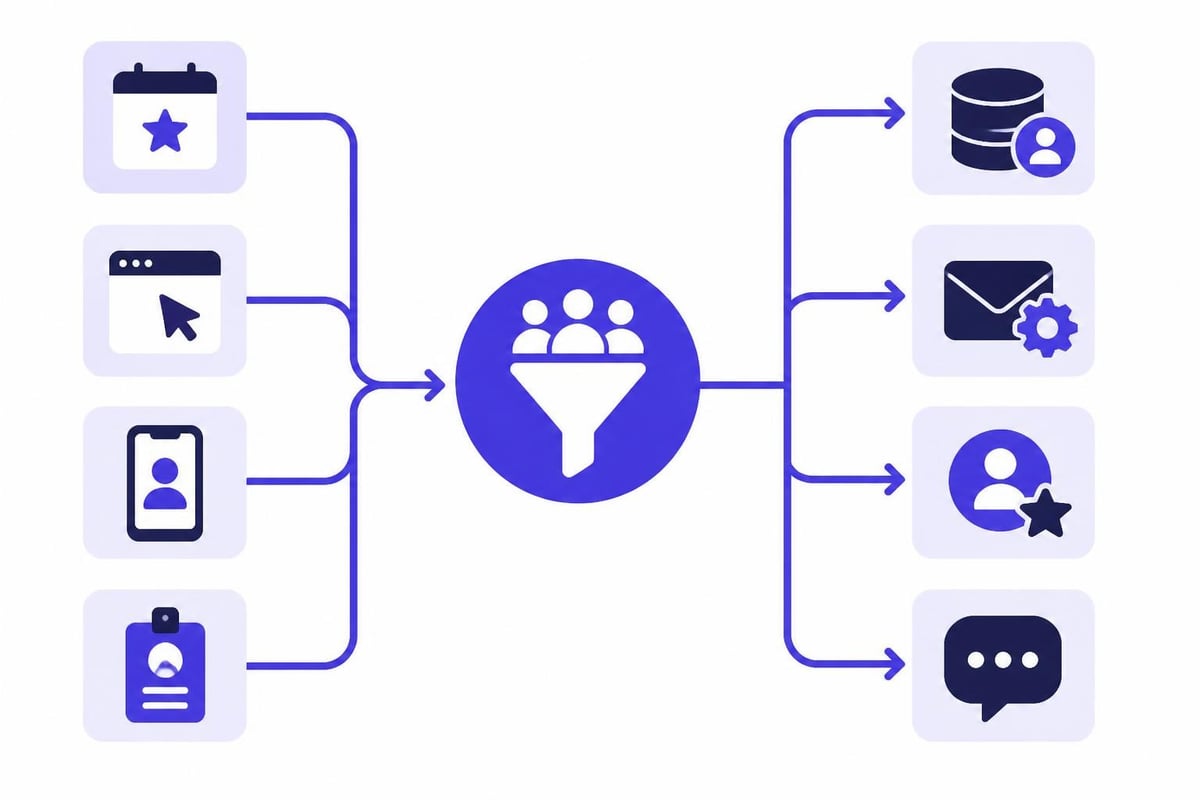
Each channel feeds into a unified database, ensuring consistent lead tracking regardless of initial contact point. This multi-channel approach aligns with effective lead capture strategies that emphasize meeting prospects where they already engage.
Intelligent Data Processing
A powerful sales lead capture solution doesn't just collect information; it enriches and validates data automatically. Advanced platforms incorporate:
- AI-powered business card scanning that extracts text from images
- Automatic field mapping to CRM custom fields
- Duplicate detection and merging
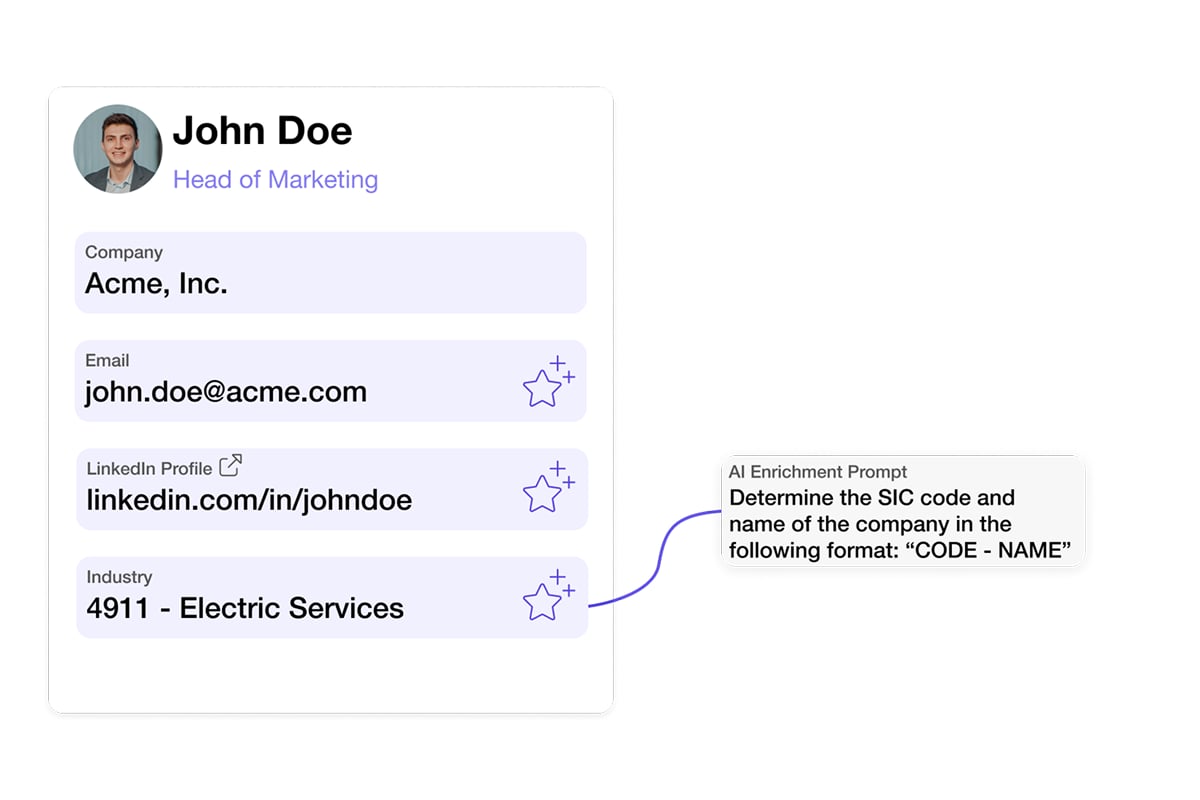
- Data enrichment from public sources
- Lead scoring based on predefined criteria
- Missing information completion using intelligent algorithms
| Feature | Traditional Method | Modern Solution |
|---|---|---|
| Capture Speed | 2-3 minutes per contact | 5-10 seconds per contact |
| Accuracy Rate | 70% (manual entry) | 95%+ (automated) |
| CRM Sync | Manual export/import | Real-time integration |
| Context Capture | Handwritten notes | Tagged, searchable metadata |
| Follow-up Triggering | Manual task creation | Automatic workflow initiation |
This intelligent processing transforms raw contact information into qualified, actionable sales opportunities. When combined with proven lead management practices, automated capture dramatically improves conversion rates.
Integration Architecture for Maximum Impact
A sales lead capture solution delivers maximum value when integrated seamlessly into existing technology stacks. Isolated tools create data silos; connected platforms enable revenue acceleration.
CRM Platform Connectivity
Direct CRM integration represents the cornerstone of effective lead capture. In 2026, enterprise-grade solutions connect with platforms including Salesforce, HubSpot, Pipedrive, Microsoft Dynamics, Freshworks, Copper, Attio, Close, Salesflare, and Odoo.
Real-time synchronization ensures every captured lead immediately appears in sales workflows. Representatives receive instant notifications, lead scoring algorithms evaluate fit, and automated sequences begin without manual intervention. Companies implementing automated workflows with CRM platforms report 300-400% increases in qualified lead volume.
Marketing Automation Alignment
Lead capture extends beyond sales. Marketing teams require captured data to fuel nurture campaigns, segment audiences, and measure campaign performance. Effective solutions bridge the gap by:
- Tagging leads with source attribution (event name, booth number, session attended)
- Triggering appropriate nurture sequences based on qualification status
- Feeding lead scoring models with behavioral data
- Enabling multi-touch attribution across the buyer journey
For teams managing digital business cards for teams, centralized lead capture ensures brand consistency while maintaining individual flexibility.
Lead Qualification and Scoring Frameworks
Capturing leads is only valuable when you can distinguish high-potential prospects from casual contacts. A sophisticated sales lead capture solution incorporates qualification logic that routes and prioritizes leads intelligently.
Implementing Effective Lead Scoring
Lead scoring assigns numerical values to prospects based on demographic fit and behavioral signals. Best practices for lead scoring emphasize both explicit data (job title, company size, industry) and implicit signals (engagement level, content downloads, response speed).
Modern capture solutions apply scoring rules automatically:
- Demographic scoring: Evaluate company size, industry, role, and decision-making authority
- Behavioral scoring: Track engagement intensity during initial conversation
- Contextual scoring: Weight leads differently based on source (keynote attendee vs. booth visitor)
- Timing scoring: Prioritize prospects indicating immediate need or active buying cycles
- Fit scoring: Compare against ideal customer profile attributes
Advanced systems now leverage AI for enhanced accuracy. Recent research on LLM-based lead scoring frameworks demonstrates that machine learning models can improve lead prioritization by 30-40% compared to traditional rule-based approaches.
Qualification Frameworks for Events
Trade shows and conferences require specialized qualification approaches. The sheer volume of contacts collected demands efficient filtering to identify genuine opportunities.
Effective event qualification frameworks include:
- Budget confirmation questions
- Timeline identification
- Authority verification
- Need assessment
- Interest level rating
Trade show lead capture experts recommend 60-second qualification frameworks that balance thorough assessment with respect for attendee time. A sales lead capture solution can prompt representatives with these questions, ensuring consistent qualification across team members.
At major industry events, the ability to scan badges, ask qualifying questions, add notes, and sync everything to CRM in under 30 seconds separates high-performing teams from those drowning in unqualified contacts. This efficiency enables representatives to focus on relationship-building rather than administrative tasks.
Compliance and Data Protection Considerations
In 2026, data privacy regulations shape every aspect of lead capture. Organizations must balance efficient collection with strict compliance requirements across multiple jurisdictions.
GDPR and Global Privacy Standards
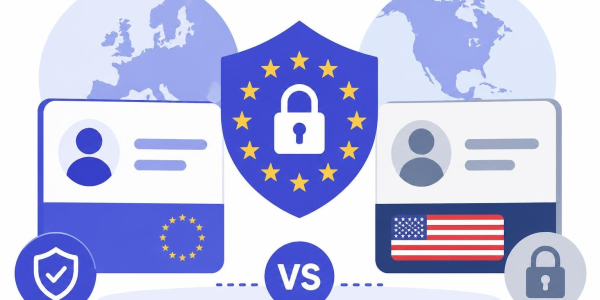
European markets demand GDPR compliance, requiring explicit consent, clear data usage policies, and straightforward opt-out mechanisms. A responsible sales lead capture solution incorporates:
- Consent capture and documentation at point of collection
- Transparent privacy policy presentation
- Easy access to data deletion requests
- Audit trails showing data handling history
- Secure storage with encryption standards
Solutions built in privacy-focused regions like Germany often exceed minimum requirements, providing additional assurance for enterprise buyers. Look for platforms that offer:
| Compliance Feature | Why It Matters | Implementation Standard |
|---|---|---|
| Consent Management | Legal requirement in EU/UK | Granular opt-ins per use case |
| Data Residency | Regional storage mandates | EU-based servers for European data |
| Retention Policies | Automatic deletion after timeframes | Configurable retention windows |
| Access Controls | Limit who views sensitive data | Role-based permissions |
| Breach Notification | Rapid response requirements | Automated monitoring and alerts |
Organizations serving global markets benefit from solutions that adapt to regional requirements automatically, ensuring compliance without requiring legal expertise from sales teams.
Best Practices for Ethical Lead Capture
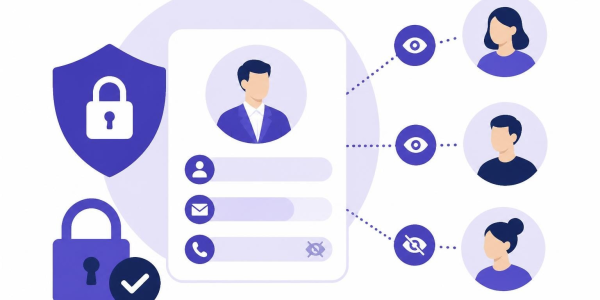
Beyond regulatory compliance, ethical lead capture builds trust and improves long-term conversion rates. Transparent practices include:
- Clearly stating how contact information will be used
- Offering value in exchange for information (resources, insights, follow-up materials)
- Respecting communication preferences (email vs. phone, frequency limits)
- Providing immediate confirmation of captured information
- Enabling prospects to update or remove their information easily
Following automated lead capture best practices ensures your processes enhance brand reputation rather than damage it.
Measuring Sales Lead Capture Solution Performance
Implementation is just the beginning. Continuous optimization requires measuring specific metrics that reveal system effectiveness and identify improvement opportunities.
Key Performance Indicators
Track these metrics to evaluate your sales lead capture solution:
- Capture completion rate (percentage of networking interactions converted to CRM records)
- Data accuracy percentage (correctly captured fields vs. total fields)
- Time from capture to first follow-up
- Lead-to-opportunity conversion rate by source
- Sales cycle length for captured leads vs. other sources
- Revenue attributed to captured leads
- Cost per lead by channel
High-performing teams segment these metrics by event type, team member, product line, and time period. This granular analysis reveals which networking investments deliver ROI and which drain resources without returns.
Continuous Improvement Strategies
Regular optimization maintains competitive advantage:
- Quarterly form audits: Review capture fields, removing unnecessary friction while ensuring sufficient qualification data
- A/B testing: Experiment with different qualification questions, consent language, and follow-up sequences
- Sales feedback loops: Gather input on lead quality, missing information, and process friction points
- Integration health checks: Verify CRM sync accuracy and address any mapping issues
- Training refreshers: Ensure team members leverage all platform capabilities effectively
Organizations implementing structured improvement programs see year-over-year increases in lead quality metrics. B2B lead capture form optimization represents an ongoing process rather than a one-time implementation.
Mobile-First Capabilities for Modern Sales Teams
The 2026 sales professional operates primarily from mobile devices. A sales lead capture solution must deliver full functionality on smartphones and tablets without compromising features.
Essential Mobile Features
Look for platforms offering:
- Native iOS and Android applications
- Offline capture with automatic sync when connectivity returns
- Camera-based business card scanning
- QR code generation and scanning
- Apple Wallet and Google Wallet integration
- NFC capability for tap-to-share functionality
- Voice note attachment for context capture
- Mobile-optimized lead forms
Mobile-first design ensures representatives can capture, qualify, and route leads from conference floors, client offices, or airport lounges. This flexibility increases capture rates and reduces the lag between meeting and follow-up.
Digital Business Card Integration
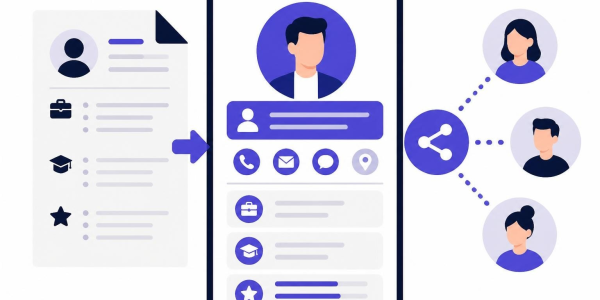
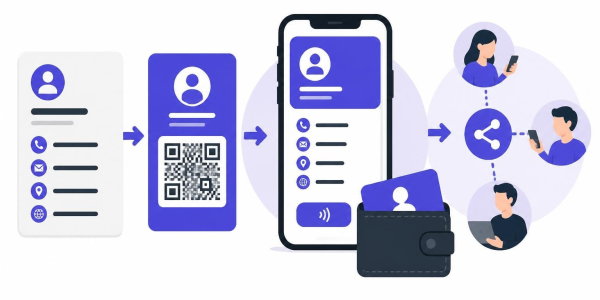
Progressive organizations equip teams with digital business cards that serve dual purposes: sharing contact information and capturing prospect details. When prospects scan a QR code or tap an NFC card, they immediately share their information while receiving the representative's profile.
This reciprocal exchange creates a seamless networking experience while eliminating manual data entry. The digital card becomes both a sharing mechanism and a capture tool, streamlining the entire interaction.
Team Deployment and Change Management
Technology adoption succeeds or fails based on user acceptance. Rolling out a sales lead capture solution requires careful change management to ensure team buy-in and consistent usage.
Implementation Best Practices
Successful deployments follow this framework:
- Executive sponsorship: Secure visible support from sales leadership
- Pilot programs: Test with early adopters before full rollout
- Comprehensive training: Provide hands-on practice in realistic scenarios
- Clear policies: Define when and how to use the system
- Success stories: Share early wins to build momentum
- Ongoing support: Offer readily accessible help resources
- Performance incentives: Tie adoption metrics to recognition programs
Organizations that invest in proper onboarding see 80%+ sustained usage rates. Those that simply deploy technology without support struggle to exceed 30% adoption.
Integration with HR Systems
Enterprise deployments benefit from HR system integration, automatically creating accounts when new sales team members join and deactivating access when they depart. Platforms connecting with Microsoft Entra ID, BambooHR, and Personio eliminate manual account management while ensuring security.
Automated provisioning also enables centralized branding control. Marketing teams set approved colors, logos, fonts, and layouts that automatically apply to all team members. This maintains brand consistency while allowing individual customization within defined parameters.
Advanced Analytics and Revenue Attribution
The most sophisticated sales lead capture solution platforms provide analytics that connect networking activities directly to revenue outcomes. This visibility justifies event investments and guides resource allocation decisions.
Multi-Touch Attribution Modeling
Understanding lead source impact requires tracking all touchpoints in the buyer journey. Advanced capture solutions tag leads with:
- Initial capture source (specific event, form, email signature)
- Capture context (session attended, booth interaction type)
- Subsequent engagement points
- Conversion milestones
- Deal size and close date
Multi-touch attribution models distribute revenue credit across all interactions, revealing which networking activities contribute most significantly to pipeline development. Research on LLM-based lead ranking systems shows that sophisticated attribution increases sales volume by 15-25% through improved resource allocation.
Predictive Lead Scoring
Machine learning algorithms analyze historical conversion patterns to predict which newly captured leads will most likely convert. These models consider:
- Industry and company characteristics
- Role and seniority level
- Engagement intensity during capture
- Similarity to previous successful conversions
- External signals (funding announcements, hiring trends, technology stack)
Predictive scoring enables sales teams to prioritize follow-up activities, focusing energy on high-probability opportunities while nurturing lower-scoring leads through automated sequences.
Selecting the Right Sales Lead Capture Solution
Choosing the appropriate platform requires evaluating specific organizational needs against available capabilities. Not all solutions serve all use cases equally well.
Evaluation Criteria Framework
Assess candidates across these dimensions:
| Criterion | Questions to Ask | Why It Matters |
|---|---|---|
| Integration Depth | Does it connect natively with our CRM and marketing automation? | Avoids data silos and manual exports |
| Capture Speed | How quickly can representatives capture complete lead information? | Impacts quantity of leads collected |
| Mobile Experience | Does the mobile app offer full functionality offline? | Enables capture in connectivity-challenged venues |
| Customization | Can we configure fields, workflows, and branding? | Ensures fit with unique processes |
| Scalability | Will it support our team size and growth plans? | Prevents future platform migrations |
| Compliance | Does it meet our industry and regional requirements? | Reduces legal and reputational risk |
| Support Quality | What training and ongoing assistance is included? | Influences adoption and effective usage |
| Pricing Model | Are costs predictable and aligned with value received? | Ensures sustainable ROI |
Request demonstrations focused on your specific use cases rather than generic feature tours. Ask to see how the system handles your exact capture scenarios, qualification questions, and CRM integration requirements.
Total Cost of Ownership Analysis
Look beyond license fees to calculate true implementation and ongoing costs. Include these factors:
- Initial setup and configuration services
- Training and onboarding resources
- Integration development or connector costs
- Annual maintenance and support fees
- User licenses across team members
- Mobile app or hardware costs (NFC cards, tablets)
- Upgrade and migration expenses
Many sales lead capture solution providers offer free trials or freemium tiers that enable hands-on evaluation before financial commitment. Take advantage of these opportunities to validate fit with actual users in real scenarios.
Future Trends in Lead Capture Technology
The sales lead capture solution landscape continues evolving rapidly. Understanding emerging trends helps organizations select platforms with staying power and future-proof capabilities.
AI-Powered Conversation Analysis
Next-generation platforms analyze actual conversations during networking interactions, automatically extracting key points, identifying pain points, and suggesting follow-up actions. Natural language processing enables systems to understand spoken exchanges, eliminating even the minimal manual input required today.
This technology captures not just contact information but the full context of discussions, preserving insights that typically disappear when representatives move to the next conversation.
Augmented Reality Integration
AR-enabled devices will soon display real-time information about networking contacts, showing relevant talking points, mutual connections, and suggested discussion topics. While maintaining in-person interaction's human element, AR augments representatives' ability to personalize conversations and identify opportunities.
Blockchain-Based Identity Verification
Concerns about data accuracy and identity fraud drive interest in blockchain-based verification systems. These technologies enable prospects to maintain verified professional profiles that automatically populate lead capture forms, ensuring accuracy while reducing friction.
Predictive Networking Recommendations
Advanced platforms will soon recommend which events to attend, which sessions to prioritize, and which attendees to seek out based on ideal customer profiles and pipeline needs. This guidance transforms random networking into strategic relationship-building aligned with revenue goals.
Modern sales success requires capturing every opportunity with accuracy, speed, and intelligence. The right sales lead capture solution eliminates manual processes, reduces follow-up delays, and ensures no prospect falls through the cracks. By automating capture, enrichment, and routing, your team focuses on relationship-building rather than administrative work. Spreadly delivers exactly this capability through modern digital business cards that capture lead information instantly while sharing your professional profile, creating seamless networking experiences that convert connections into revenue.